Wall Art Guide, Wall Art Tutoriels
Large Cow Wall Art: Farmhouse Animal Statement Pieces
Jun
So I’ve been working with cow art for like three years now and honestly it’s one of those things that either makes a room or makes people think you’ve lost your mind, there’s really no in between.
First thing you gotta know is size matters SO much with these pieces. I made the mistake early on of hanging a 24×36 cow print in a client’s dining room and it just looked… sad? Like a regular picture that happened to have a cow in it. You want to go big or honestly just pick something else. I’m talking 40×60 minimum, or even better, those oversized 48×72 pieces that make people stop and actually look.
The sweet spot I’ve found is around 60 inches wide for most living rooms. That’s big enough to anchor a whole wall without needing a gallery arrangement around it. My living room has a 55×40 Highland cow print and my dog literally barked at it for two days straight when I first hung it because the scale makes it feel like there’s actually a cow in the room.
Picking the Right Style Because They’re Not All the Same
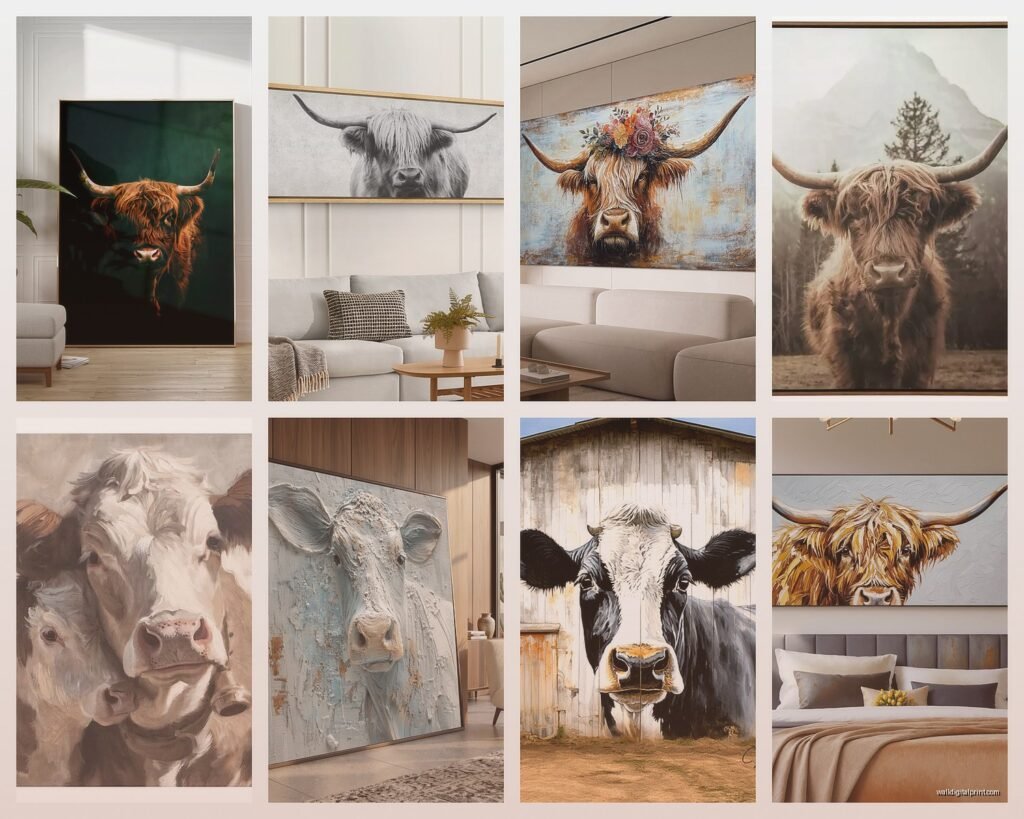
Okay so there are basically four types of cow art that actually work as statement pieces:
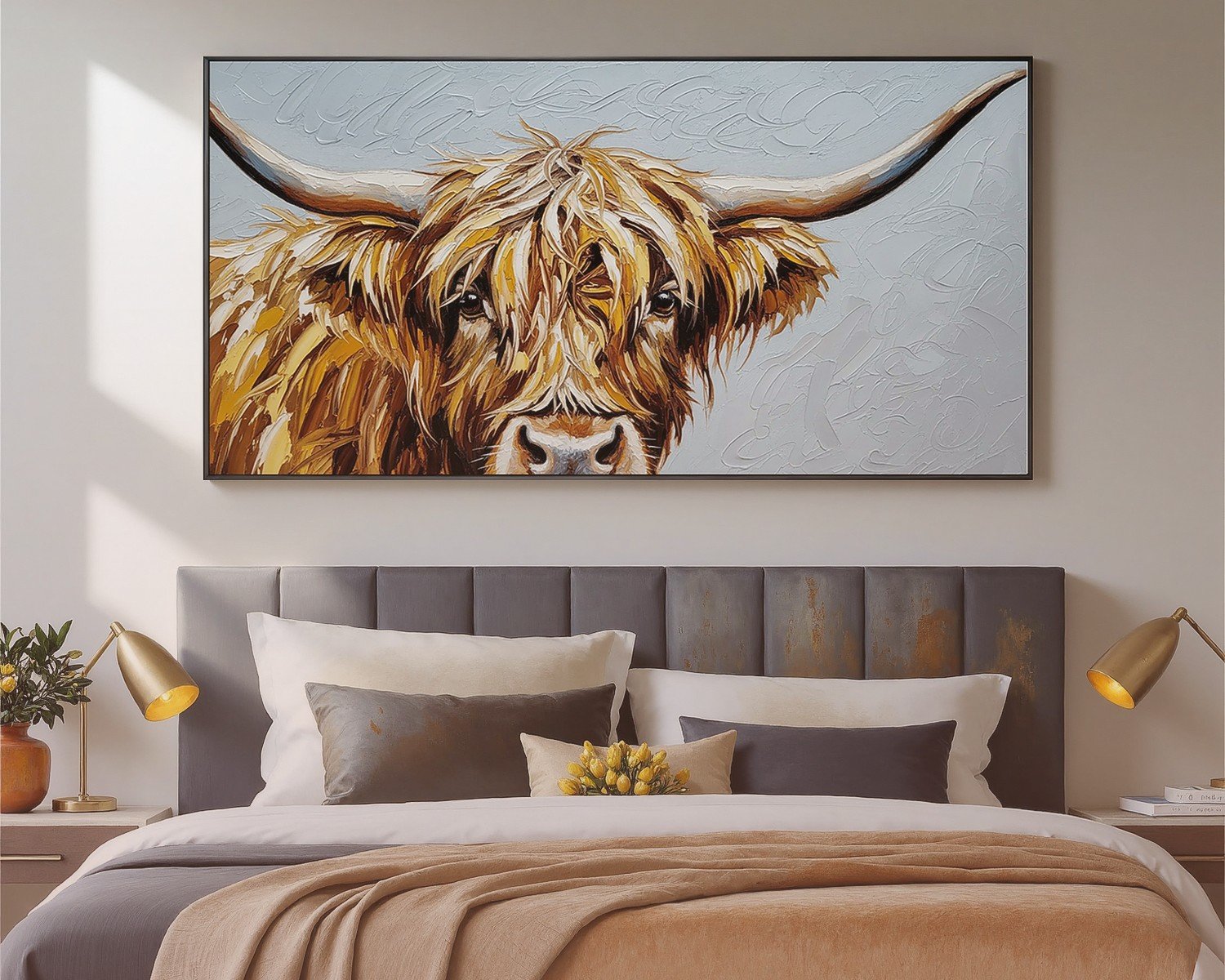
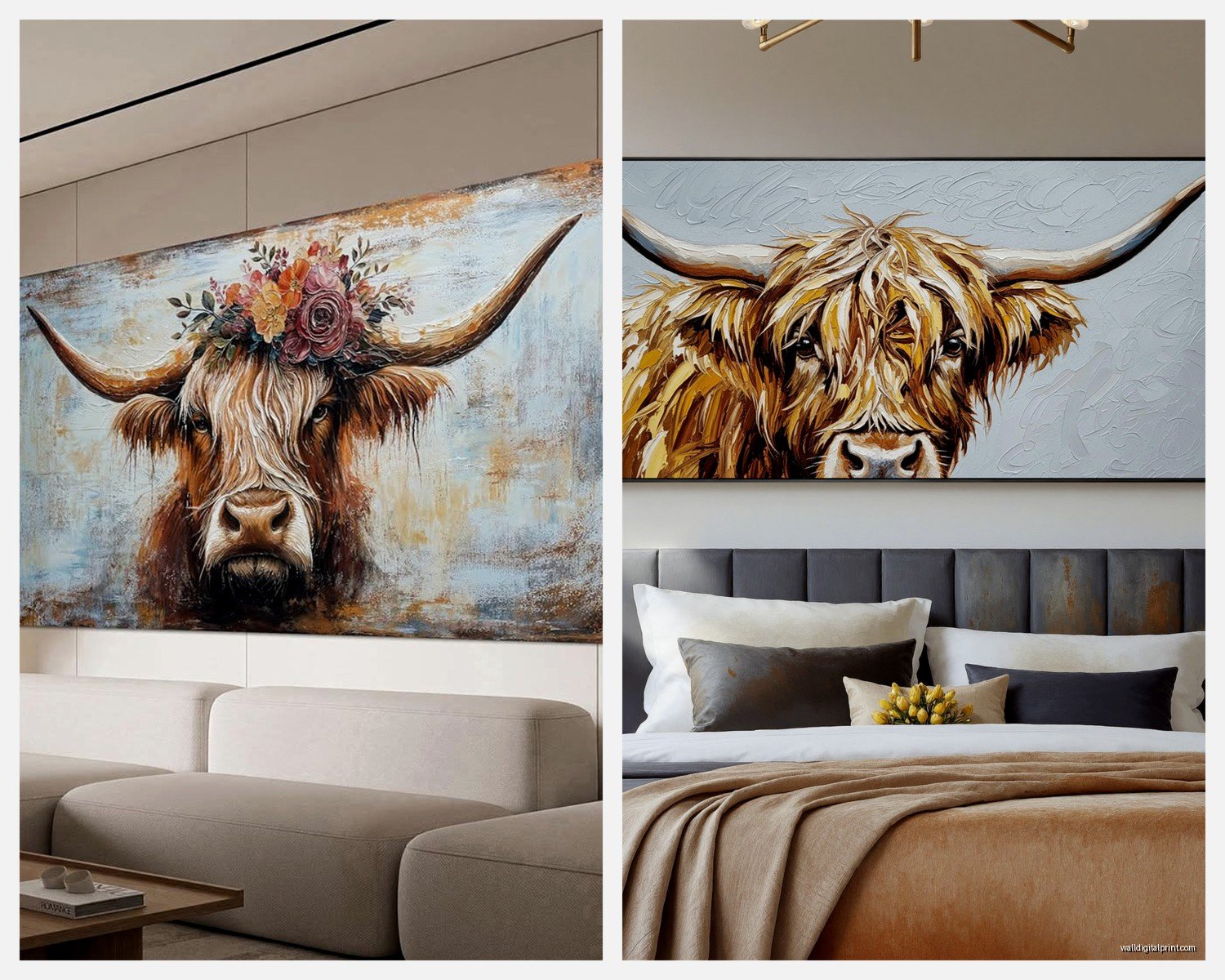
Highland cows are the fluffy ones with the bangs, super popular right now. They photograph really well and have that whole whimsical cottage vibe going on. The texture in their fur gives you visual interest even from across the room. I usually recommend these for spaces that already have some softness to them, upholstered furniture, throw blankets, that kind of thing.
Black and white photography style cows are more dramatic. These work incredibly well in modern farmhouse spaces or when you’re trying to bridge farmhouse with contemporary. The contrast is chef’s kiss for rooms with a lot of white shiplap or neutral walls. Just hung one last month in a client’s entryway and the black and white cow against this pale gray wall is honestly the first thing everyone comments on.
Colorful painted cows where the artist goes wild with blues, oranges, unexpected colors. These are tricky. They can look amazing but you need to pull colors from the piece into your room or it’ll feel random. I have one client who has this gorgeous teal and coral cow painting and she brought in teal velvet pillows and a coral throw and now it all makes sense together.
Vintage farm sketch style is more subtle, usually cream or beige backgrounds with brown line drawings. These are your safest bet if you’re nervous about going too bold. They read as farmhouse without screaming LOOK I HAVE A COW ON MY WALL.
Where to Actually Hang These Things
Living room above the couch is obvious but here’s what I’ve learned actually works. You want the cow’s eyes roughly at sitting eye level when you’re on the couch. Sounds weird but trust me. If you hang it too high it feels like the cow is judging you from above and that’s just uncomfortable.
I’ve done cow art in dining rooms and it’s actually perfect there. Something about a pastoral animal scene while you’re eating feels very European countryside. Just don’t go too realistic if you’re vegetarian, learned that one the hard way when a client was like “Sophia I can’t eat steak while staring at Bessie.”
Bedrooms can work but keep it to one wall, probably the wall opposite your bed or above a dresser. You don’t want to wake up to a cow staring at you, that’s a lot of energy first thing in the morning.
Entryways and mudrooms are actually my favorite spots lately. Sets the whole farmhouse tone immediately when people walk in. I did a huge 60×40 cow print in a mudroom last fall and paired it with vintage hooks and a wooden bench underneath and it’s probably my most photographed project on Instagram.
The Frame Situation Nobody Talks About
Okay so this is gonna sound weird but the frame matters almost as much as the art itself. Most large cow prints come unframed because shipping a 60-inch framed piece costs approximately one million dollars.
You’ve got a few options. Canvas prints are popular because you can hang them frameless and they look intentional. The image wraps around the edges so you get this floating effect on the wall. I like these for more casual spaces, family rooms, kitchens.
But if you want it to feel more elevated, get it framed. I usually do a simple wood frame, nothing ornate. Natural wood or black are your friends. White frames can work but they tend to make the piece feel more beachy than farmhouse, which might be what you want actually.
There’s also this thing where you can get a canvas print and then add a floating frame to it later. Gives you the texture of canvas with the finished look of a frame. Companies like Framebridge will do this but it’s pricey for large sizes.
Oh and another thing, if you’re buying from Etsy or one of those print-on-demand places, check if they offer different material options. I’ve gotten the same cow image printed on canvas, fine art paper, and even wood, and they all give completely different vibes.
Color Coordination That Actually Makes Sense
Your cow art needs to talk to the rest of your room, and I don’t mean literally even though my cat definitely thinks the cow in my office is real.
If you’ve got a lot of warm woods and creams in your space, look for cow art with warm tones. Sepia-toned photography, cows in golden fields, that kind of thing. The colors should feel like they could exist in the same season if that makes sense.
Cool-toned rooms with grays and whites can handle those dramatic black and white cow portraits really well. The contrast actually enhances the coolness of the space.
One trick I use is pulling an unexpected accent color from the cow art. Like if there’s a hint of rust orange in the field behind the cow, bring in a rust pillow or throw blanket. It creates this subtle connection that makes the whole room feel intentional instead of like you just hung whatever.
Mixing Cow Art With Other Decor
You can’t just slap a giant cow on the wall and call it a day, I mean you can but it’ll look weird. The art needs buddies.
I usually create a whole vignette situation on the wall or surface below the cow art. Think vintage milk bottles, a wooden dough bowl, maybe some cotton stems in a galvanized pitcher. You’re building a story.
But here’s the thing, don’t go too literal. You don’t need cow figurines everywhere. That’s how you end up in cow lady territory and unless that’s your goal, pull back. The wall art is your statement, everything else should support it quietly.
Shelving on either side of a large cow print works really well. Style them with books, small plants, maybe a vintage scale or some ironstone. Creates balance without competing with the cow.
Lighting Makes or Breaks It
Okay so funny story, I hung this beautiful Highland cow print in my hallway and couldn’t figure out why it looked flat and boring. Turns out the lighting was all wrong. Added a simple picture light above it and suddenly the whole thing came alive.
If you’re hanging cow art on a wall without much natural light, you gotta add artificial lighting. Picture lights are classic, or you can use track lighting if that fits your style. Even a well-placed floor lamp angled toward the wall helps.
Natural light is obviously gorgeous but watch out for direct sunlight hitting your art. It’ll fade over time, especially if it’s a print rather than an original. I learned this when a client’s beautiful sepia cow print turned basically beige after two years in a south-facing window.
Where to Actually Buy This Stuff
Etsy is honestly my first stop for large cow prints. You can find digital downloads and have them printed at your local print shop for way less than buying a finished piece. Just make sure the file size is big enough for the dimensions you want. I always ask sellers for the DPI before buying.
Society6 and Redbubble have tons of options and they’ll print and ship to you. Quality is hit or miss though, I’ve had some arrive looking amazing and others where the colors were way off from the website.
For original paintings or higher-end pieces, I browse Saatchi Art and Artfinder. You’re paying more but you’re getting actual original work. Had a client invest in a 48×60 original cow painting and five years later it’s still the centerpiece of her whole house.
Local artist markets and farm shows actually have incredible cow art sometimes. I found this artist at a county fair who does the most beautiful loose watercolor cows and I’ve commissioned three pieces from her now.
wait I forgot to mention, HomeGoods and Kirkland’s randomly have large cow art sometimes. It’s hit or miss and you gotta go in person because their online inventory doesn’t show everything. But I’ve scored some really good pieces there for like $79 which is insane for something 40 inches wide.
Installation Tips Because I’ve Definitely Hung These Wrong
Large art is HEAVY. Don’t trust those little sawtooth hangers that come attached to cheaper frames. I use heavy duty D-rings and picture wire rated for at least 50 pounds even if the piece is lighter.
For canvas prints without frames, I’m obsessed with those 3M velcro strips for hanging. Sounds sketchy for something this big but I’ve had a 50-inch canvas up for two years on velcro strips and it hasn’t budged. The key is using enough of them, I usually do 8-10 strips for anything over 40 inches.
If you’re hanging on drywall, find the studs if possible. If not, use proper drywall anchors. Those plastic ribbed ones from the hardware store are fine for medium weight but I prefer the metal toggle anchors for anything over 30 pounds.
Measure from the floor up, not from the ceiling down. Ceilings aren’t always level and you’ll end up with crooked art. I aim for 57-60 inches from the floor to the center of the artwork, which is standard gallery height.
Making It Work in Different Room Styles
Modern farmhouse is the obvious match but I’ve made cow art work in so many different styles. In a transitional space, go with black and white photography and keep the frame sleek. It bridges that gap between traditional and contemporary really well.
For actual farmhouse or cottage style, Highland cows or pastoral scenes work perfectly. Play up the rustic elements with distressed wood frames or even no frame at all on a canvas.
I did cow art in a Scandinavian-style room once and honestly it was perfect. The minimal aesthetic let the art be the only real focal point and the natural subject matter fit with the whole nature-inspired Scandi vibe.
Even in boho spaces you can make it work with colorful painted cows. The key is matching the energy, if your room is calm and neutral, don’t bring in a neon cow situation.
The Scale Mistakes I See All The Time
Too small is the biggest issue. People get nervous about going big and end up with something that looks dinky on their massive blank wall. If your wall is 10 feet wide, your cow art should be at least 4-5 feet wide or you need to create a gallery wall around it.
Too high is the other one. I see people hanging large art way too close to the ceiling because they think bigger art needs to go higher. Nope. Same rules apply, you want it at a comfortable viewing height.
Not leaving enough breathing room around the art. Your cow needs space. Don’t cram furniture right up against the wall, don’t hang other stuff too close to it. Give it like 8-12 inches of clearance on all sides if possible.
Seasonal Switching Because I’m Extra
This is totally optional but I have a couple clients who swap their cow art seasonally. Highland cow with snow for winter, cow in a field of wildflowers for spring/summer. Storage is the only issue but if you’ve got the space it keeps things fresh.
Personally I keep mine up year-round because I’m not climbing a ladder to change art every few months, my knees can’t handle that anymore. But I’ll change the styling around it. Fall means wheat stalks and mini pumpkins, winter gets pine branches and white candles.
The cow art itself stays but the supporting cast rotates and it feels like a whole new look without the hassle of rehanging heavy pieces.
Okay I think that covers most of what I’ve learned through trial and error and one incident where I dropped a 60-inch framed cow print down the stairs but we don’t talk about that. The main thing is commit to the size, make sure it fits your actual style not just the Pinterest version of farmhouse, and give it proper support both literally with good hardware and visually with thoughtful styling. And maybe don’t let your dog see it before you’re ready for the barking situation.