Wall Art Guide, Wall Art Tutoriels
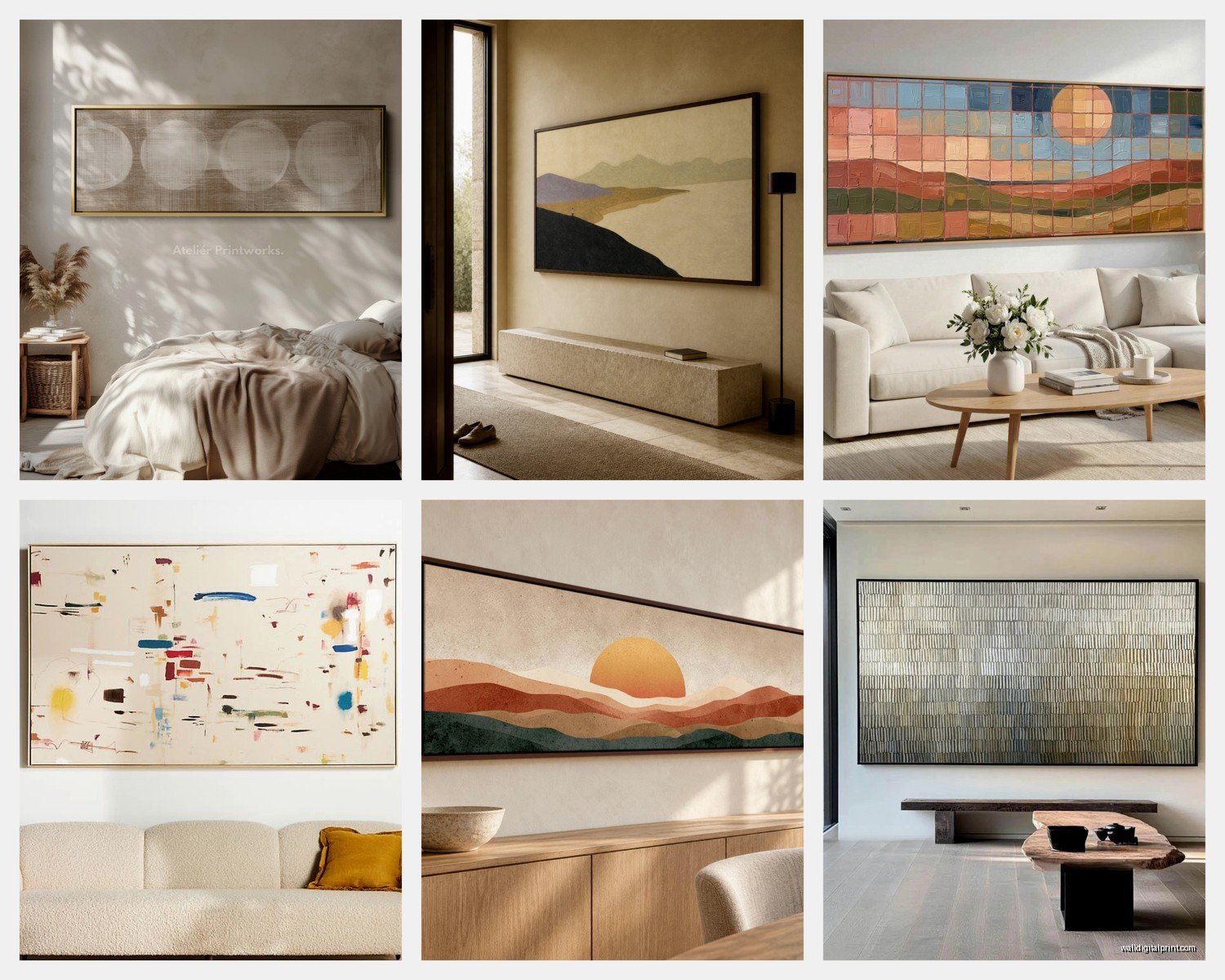
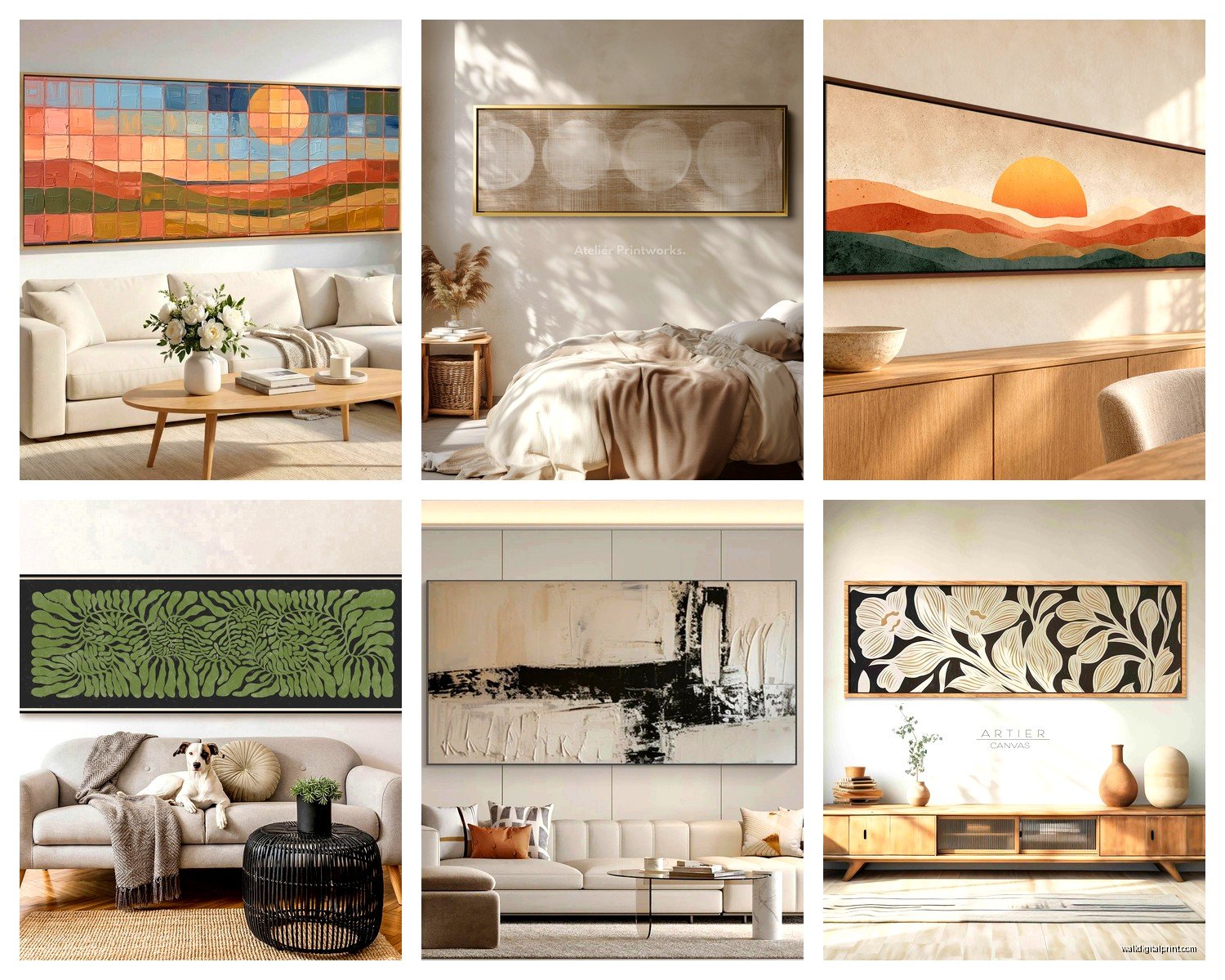
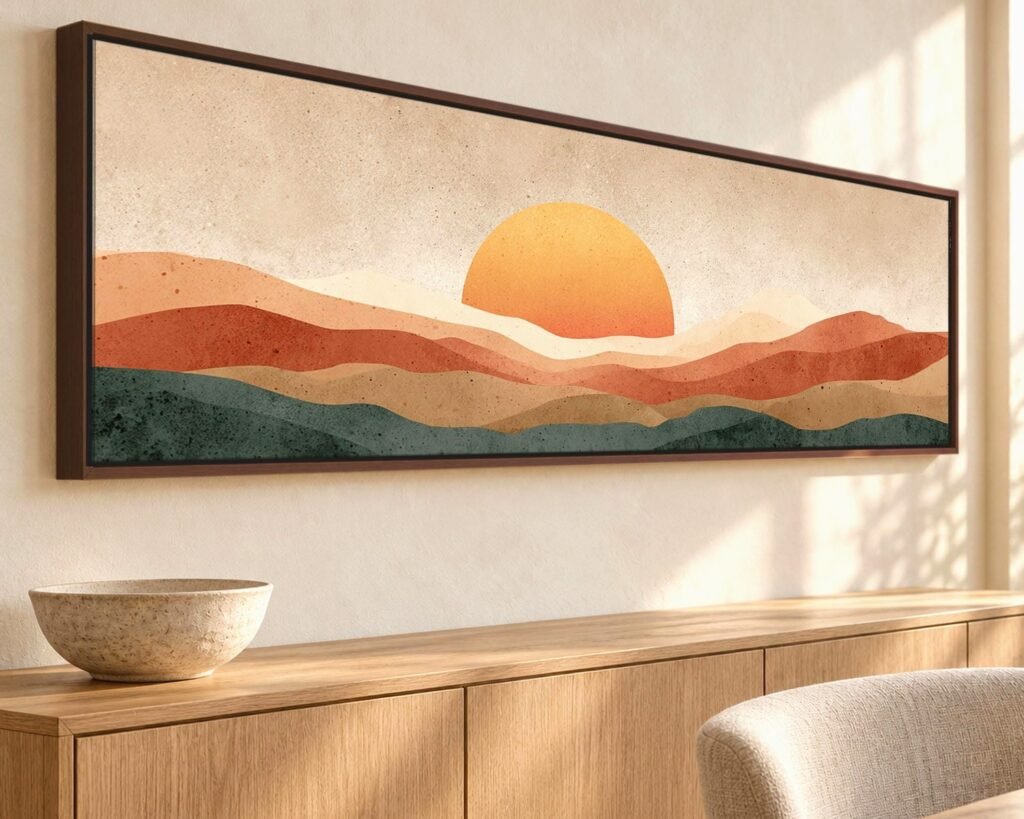
Large Horizontal Wall Art: Oversized Wide Landscape Format
Nov
So I’ve been dealing with this massive wall in my living room for like three years now and I finally figured out the whole oversized horizontal art thing, and honestly wish someone had just told me this stuff upfront instead of me buying two pieces that were completely wrong first.
Why Your Wall Looks Weird Right Now
Okay so the thing nobody tells you is that most people buy art that’s way too small. Like you’ve got this huge expanse of wall above your sofa or console table and you stick up something that’s 24×36 and wonder why it looks like a postage stamp. Horizontal oversized pieces—we’re talking 60 inches wide minimum, sometimes up to 96 inches—actually fill the space the way it needs to be filled.
I learned this the hard way when I bought what I thought was “large” art at 40 inches wide and hung it above my sectional. Looked ridiculous. My dog literally knocked into the wall below it and I realized there was like three feet of empty space on either side. That’s when I started actually measuring things instead of just eyeballing it at the store like an amateur.
The Actual Measurements You Need
Here’s what actually works and I’ve tested this in probably 30 different spaces by now:
- Above a sofa: your art should be roughly two-thirds to three-quarters the width of the sofa itself
- Above a console or credenza: aim for 80-90% of the furniture width
- Standalone wall with no furniture: you want the art to take up about 60-75% of the wall width
- Height-wise, most oversized horizontal pieces are between 30-48 inches tall
The proportions matter way more than the exact dimensions. I had a client who insisted on a specific piece that was 72 inches wide but only 18 inches tall and it looked like a weird banner. The sweet spot for aspect ratio is usually somewhere between 2:1 and 3:1 (width to height).
Where to Actually Find This Stuff
Oh and another thing—finding oversized horizontal art is weirdly harder than it should be. Most online stores show you their whole collection and like maybe 10% is actually large format horizontal.
I’ve had the best luck with:
- Minted for prints that come in custom sizes—you can go up to 96 inches on some designs
- Etsy shops that specialize in printable art, then I take the file to a local print shop
- Saatchi Art for original paintings but be ready to spend actual money
- Society6 has decent options up to 88 inches though quality can be hit or miss
- Local art fairs and studio sales—honestly where I find the best stuff but you gotta be okay with no returns
This is gonna sound weird but I’ve also commissioned pieces from art students at the local university. Way cheaper than established artists and the quality has been incredible. Found one girl who does these amazing abstract landscapes that are perfect for horizontal formats.
Canvas vs Print vs Other Materials
Okay so I spent an entire Saturday comparing different materials because my client canceled and I had nothing better to do. Here’s what I figured out:
Stretched canvas is probably the easiest for oversized pieces. It’s lightweight compared to framed options, you can hang it with just a few sawtooth hangers or wire, and it looks finished without a frame. The problem is that really wide canvas pieces—like over 80 inches—sometimes need a center support bar and you can see a slight line where that bar sits if you look closely. Drives me nuts but most people don’t notice.
Framed prints look more polished but oh my god the weight. A 72×36 inch framed print can easily weigh 40-50 pounds and you need serious wall anchors. I tried hanging one with regular picture hangers once and it literally fell off the wall at 2am and scared me so badly I thought someone broke in. Also framing something that large gets expensive fast—we’re talking $500+ for custom framing.
Acrylic or metal prints are having a moment right now and I actually really love them for modern spaces. They’re durable, easy to clean, and have this gallery look without needing a frame. The acrylic ones catch light in interesting ways. Downside is they’re pricey and you’re kind of locked into a contemporary aesthetic.
Wood prints work great if you’re going for that rustic or organic vibe. They’re sturdy, relatively lightweight, and the wood grain adds texture. I used a 84×36 wood print in a mountain house project and it was perfect.
The Weight Problem Nobody Talks About
Real talk—oversized art is heavy and most people don’t hang it correctly. I’ve seen so many pieces hanging crooked or with visible gaps between the wall because someone just used whatever hooks came in the package.
For anything over 50 pounds you need:
- Wall anchors rated for the weight—I use toggle bolts or molly bolts for drywall
- Two hanging points minimum, sometimes three for really wide pieces
- A level that’s at least 48 inches long—those tiny levels are useless here
- Ideally hang on studs but if you can’t, see above about anchors
I keep a stud finder in my car now because I got so tired of clients asking me to hang things and then discovering their walls are weird.
What Actually Looks Good in Horizontal Format
Not every image works when it’s stretched super wide. I learned this when I fell in love with a square abstract painting and asked the artist to make it horizontal and it just… didn’t work. The composition was all wrong.
Things that work really well:
- Landscapes obviously—mountains, seascapes, desert scenes
- Panoramic cityscapes
- Abstract pieces with horizontal movement or flow
- Photography of horizons, beaches, fields
- Minimalist designs with lots of negative space
- Triptychs or multi-panel pieces arranged horizontally
Things that usually look forced:
- Portraits or figures—they get stretched and weird
- Anything with strong vertical elements unless there are multiple ones spread across
- Super detailed busy patterns that lose impact when spread out
Wait I forgot to mention—if you’re going for a landscape photo or print, make sure the resolution is high enough. A low-res image blown up to 80 inches wide looks pixelated and terrible. You want at least 100-150 DPI at the final print size.
Color Choices That Won’t Make You Crazy
Here’s something I wish I’d known earlier—oversized art becomes a MAJOR focal point and color statement in your room. Like it will dominate the space. So unless you’re ready to redecorate around a bright orange abstract piece, maybe think twice.
I usually go with:
- Neutrals with one accent color that’s already in the room
- Black and white photography—classic and works with everything
- Muted earth tones for organic modern spaces
- Blues and greens which read as calm and work in most homes
My own living room has this massive 90×40 piece that’s mostly cream and soft gray with hints of rust orange. It’s big enough to make a statement but calm enough that I won’t get sick of it. The bold turquoise piece I had before? Lasted six months before I was completely over it.
The Multi-Panel Hack
Okay so funny story—I couldn’t afford one giant piece for my dining room wall so I bought three 30×40 canvases and hung them side by side with about 3 inches between each. Total width was like 98 inches and it looked completely intentional. Way cheaper than buying a single 98-inch piece and if I get bored I can swap out just one panel.
This works especially well if you find a triptych that’s designed to go together. But honestly even three separate pieces in similar colors or themes can work. I’ve done this with black and white photography, abstract paintings, even botanical prints.
The key is keeping the spacing consistent between panels and making sure they’re perfectly level with each other. Use painters tape to mark where each one goes before you start hammering.
Budget Reality Check
Let’s talk money because this stuff adds up fast. A legitimate oversized original painting can easily be $3000-$10000. I’ve seen them go for way more at galleries. For most people that’s not realistic.
Here’s the budget breakdown I usually work with:
- Printable digital art from Etsy: $10-50 for the file, then $150-400 for printing at a local shop
- Large format prints from online retailers: $200-800 depending on size and material
- Canvas prints: $300-1000 for oversized
- Original paintings from emerging artists: $800-2500
- High-end gallery pieces: sky’s the limit honestly
I usually tell people to budget at least $400-600 for a quality oversized horizontal piece including hanging hardware. You can definitely do it cheaper with the printable route but factor in printing costs.
The Lighting Thing
This is gonna sound extra but lighting makes such a difference with large art. I installed picture lights above two big horizontal pieces in my hallway and they went from looking fine to looking like actual gallery art.
You don’t need fancy gallery lighting though. Even just making sure there’s enough ambient light in the room helps. Or position the art on a wall that gets good natural light during the day. I had one piece that looked completely different in morning light versus evening and it was actually kinda cool.
Just avoid direct sunlight if you have a print or canvas because it’ll fade over time. Learned that one the hard way with a beautiful landscape print that’s now like three shades lighter than it was two years ago.
Common Mistakes I See Constantly
Hanging it too high—the center of your art should be at eye level, which is usually around 57-60 inches from the floor. For art above furniture, leave 6-8 inches between the furniture and the bottom of the art.
Not considering the room’s scale—an oversized piece in a small room can feel overwhelming. I mean sometimes that’s the vibe you want but make sure it’s intentional.
Forgetting about doors and windows—measure the path you’ll need to carry the art through. I once ordered a 96-inch piece that didn’t fit through my client’s doorway and we had to bring it through a window I’m not even kidding.
Buying art that doesn’t mean anything to you—just because something is trendy or matches your couch doesn’t mean you should live with it on your wall for the next five years. Get something you actually connect with.
Anyway that’s basically everything I’ve figured out through way too much trial and error. My walls finally look intentional instead of accidentally decorated and it makes such a difference in how the whole space feels.