Wall Art Guide, Wall Art Tutoriels
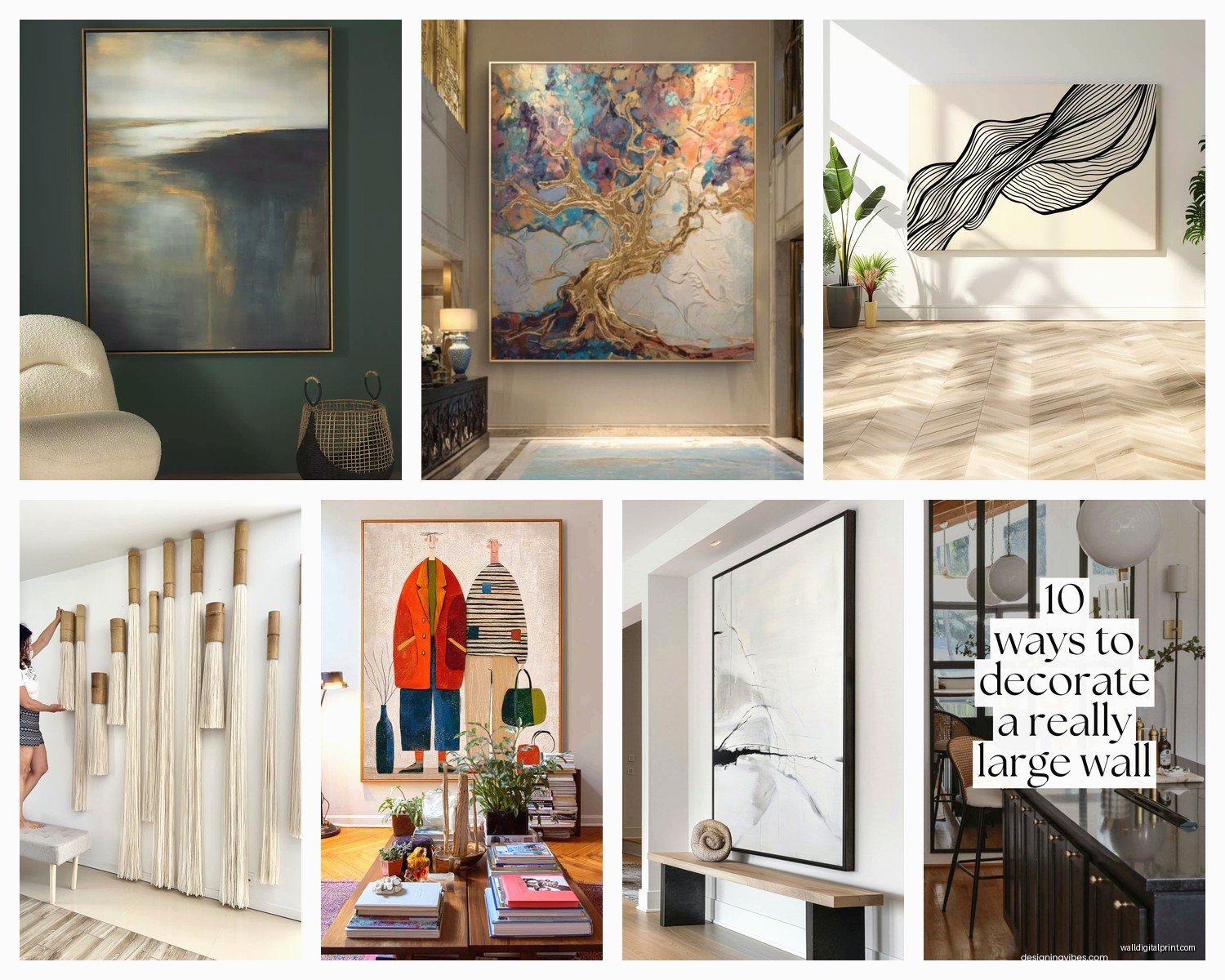
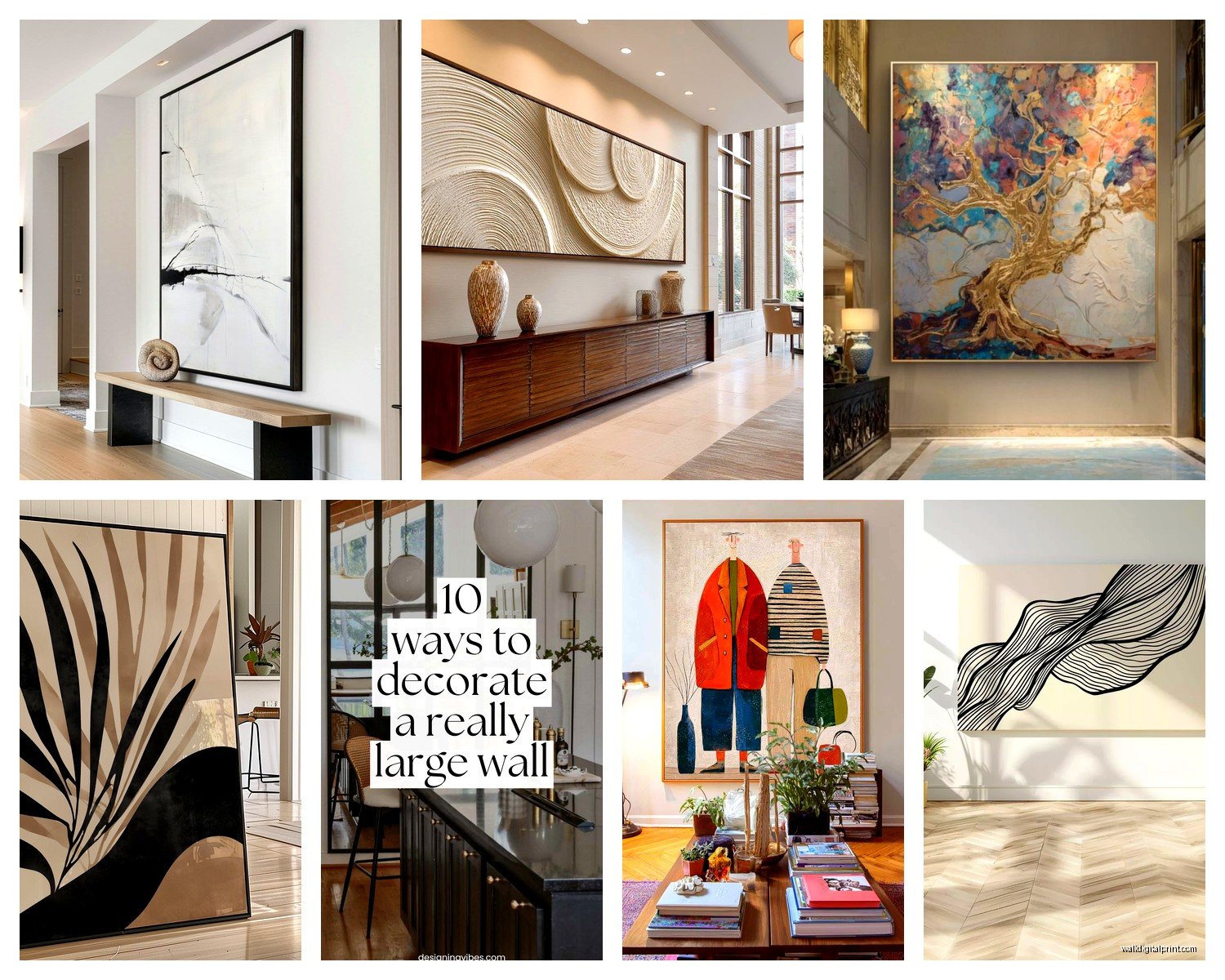
Large Wall Art for Hallway: Oversized Corridor Entry Decor

Sep
So I just finished installing this massive 6-foot canvas in a client’s hallway last week and honestly, the difference is insane. Like, it went from being this awkward narrow space nobody wanted to walk through to basically the coolest part of their house. But here’s the thing about oversized hallway art that nobody tells you until you’re standing there with a measuring tape at 9pm on a Tuesday…
The Sizing Thing Everyone Gets Wrong
Okay so first, forget what you think “oversized” means. In a hallway, you’re working with weird proportions. Your hallway is probably like 3-4 feet wide, maybe 8 feet tall, and you’re thinking “oh I’ll get something big” and then you buy a 24×36 inch piece and it looks like a postage stamp. Been there.
Here’s what actually works: for a standard 3-4 foot wide hallway, you want art that’s AT LEAST 36 inches wide. Like, that’s your starting point. I usually go for pieces that are 48-60 inches wide if the hallway is longer than 10 feet. My own hallway has a 5-foot wide piece and it still doesn’t feel too big.
The height thing is tricky because hallways have this vertical emphasis already. You can go really tall here without it feeling overwhelming. I’ve done 72-inch tall pieces in 8-foot hallways and it works because the narrowness of the space balances it out. Your eye needs something substantial to land on or the whole corridor just feels like a bowling alley.
Horizontal vs Vertical
This is gonna sound weird but I almost always choose horizontal pieces for hallways even though the space is vertical. It creates this visual break that makes the hallway feel less like a tunnel. The exception is if you have a really short hallway, maybe 6 feet or less, then vertical can work to draw the eye forward.
I had this client who insisted on a vertical triptych and it just…emphasized how long and narrow the space was. We switched to a horizontal abstract and suddenly the hallway felt wider. Brain is weird like that.
What Actually Looks Good in Narrow Spaces
Abstract art is your friend here, not gonna lie. When you’re walking past something in a narrow hallway, you don’t have the distance to really take in detailed realistic imagery. It just becomes visual noise. But abstracts work because they’re meant to be experienced in pieces as you move past them.
I’m obsessed with these large-scale geometric pieces right now. Clean lines, bold colors, maybe 2-3 colors max. They read well from a distance when you’re approaching the hallway AND when you’re walking through it. This one piece I sourced last month was just navy and cream with gold leaf accents, like 5 feet wide, and it completely transformed the entry.
Photography can work too but it needs to be simple. Think: one large landscape, minimal composition, lots of negative space. A busy photograph with lots of detail is just gonna be frustrating in a hallway because you can’t step back to see it properly.
My cat literally just knocked over my coffee talking about this
Okay anyway, black and white photography is actually perfect for hallways. High contrast, simple subjects. I used a massive black and white mountain landscape in my own corridor and people always stop to look at it. The lack of color means it doesn’t compete with the rooms it’s connecting.
The Practical Installation Stuff Nobody Warns You About
Real talk: hanging oversized art in a hallway is a pain. You don’t have room to step back and check if it’s level. You’re basically working in a 3-foot wide space trying to hold a 5-foot piece of art. Get help. Seriously.
Here’s what I do: measure 57 inches from the floor to where the CENTER of your art should be. This is gallery standard and it works. But in hallways, I sometimes cheat this up to 60 inches if the ceilings are high because you’re usually seeing the art while walking, not standing still, so your sightline is slightly different.
Use proper hardware. Like, not the little sawtooth hangers that come with frames. For anything over 40 inches wide, I use two D-rings attached to the frame and hang from two hooks in the wall. It distributes weight better and keeps the piece from tilting.
The Stud Situation
You gotta find studs for big pieces. Those drywall anchors are fine for smaller stuff but a 5-foot canvas can weigh 30-40 pounds and I don’t trust anchors for that. If your studs don’t line up with where you want the art, use a picture rail system. I installed one in a client’s hallway last year and now they can move the art around without making new holes.
Oh and another thing, if you’re hanging multiple pieces in a gallery wall situation in a hallway, keep them TIGHT. Like 2-3 inches apart max. In a narrow space, too much wall showing between pieces makes it look scattered. Tight groupings read as one cohesive installation.
Lighting Makes or Breaks This
Your hallway probably has terrible lighting. Most do. It’s usually one overhead fixture that creates these weird shadows. If you’re investing in a large statement piece, you need to light it properly.
Picture lights are okay but they can feel formal. I prefer track lighting or adjustable recessed lights that you can aim at the art. You want the light hitting the piece at about a 30-degree angle to avoid glare. If you have a glossy canvas or glass-covered print, this matters even more.
I installed LED strip lighting behind a floating canvas in my friend’s hallway and it created this amazing glow effect. The art looked like it was floating off the wall. Super dramatic for like $40 in materials.
Wait I forgot to mention: natural light in hallways is tricky. If you have a window at the end of your hallway, be careful with art placement. Direct sunlight will fade prints and paintings over time. Either use UV-protective glass or position the art where it won’t get direct sun.
Budget Options That Don’t Look Cheap
Okay so funny story, I was watching that design show on Netflix while comparing large canvas options online at like midnight and realized most “affordable” oversized art looks affordable. But there are workarounds.
DIY canvas prints from online services are actually good now. I’ve used CanvasChamp and CanvasPop for client projects and if you choose the right image, they look professional. The trick is picking high-resolution images with good composition. Don’t just blow up any random photo.
Textile wall hangings are having a moment and they work great in hallways. A large woven piece or tapestry adds texture and doesn’t require glass so it’s lighter and easier to hang. I found this 4-foot wide macrame piece at a local maker’s market and it’s been in my hallway for two years. Cost like $200 which for that size is reasonable.
The Framing Decision
Framed vs unframed is a whole thing. In hallways, I usually skip frames for really large pieces because frames add width and weight. A 60-inch canvas in a 3-inch frame becomes 66 inches and suddenly doesn’t fit the space. Plus framing that size costs like $500-800 easily.
If you want the polished look of a frame without the bulk, try a floater frame. It’s like a 1-inch frame that sits behind the canvas edges so it doesn’t add much width but gives that finished look. I use them when clients want something more traditional.
Color Coordination Without Being Matchy-Matchy
Your hallway art should relate to the rooms it connects but it doesn’t need to match exactly. I usually pull one or two colors from the adjacent spaces and make sure those appear somewhere in the hallway piece.
Like, if your living room has navy and brass accents, your hallway art might be predominantly neutral but have navy elements. It creates flow without being obvious about it.
Honestly though, hallways are also great places to go bold with color because you’re not spending hours there. I have a super bright coral and turquoise abstract in my hallway and it would be too much in a living room but in the corridor it’s just this fun pop of energy as you walk past.
Neutral Spaces Need Drama
If your whole house is white and gray and beige, your hallway art is where you can take risks. A massive black piece, something with metallics, deep jewel tones. The art becomes the focal point and everything else fades back.
I did this project where the entire home was white walls, natural wood, very minimal. We put a 6-foot black and gold abstract in the hallway and it was like the whole space suddenly had a personality. Before that it felt like a fancy doctor’s office.
Specific Pieces and Sources That Actually Work
Society6 has oversized prints up to 88 inches wide now. Quality varies depending on the artist but I’ve had good experiences with their large canvas wraps. They’re pricey for that size but less than custom framing a print yourself.
Etsy is hit or miss but there are artists selling original large-scale work for surprisingly reasonable prices. I found a 48×60 inch acrylic abstract for $600 last month that would’ve been $3000 in a gallery. You gotta scroll past all the printable downloads but the originals are there.
West Elm and CB2 have decent large wall art selections if you catch sales. Their oversized prints are usually 40×60 inches which works for most hallways. Not super unique but well-made.
For photography, check out Minted. They do custom sizing up to 54×40 inches and their photographers are actually good. I’ve ordered from them for probably five client projects.
The Commissioned Art Route
If you have a weird-sized hallway or specific vision, commissioning an artist isn’t as expensive as you think. I worked with a local painter who did a 5-foot custom abstract for $800. That’s less than I would’ve spent on a mass-produced piece that size from a furniture store.
Plus you get exactly the colors and style you want. Just make sure to see examples of their large-scale work first. Some artists are great at small pieces but their composition doesn’t translate to bigger sizes.
Mistakes I’ve Made So You Don’t Have To
Bought a gorgeous 60-inch piece without measuring the hallway corner and couldn’t physically get it into position. Had to return it. Measure your hallway width AND check if there are any corners or doorways that might block installation.
Hung art too low in a hallway with high ceilings and it looked like it was sinking into the floor. The 57-inch center rule doesn’t always apply with 10-foot ceilings. Go higher.
Used wire hanging systems on heavy canvases and they tilted forward at the top. The wire stretches over time with weight. D-rings and two hooks are more secure.
Picked a super detailed realistic painting that looked amazing in the gallery but in my narrow hallway you couldn’t appreciate any of the detail. Learned that simple bold imagery works better.
Put a light-colored canvas at the end of a hallway with a window behind it and it just disappeared in the glare. Dark pieces work better with backlighting or you need to add front lighting.
Making It Feel Intentional
One large piece is almost always better than trying to do a gallery wall in a hallway. The space is too narrow for your eye to take in multiple pieces comfortably. Go big with one statement piece.
If you do want multiple pieces, make them the same size and hang them in a line, evenly spaced. I did three 30×40 inch pieces in a long hallway, spaced 12 inches apart, all at the same height. It created rhythm as you walked past.
Symmetry matters more in hallways than other spaces because the architecture is already so linear. If you hang something off-center it’s really obvious. Either center it on the wall or commit to an asymmetrical arrangement that feels intentional.
The art should be the focal point, not an afterthought. If you’re gonna put something massive in your hallway, make sure the rest of the corridor is relatively simple. Don’t have a busy console table, lots of stuff on the walls, AND a huge painting. Pick one thing to be the star.
Anyway that’s basically everything I’ve learned from doing this in like 20+ homes over the past few years. The main thing is don’t be scared to go bigger than feels comfortable. Hallways can handle drama way better than you think they can.