Wall Art Guide, Wall Art Tutoriels
Massive Wall Art: Enormous Statement Pieces & Murals
May
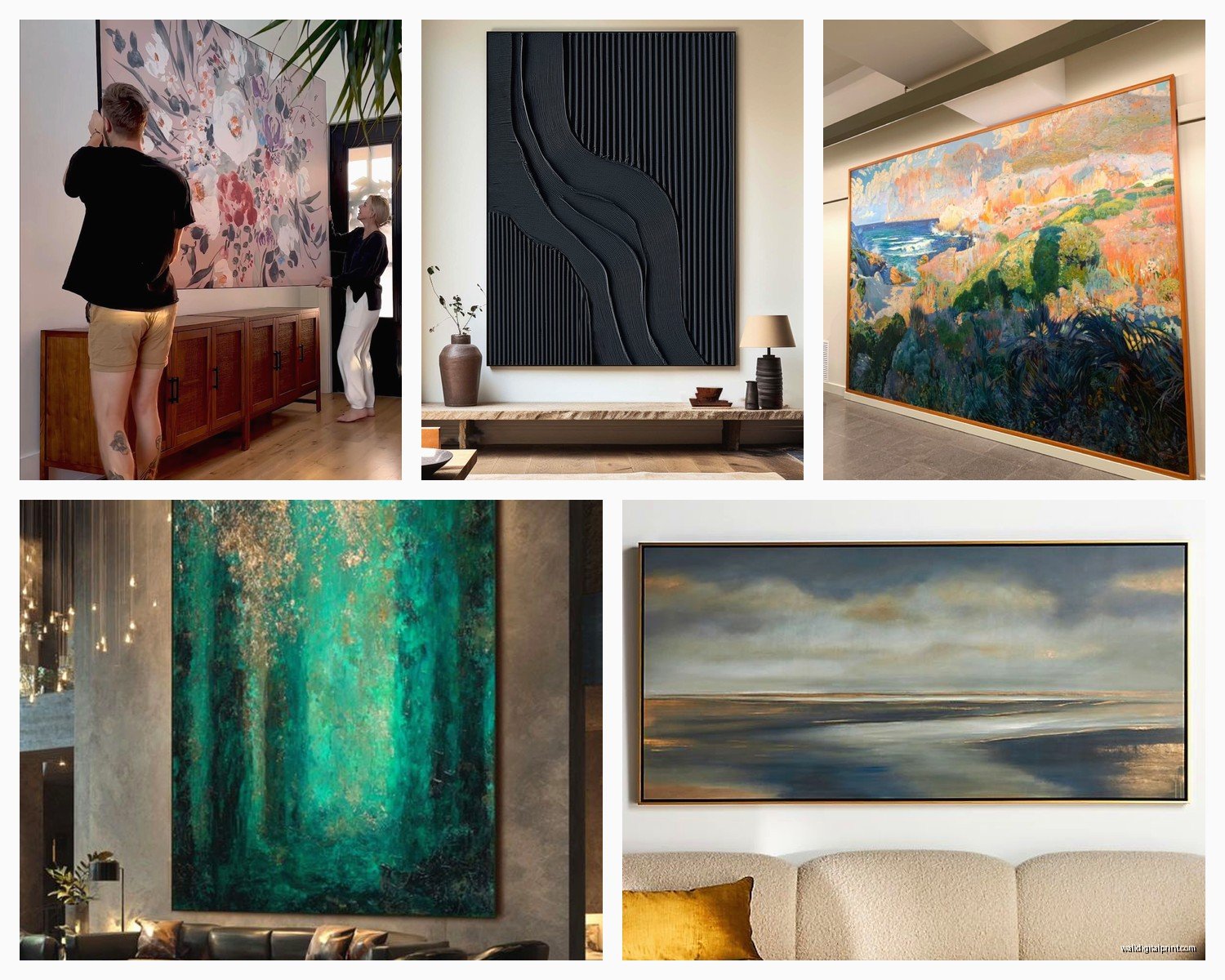
So I just finished installing this absolutely massive 12-foot mural in a client’s dining room and my arms are still sore, but honestly? It transformed the entire space in a way that like five smaller pieces never could’ve. Let me tell you what I’ve learned from doing way too many of these projects.
The Scale Thing Nobody Warns You About
Okay so the biggest mistake everyone makes is buying something they think is “big” and then it arrives and looks like a postage stamp on their wall. I’m talking you need to measure the wall and then probably go 20% larger than feels comfortable. That feeling of “this seems too big” when you’re ordering? That’s actually the right size.
I use painter’s tape to map out dimensions before committing to anything. Sounds basic but I’ve saved myself so many returns this way. My cat keeps attacking the tape which makes it harder but whatever. Put the tape up, live with it for a few days, take a photo. The photo especially helps because your eye adjusts to things in person but a photo shows you what guests will actually see.
For reference, on a wall that’s like 12-14 feet wide, you’re looking at art that’s minimum 6-8 feet wide. Minimum. I did a living room last month where we went with a 10-foot wide triptych and it STILL could’ve gone bigger.
Weight Is Gonna Be Your Enemy
Nobody thinks about this until they’re holding a 60-pound canvas wondering why they didn’t hire help. Anything over 30 pounds needs serious mounting hardware. I’m talking heavy-duty wall anchors, french cleats, or mounting it directly into studs.
French cleats are my favorite for really massive pieces because they distribute weight so well and you can adjust positioning slightly. You mount one piece of the cleat to the wall, one to the back of the artwork, and they interlock. Game changer for those enormous gallery-wrapped canvases.
Mural Options That Actually Work
Okay so there’s basically three routes here and I’ve tried them all multiple times.
Peel and Stick Wallpaper Murals
These have gotten SO much better in the past few years. I was skeptical but the quality from companies like Rebel Walls or Photowall is legitimately good. The texture matters though – the woven fabric ones look way more expensive than the vinyl ones.
Installation is… well it’s not hard exactly but you gotta be patient. I did one in my own bedroom and there was a lot of swearing involved. You need a squeegee, a sharp blade, and someone to help you hold the panels level. The seams are the tricky part – if your wall has any texture at all, those seams will show a bit.
Pro tip I learned the hard way: start from the middle of the wall and work outward, not from one side to the other. Makes it way easier to keep things centered and you can hide any weird cuts in the corners.
Traditional Painted Murals
If you’ve got the budget, hiring a muralist is incredible. I worked with this artist in Portland who did a custom landscape scene and it’s literally the only thing anyone talks about when they visit that house. Costs anywhere from $2000-$10000+ depending on complexity and size.
The cool thing about painted murals is they can work around outlets, weird corners, all that stuff that makes wallpaper annoying. Plus there’s something about the texture of actual paint that photographs really well.
Printed Canvas or Fabric Panels
This is my middle-ground option. Companies like Shutterfly or local print shops can print your image (or stock images) on massive canvas. You can go up to like 16 feet if you do multiple panels.
I did this for a client who wanted a black and white forest scene across an entire wall. We printed it in three 4-foot panels, mounted them with a tiny gap between each, and it looks intentional and gallery-like. Cost was maybe $800 total which is way less than a painted mural.
What Actually Looks Good at That Size
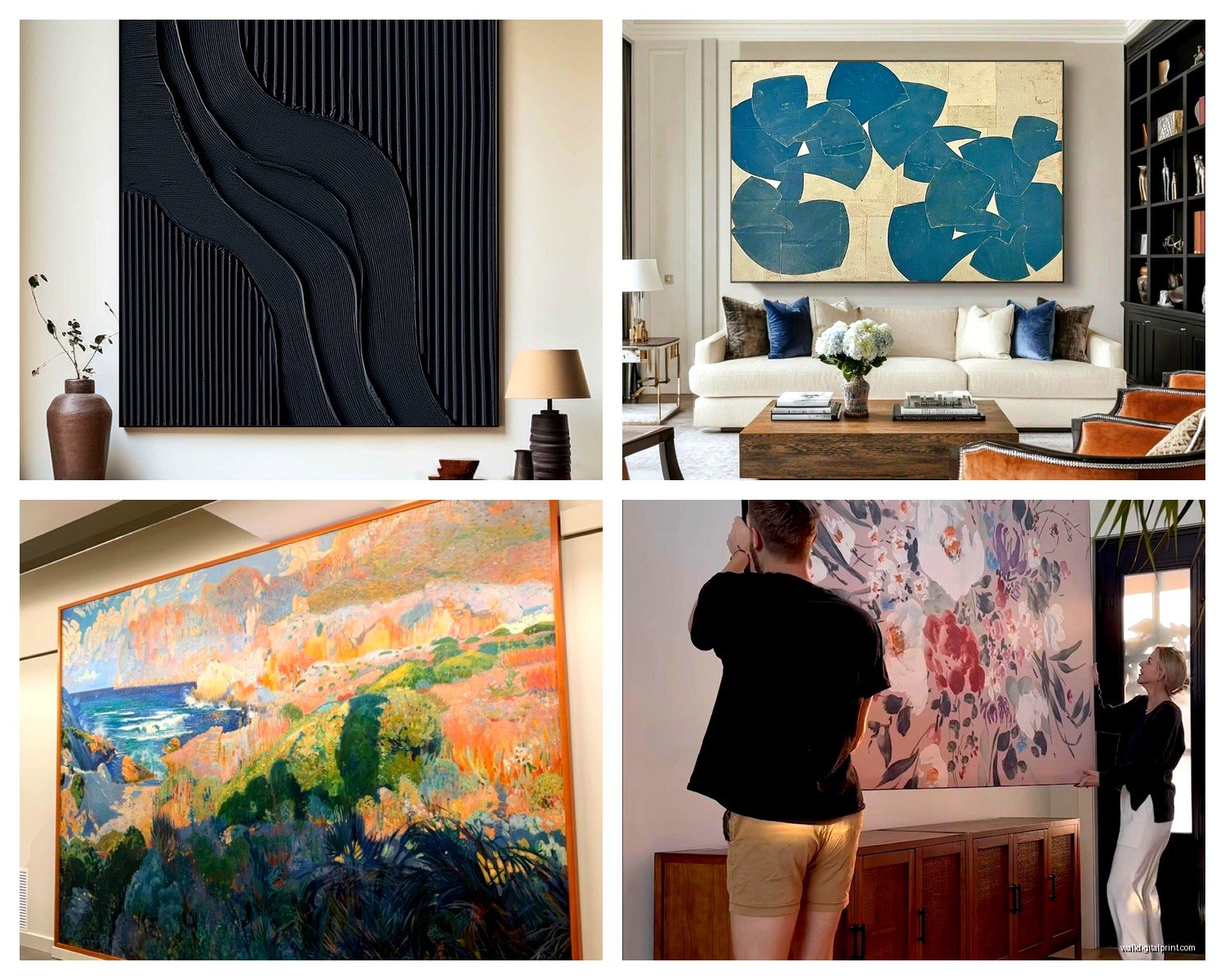
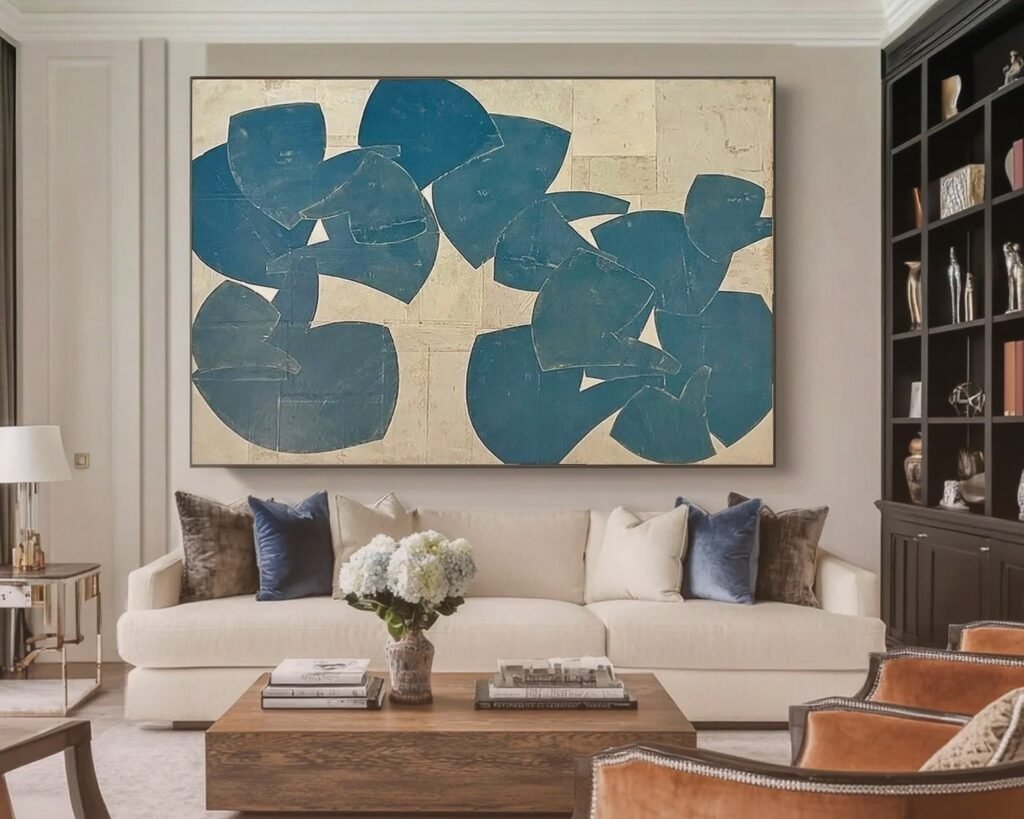
Not everything scales up well and I’ve seen some disasters. Abstract work almost always works because there’s no detail your eye expects to see. Same with photography – landscapes, cityscapes, anything with depth.
What doesn’t work: busy patterns that were meant to be small, anything with fine text, most figurative work unless it’s specifically designed to be viewed from far away. I saw someone try to blow up a regular painting to 8 feet and you could see every pixelated brushstroke and it just looked wrong.
Color Considerations
Dark murals make a room feel smaller but also cozier and more dramatic. I have a client with a deep blue forest mural in their bedroom and it’s moody in the best way. Light colors or black and white tends to feel more spacious.
One thing that surprised me – really colorful massive art can actually be easier to decorate around than you’d think. Because it’s such a statement, you can keep everything else super simple and the room still feels complete. Like you don’t need a bunch of accessories and stuff.
The Installation Day Reality Check
Okay so funny story, I once tried to install a 9-foot canvas by myself because the client’s husband said he’d help but then had to work. Do not do this. You need two people minimum, three is better.
Here’s what you actually need:
- A good level (laser levels are worth it for this)
- Stud finder that actually works
- Power drill
- Appropriate mounting hardware for your wall type
- Pencil for marking
- Measuring tape
- Someone patient who won’t get annoyed when you change your mind about height seventeen times
The height thing is crucial. Standard rule is center of the artwork at 57-60 inches from the floor, but with massive pieces this can look weird. I usually go slightly higher, especially if it’s a horizontal piece. Your eye needs to be able to take in the whole thing without craning your neck.
The Lighting Situation
You gotta think about lighting or your massive investment just looks like a dark blob at night. Track lighting aimed at the wall works great. I’m also obsessed with picture lights mounted above the frame – they look so gallery-like.
If you’re doing a mural, consider adding some uplighting or wall washers. The shadows and depth make such a difference. I watched this documentary about museum lighting last week (couldn’t sleep, don’t judge) and it made me rethink how I approach this stuff.
Budget Breakdown Real Talk
Because everyone wants to know what this actually costs:
DIY peel and stick mural: $300-800 depending on size and quality
Large canvas print: $400-1200
Professional mural artist: $2000-10000+
Framed photography or art print (huge): $800-3000
Installation if you hire it out: $150-500
The cheapest route I’ve done that still looked amazing was printing a high-res public domain image (there are tons on museum websites) at a local print shop on fabric panels. Whole thing was maybe $350 including mounting supplies.
Where to Actually Find This Stuff
I’m always hunting for good sources. Society6 and Minted both do large-scale prints. Etsy has some artists who specialize in oversized digital prints you can download and print locally. For murals, Murals Wallpaper has wild options.
If you want something really custom, find a local printing company that does trade show banners – they can print anything huge on fabric and it’s usually cheaper than art-specific places. Just don’t tell them it’s for art, say it’s for an event or something.
Common Problems I’ve Dealt With
Seams showing on wallpaper murals – this happens on textured walls. You can either skim coat the wall first (pain in the butt) or embrace it as part of the look.
Colors looking different than online – always always order a sample swatch first. The color shift can be dramatic depending on your lighting.
Humidity making things peel – happened in a bathroom install. You need proper ventilation and might need to go with a different material. Acrylic or aluminum prints hold up better in humid spaces.
The art overwhelming the space – sometimes you get it up and it’s just… too much. Before you panic, live with it for a week. Your eye adjusts. If it still feels wrong, adding more furniture or grounding elements helps. Or you picked wrong and gotta start over, which has happened to me exactly twice and I’m still not over it.
Making It Work With Your Existing Stuff
This is gonna sound weird but sometimes you need to remove things for a massive art piece to work. Like if you have a gallery wall and then add huge art nearby, it’s visual chaos. The massive piece needs breathing room – pretty much the entire wall to itself.
I had a client who couldn’t let go of their existing art collection and we ended up putting the mural on a different wall than planned. Sometimes you gotta be flexible about the layout of the whole room.
Oh and another thing – your furniture arrangement might need to change. A massive piece creates a focal point and everything should orient toward it or at least not compete with it. I’ve rearranged entire living rooms after installing big art because the old layout suddenly felt wrong.
Renters and Temporary Solutions
If you’re renting, peel and stick is obviously ideal but there are other options. Hanging systems that use ceiling tracks work great and don’t damage walls. There’s also this stuff called command strips that’s rated for heavy items – I’ve used them for pieces up to about 40 pounds and they hold fine.
You could also do a massive tapestry situation which is having a moment anyway. Easy to hang, easy to take down, and there are some gorgeous oversized options out there.
The key is making sure your landlord is cool with whatever hardware you’re using. Take photos of the wall before you start so you can prove you didn’t damage anything.
Maintenance Nobody Mentions
Dust accumulates on these things like crazy because of the surface area. I use a microfiber duster on an extension pole every couple weeks. For canvas, you can very gently vacuum with a brush attachment if it gets really dusty.
Wallpaper murals in kitchens or high-traffic areas might need spot cleaning. Test whatever cleaner you use in a corner first because some will smear the ink.
If it’s behind glass or acrylic, regular glass cleaner works but you’ll be cleaning it a lot because every fingerprint shows at that scale.
Anyway that’s basically everything I’ve figured out through trial and error and one really expensive mistake involving a baroque ceiling mural that the client hated. Start with good measurements, don’t cheap out on mounting hardware, and when in doubt go bigger than seems reasonable.