Wall Art Guide, Wall Art Tutoriels
Metal Beach Wall Art: Coastal Ocean Sculpture Designs
Jul
So I’ve been basically obsessed with metal beach wall art lately and honestly it started because a client wanted this whole coastal vibe but didn’t want the typical seashell-covered everything situation. Like, we needed something with actual presence, you know?
Why Metal Actually Works Better Than You’d Think
The thing about metal ocean sculptures is they don’t get that dated beach house look that happens with painted wood signs. I tested a bunch of different materials in my own place first—because yeah I’m that person who uses their apartment as a test lab—and the metal stuff just holds up. No fading, no warping from humidity, and if you live anywhere near actual saltwater, wood pieces literally fall apart. Found that out the hard way at my sister’s beach condo.
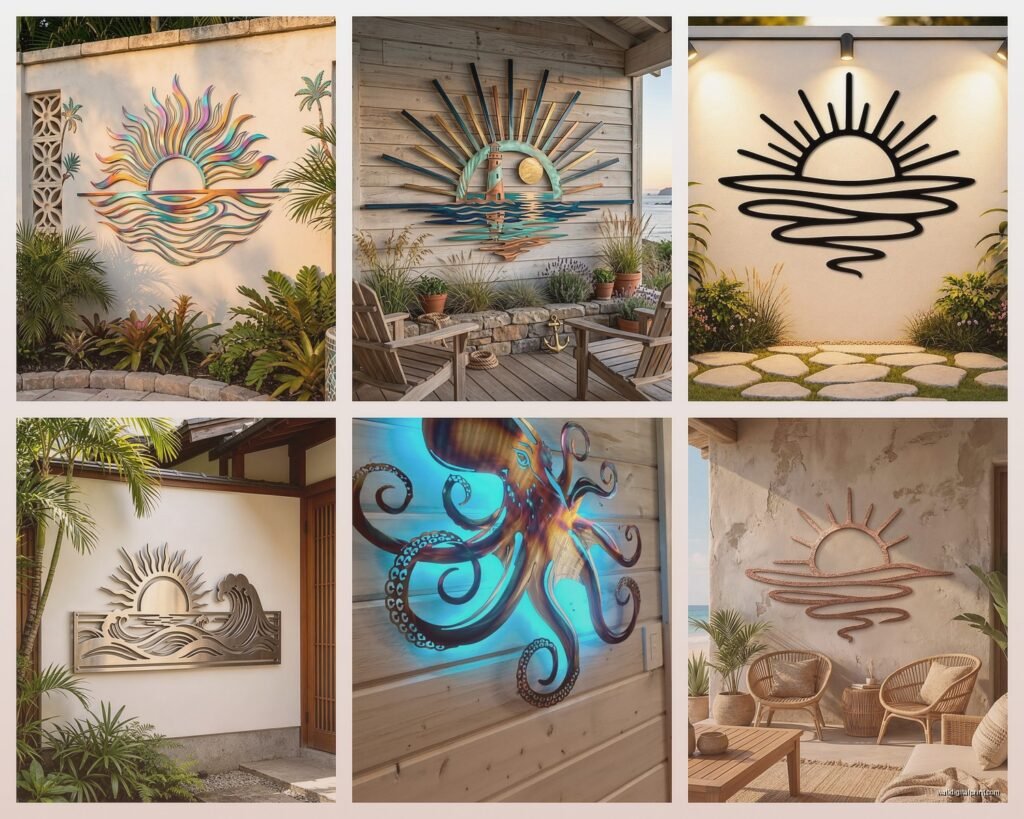
Metal catches light differently throughout the day which sounds super artsy but actually matters. That copper patina octopus I hung in my office? Completely different piece at 8am versus 6pm. The shadows shift, the oxidation creates this depth thing…okay I’m getting too into it but you’ll see what I mean.
The Main Styles You’ll Actually Find
Silhouette Cutouts
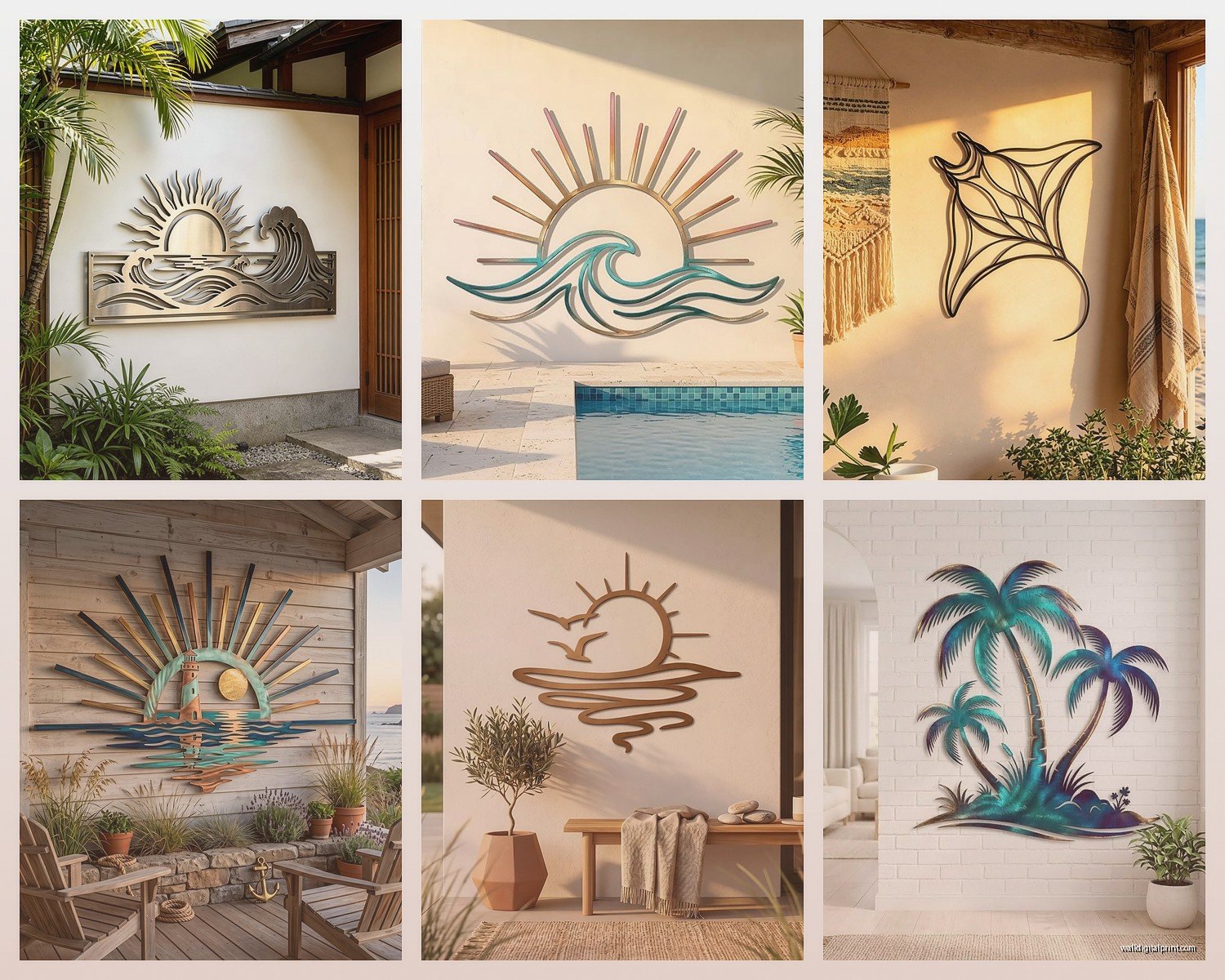
These are the flat ones, usually made from steel or aluminum, powder-coated or left to rust naturally. Sea turtles, dolphins, waves, that kind of thing. They’re like $40-$200 depending on size and detail level. The cheap ones from those home goods stores? They’re fine honestly. I put one in a rental property and three years later it still looks good.
What to look for: Make sure the edges are finished properly. Run your finger along them in the store because sharp edges are gonna be a problem if you have kids or just like…walk near your walls in the dark like I do.
3D Sculptural Pieces
Now these are where things get interesting. Layered metal that creates actual dimension—think fish schools where each fish is on a different plane, or waves that curve out from the wall. Price jumps to like $150-$600 easy. Worth it though if you’ve got the wall space and budget.
I installed this crazy jellyfish piece last month that had different layers of copper mesh and it was…okay wait I gotta mention this because the installation almost killed me. These 3D pieces are HEAVY. Like way heavier than they look. Make sure you’re hitting studs or using serious anchors. My first attempt I used regular picture hangers and heard it crash at 2am. My cat lost her mind.
Mixed Media Metal
This is where they combine metal with glass, driftwood, or capiz shells. Very beachy but in a sophisticated way? I’m obsessed with the ones that have sea glass embedded in metal frameworks. They catch sun and create these little light spots on your walls. But they’re fragile during shipping so inspect immediately when it arrives.
Finishes That Actually Matter
Nobody tells you this but the finish makes or breaks the whole thing.
Powder-coated: Most durable, comes in any color, won’t rust. Good for humid environments or actual outdoor use. Kinda boring sometimes though because it’s too perfect.
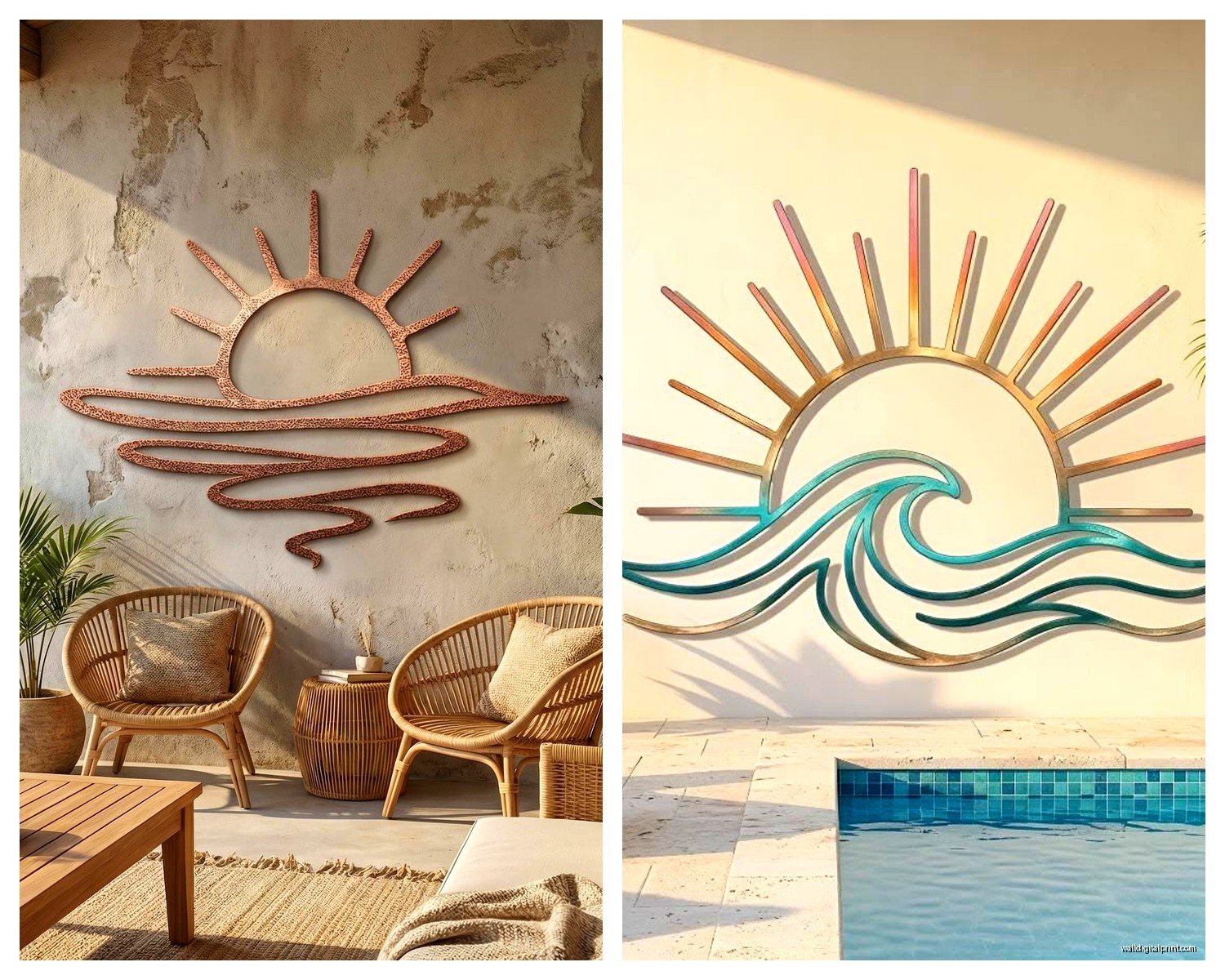
Natural patina/rust: This is the weathered look, usually on copper or steel. It keeps changing over time which is cool or annoying depending on your personality. I love it but my client Karen (actual name) hated that it “wasn’t done changing” so…know yourself.
Brushed or polished: Shiny metallic look, very modern. Shows fingerprints like crazy during installation but once it’s up you’re fine. Works better in contemporary spaces versus traditional beach cottages.
Painted metal: They paint it turquoise or coral or whatever. Looks good initially but can chip. I only recommend if you’re doing a really specific color scheme that you can’t achieve otherwise.
Sizing Without Screwing It Up
Okay so funny story, I ordered what I thought was a massive statement piece for above a client’s sofa and it arrived and was like…the size of a dinner plate. Always check actual dimensions, not just how it looks in the photo.
For reference:
– Small accent pieces (12-24 inches): Good for gallery walls or bathrooms
– Medium statements (24-40 inches): Entry ways, above furniture, bedroom focal points
– Large installations (40+ inches): Living room main walls, outdoor spaces, commercial
The rule I use is your art should take up about 2/3 to 3/4 the width of the furniture below it. Or if it’s on a blank wall, consider the whole wall section. I saw someone put a tiny 18-inch turtle on a massive 12-foot wall and it just looked…sad and floating.
Weight Distribution Thing Nobody Mentions
If you’re doing a school of fish or multiple pieces, map it out first. Use painter’s tape on the wall. I skip this step sometimes when I’m lazy and always regret it. The visual weight needs to balance—like if all your pieces are clustered on one side, the whole wall feels off even if you can’t articulate why.
Installation Real Talk
You’re gonna need:
– Stud finder (the $15 one is fine, don’t go crazy)
– Level (or just use your phone app honestly)
– Appropriate anchors—drywall anchors for lighter pieces under 10 lbs, toggle bolts or mounting to studs for anything heavier
– Drill
– Someone to hold it while you step back and say “left…no right…no back left” for 20 minutes
The metal pieces with multiple hanging points are superior to single-point hangers. More stability, less likely to go crooked over time. But they’re harder to install perfectly level so…trade-offs.
Oh and another thing—consider the wall texture. Smooth walls are easy. That knockdown texture or heavy orange peel? The piece might not sit flush against the wall and can look weird with 3D sculptures. Sometimes you need to add small spacers or just accept a tiny gap.
Where to Actually Buy These
I’ve tested a ridiculous number of sources at this point:
Etsy: Best for unique, handmade pieces. Found my favorite octopus here from a maker in Oregon. Ships carefully, can do custom sizes. Price is all over the place but expect $100-$400 for quality stuff.
Wayfair/Overstock: Huge selection, frequent sales, free shipping usually. Quality is hit or miss—read reviews obsessively. I filter by 4+ stars and actually read the photo reviews.
Local metal artists: Check craft fairs and art walks. Sometimes pricier but you can see it in person and support local people. Plus they’ll often customize.
Home goods stores (HomeGoods, TJ Maxx): Cheap options, very trendy styles. If you’re gonna change your decor in 2-3 years anyway, this works. Don’t expect heirloom quality.
West Elm/CB2/Anthropologie: Expensive but the design is usually more sophisticated. Wait for sales—they have them constantly.
Styles for Different Coastal Vibes
Because not all beach themes are the same and this matters more than people think.
Modern Coastal
Clean lines, abstract wave forms, monochromatic metals. Think brushed steel or matte black. Geometric fish shapes rather than realistic ones. I did a whole condo in Miami with just black metal coral silhouettes and it was *chef’s kiss*.
Traditional Beach House
Painted metals in sea blues and sandy neutrals, realistic sea life, vintage-style anchors or ship wheels. Distressed finishes. This is what most people think of but it can go kitschy fast. Balance it with simpler pieces.
Tropical Coastal
Bright colored fish, sea turtles, palm fronds in metal. More playful and colorful. Works in kids’ rooms or casual spaces. I’m personally not into it but clients with beach rentals love this stuff because it photographs well.
Nautical Industrial
Raw steel, natural rust, ship-inspired designs, mixed with rope or wood. Very popular right now. Looks good in spaces with exposed brick or concrete. Heavy metal submarine art, propeller designs, that vibe.
Mixing Metal Beach Art With Other Stuff
Don’t do all metal everything unless you want it to feel cold. I learned this the hard way—did a client’s whole gallery wall in metal pieces and she said it felt “like a fancy hardware store” which…ouch but also fair.
Mix in:
– Framed photography or prints
– Woven elements like macrame or rattan
– Wood pieces or shelving
– Mirrors to bounce light around
– Some textile elements nearby like pillows
The metal should be your statement but not your only statement, you know?
Outdoor vs Indoor Considerations
If you’re putting this outside (covered porch, lanai, whatever), you gotta be more careful. Even “outdoor rated” metal can deteriorate depending on your climate. Coastal areas with salt air? You want marine-grade materials or expect to replace every few years.
I’ve had good luck with aluminum and specially treated steel outdoors. Copper develops that green patina which some people love. Avoid anything with painted finishes unless it specifically says marine-grade powder coating.
Also secure them REALLY well outside. Wind catches these pieces like crazy. I watched a metal sailboat decoration basically become a weapon during a storm at my friend’s beach house. No injuries but her siding was not happy.
The Lighting Thing
Wait I forgot to mention—these pieces look completely different with proper lighting. If you can add a picture light above or some ambient uplighting, it transforms the whole thing. The shadows from 3D pieces especially create this whole secondary art situation on your wall.
I was watching that design show on Netflix last week (the one with the annoying host but good makeovers?) and they did this whole thing with backlit metal art and honestly it looked amazing but seems complicated to install so maybe skip unless you’re handy.
Maintenance Is Basically Nothing
This is gonna sound weird but that’s part of why I love metal beach art. You dust it occasionally. That’s it. No special cleaners, no conditioning, no repainting. If it’s a natural patina finish, it keeps aging and that’s the point.
If something gets a scratch on powder-coated pieces, there are touch-up paints but honestly I’ve never bothered unless it’s super noticeable.
Price Reality Check
You can do this on any budget, really. I’ve created gorgeous coastal walls for under $100 total using smaller pieces strategically placed. I’ve also specified single sculptures that cost $1,200. Both looked appropriate for their spaces.
Don’t feel like you need to spend a ton. Start with one medium-sized quality piece (around $150-$250) and build from there if you want. Test it out, see how you like living with it, then add more.
The expensive pieces do tend to have better craftsmanship—cleaner welds, more intricate details, better finishes. But for most people, mid-range stuff works perfectly fine.
Just avoid the super cheap stamped metal that’s basically thick aluminum foil. It dents if you look at it wrong and reads as obviously cheap. Spend at least $40-50 per piece minimum for something that looks intentional.
Anyway that’s basically everything I’ve figured out through way too many installations and probably more money spent than I should admit. The metal beach art trend isn’t going anywhere soon so at least it’s not gonna look dated next year like those word signs everyone had in 2015.