
Wall Art Guide, Wall Art Tutoriels
Nautical Metal Wall Art: Sculptural Sailing Ocean Designs
Aug
So I’ve been completely obsessed with nautical metal wall art lately and honestly it started because a client wanted to redo their beach house but didn’t want it to look like every other coastal place with the same old anchor prints from HomeGoods. Let me tell you what I’ve learned because I’ve tested SO much of this stuff.
Understanding What Actually Works Size-Wise
Okay first thing – size is gonna make or break this whole situation. I made the mistake of ordering this gorgeous metal sailboat sculpture that was like 18 inches and it looked absolutely ridiculous on my client’s 12-foot wall. Like a postage stamp situation. Here’s what actually works:
- For walls 8-10 feet wide: you want pieces that are AT LEAST 36-48 inches across
- Smaller walls or gallery arrangements: 18-24 inch pieces work but you need multiple
- Statement pieces over furniture: go 2/3 the width of whatever’s underneath
- Vertical spaces like narrow hallways: tall vertical designs 36+ inches work amazing
I learned this the hard way when I had to return three different pieces because they just didn’t have the presence needed. My cat knocked over my coffee while I was measuring one time and I just…anyway, always mock it up with painter’s tape first. Seriously. Take the dimensions and tape out the shape on your wall before you buy anything.
Material Quality Because Not All Metal Is Created Equal
This is where it gets technical but stay with me. You’ve got basically a few options and they all age differently:
Powder-coated steel is what I recommend for most people. It’s durable, won’t rust if it’s properly sealed, and holds detail really well. I have a piece in my own bathroom (yeah, bathroom) that’s been there two years with all the humidity and it still looks perfect. Look for pieces that specifically say “powder-coated” or “weather-resistant coating.”
Raw steel or iron develops that rustic patina which some people love. I’ve got a client who specifically wanted the rusted look for their industrial loft. But if you don’t want rust, avoid these unless they’re labeled for indoor use only and you’re not putting them anywhere humid.
Aluminum is lightweight and naturally rust-resistant but can look cheaper if it’s not finished well. Good for really large pieces though because hanging them is way easier.
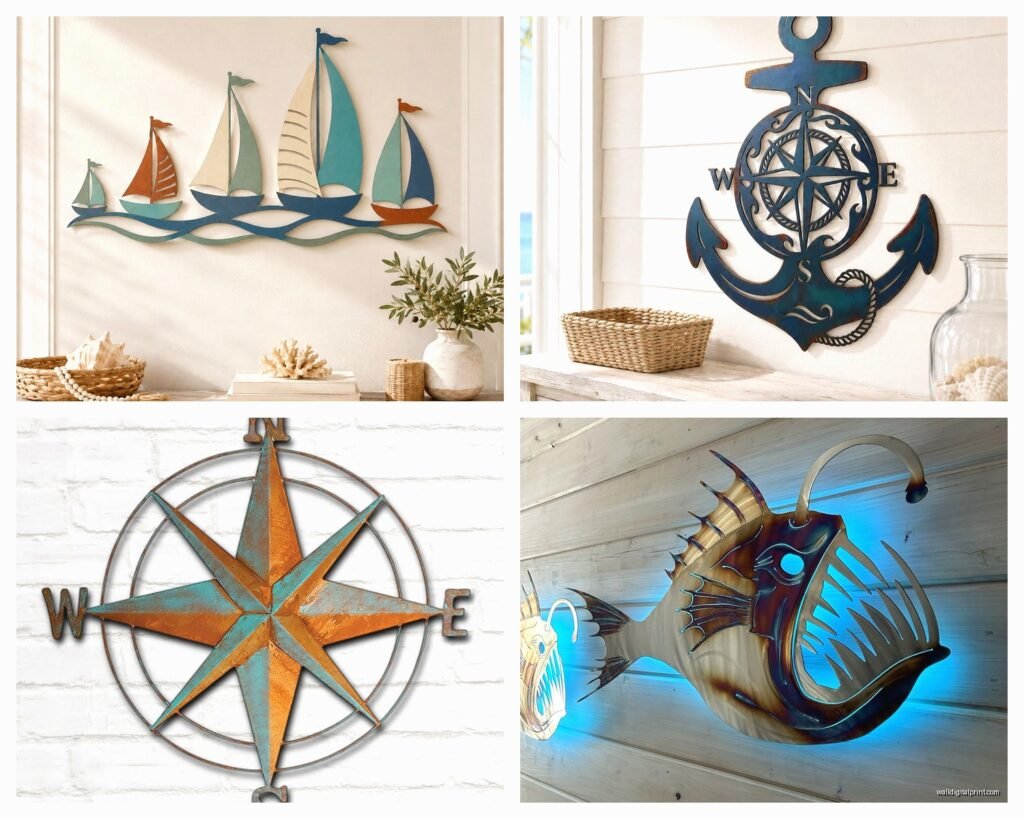
Copper or brass accents – oh and another thing, some mixed metal pieces use copper elements that develop this gorgeous verdigris patina over time. I have one with copper fish that’s turning the prettiest green-blue color.
Design Styles That Don’t Look Cheesy
Here’s where people usually go wrong. They buy something that’s too literal or too cutesy and it ends up looking like a beach gift shop exploded. What actually works:
Abstract wave designs are my go-to recommendation. Instead of a realistic wave, look for pieces that capture the movement of water through curved lines and flowing shapes. I found this one piece that’s basically just concentric curves in brushed steel and everyone who sees it asks where it’s from.
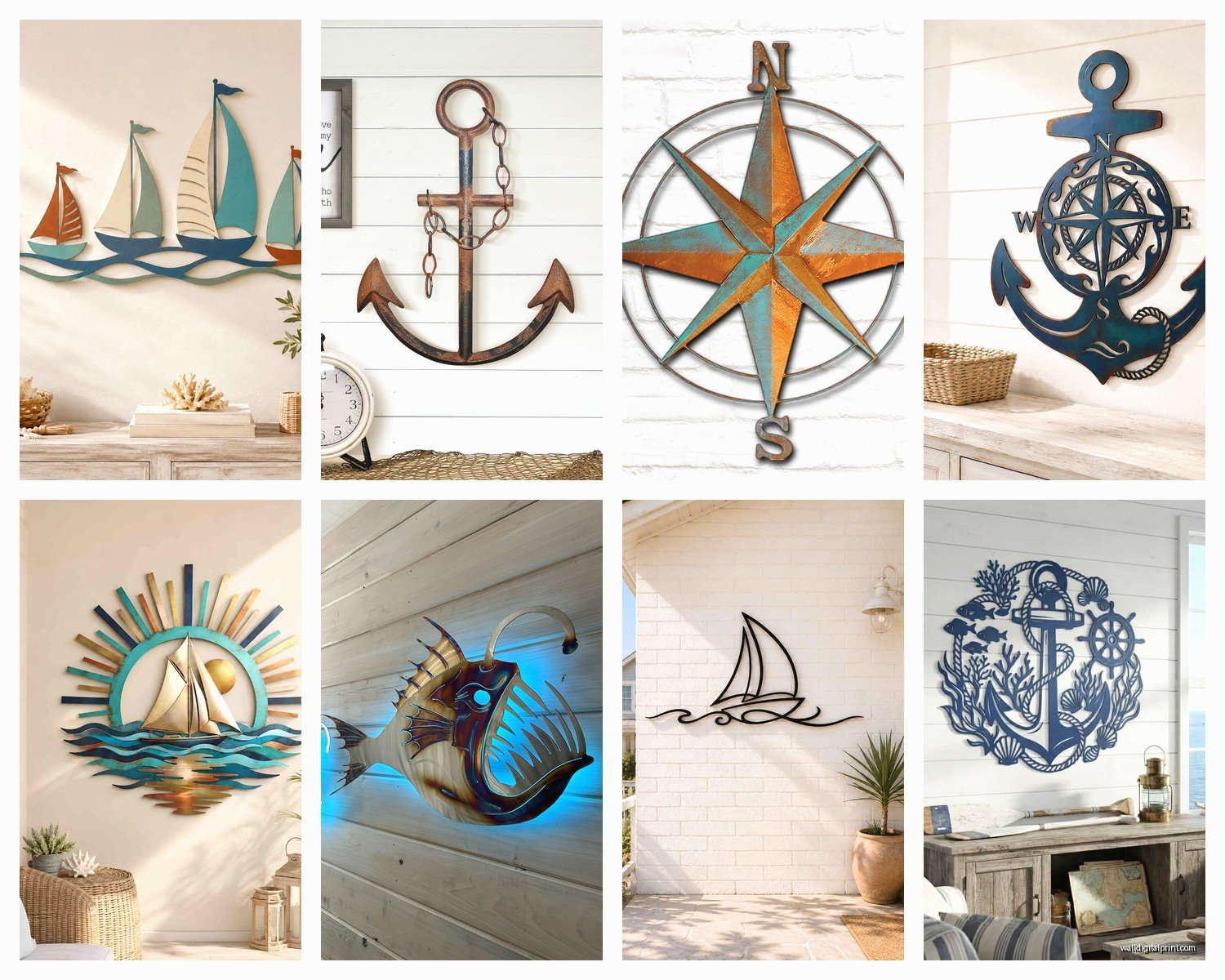
Minimalist sailboat silhouettes beat detailed ones every time. You want the suggestion of a sail, not every rope and rigging detail. Trust me on this.
School of fish in geometric patterns rather than realistic fish. There’s this one design I keep recommending that’s triangular fish shapes in an ombre from dark to light metal and it’s stunning without being kitschy.
Compass roses work if they’re oversized and simplified. Like 30+ inches with clean lines, not the super ornate ones with all the decorative flourishes.
Where To Actually Buy This Stuff
Okay so funny story, I used to only look at high-end galleries and was spending my clients’ money on pieces that honestly weren’t that much better than what you can find if you know where to look.
Etsy has been my secret weapon lately. Search for “modern nautical metal art” or “contemporary ocean sculpture” and filter by shops that have good reviews. I’ve found incredible artists who do custom sizing. This one shop called – wait I gotta find the name – anyway there are metalworkers who’ll customize dimensions for like $50 extra.
Wayfair surprisingly has some good options if you filter carefully. Sort by rating and read reviews with photos. People will straight up tell you if something looks cheap in person.
Local metal artists at art fairs or farmers markets. I know this sounds random but I’ve commissioned three pieces this way and they’re always conversation starters. Plus you can usually negotiate on price if you’re buying multiple pieces.
West Elm and CB2 during sales. Their regular prices are ridiculous but I’ve snagged pieces for 40% off that are legitimately well-made.
Avoid Amazon unless it’s a brand you recognize because the quality control is all over the place. I ordered what looked like a substantial piece and it arrived so flimsy it bent when I picked it up.
Installation Tips Nobody Tells You
This is gonna sound weird but the biggest mistake people make is using the wrong hardware. Metal art is HEAVY. Like way heavier than you think.
For anything over 15 pounds you need to hit studs or use proper drywall anchors. I use those heavy-duty toggle anchors rated for like 50 pounds and I’ve never had an issue. Regular plastic anchors will fail and you’ll have a sculpture-shaped hole in your wall.
Get a studfinder that actually works. I went through three cheap ones before investing in a Zircon that cost $40 and it’s been worth every penny. My contractor friend recommended it while we were watching The Great British Baking Show and honestly best random advice ever.
Leveling Without Losing Your Mind
Most metal art has uneven weight distribution so hanging it level is tricky. Here’s my process:
- Mark where you think the center should be with light pencil
- Hold the piece up and have someone stand back to check if it looks centered (your eye is better than measurements sometimes)
- Use a laser level if you have one, regular level if you don’t
- Install one hook, hang the piece, then adjust before installing the second hook if it has two hanging points
For really heavy pieces, I use two hooks even if the art only has one hanging point. Better safe than sorry.
Styling Around Nautical Metal Art
The art shouldn’t exist in isolation. I learned this when I hung a gorgeous wave sculpture and the room still felt off because nothing else connected to it.
Pull one metal finish from the artwork into the room somehow. If your sculpture has copper accents, add copper candle holders or a copper bowl. If it’s all silver-toned, bring in chrome or brushed nickel accessories.
Don’t go overboard (pun intended I guess) with the nautical theme everywhere else. The metal art should be THE statement, then keep everything else more neutral. I see people who have anchors AND ships AND ropes AND shells and it’s too much. Pick your lane.
Lighting matters more than you think. I installed uplighting under a large metal octopus sculpture and the shadows it casts are incredible. Even just positioning it where natural light hits it during golden hour makes a huge difference.
Mixing Metals and Finishes
Wait I forgot to mention – you can totally mix different metal finishes but there’s a trick to it. Use the 70-20-10 rule: 70% one dominant metal (like matte black), 20% a secondary metal (maybe brushed steel), and 10% an accent metal (copper or gold). This keeps it from looking chaotic.
I have three different pieces in my dining room that are all different metals but they work together because they’re all in that ratio. One large matte black wave, a medium brushed aluminum fish school, and a small copper accent piece.
Maintenance Because Yes You Need To Clean These
Nobody thinks about this until their beautiful sculpture is covered in dust and salt air residue. Every few months:
- Dust with a microfiber cloth – don’t use anything wet on raw metal
- For powder-coated pieces, you can use a slightly damp cloth with mild soap
- Dry thoroughly to prevent water spots
- If you have outdoor-rated pieces inside, they still need occasional cleaning
- Check mounting hardware annually because vibrations from doors closing can loosen screws
I have a piece near my front door that needed hardware tightening after six months because the door slam vibrations had worked the screws loose. Easy fix but could’ve been a disaster.
Custom vs Ready-Made
So here’s the thing – custom sounds expensive but sometimes it’s actually the better value. I had a weird angled wall in a client’s stairwell and ready-made pieces just didn’t work proportionally. Found a metalworker on Etsy who created a custom wave design for $380 including shipping and it fits perfectly.
Ready-made is fine for standard spaces and you get it faster. But if you have specific size requirements or want something unique, custom isn’t as out of reach as you’d think. Most artists I’ve worked with want 50% upfront and 50% on completion, and turnaround is usually 3-6 weeks.
Questions To Ask Before Commissioning Custom
- What’s included in the price – does shipping cost extra?
- Do they provide a digital mockup first?
- What’s their revision policy?
- Is it rated for outdoor use if you need that?
- What hanging hardware comes with it?
- Do they offer any kind of warranty?
Color Considerations Beyond Just Metal
Not all nautical metal art is silver or black. I’ve been seeing gorgeous pieces with:
Ombre effects from dark blue to silver that mimic water depth. Patina finishes in turquoise and green that look naturally aged. Coral or rust orange accents mixed with steel gray. Even some pieces with subtle gold leaf details.
Think about your existing color scheme. If you have a lot of warm woods and beiges, pieces with copper or warm metallic tones integrate better. Cool gray walls and modern furniture pair perfectly with brushed steel and matte black pieces.
Scale In Groupings
Oh and another thing about groupings – if you’re doing a gallery wall situation with multiple nautical pieces, vary the sizes but keep them in odd numbers. Three pieces or five pieces looks more balanced than two or four.
I did a five-piece installation last month with different sized fish swimming in the same direction across a wall and the visual movement is incredible. Started with a 6-inch piece, then 10-inch, then 18-inch as the focal point, then back down to 12-inch and 8-inch. Creates this flow that draws your eye across the space.
Space them 2-4 inches apart for a cohesive look. Too far apart and they read as separate elements instead of a collection.
Unexpected Places That Work
Don’t just think living room walls. I’ve installed nautical metal art in:
Bathrooms – especially pieces rated for humidity. A small jellyfish sculpture in a powder room is *chef’s kiss*
Outdoor covered patios – get weatherproof pieces obviously but the texture against outdoor materials is gorgeous
Bedroom accent walls – calming wave designs work beautifully behind beds
Home offices – that compass rose I mentioned earlier? Perfect for an office because it’s sophisticated without being too beachy
Kitchen backsplash areas – small pieces can work if your kitchen has a coastal vibe, though check heat tolerance if near stove
My own laundry room has a little metal seahorse because why should boring rooms stay boring? Makes me slightly less annoyed about folding clothes.
Budget Breakdown
Since you’re probably wondering what this actually costs:
Small accent pieces (12-18 inches): $40-$120
Medium statement pieces (24-36 inches): $150-$400
Large focal pieces (36+ inches): $300-$800+
Custom commissioned work: $250-$1000+ depending on complexity
The sweet spot I’ve found is around $200-$300 for a quality medium-sized piece that’ll last years. You can find cheaper but the quality difference is noticeable. That thin gauge metal that dents if you look at it wrong versus substantial pieces that feel permanent.
What To Avoid
Pieces that are trying to do too much – like a sailboat with a lighthouse and an anchor and a whale all in one sculpture. Pick one subject and do it well.
Anything described as “rustic shabby chic nautical” because that’s usually code for cheaply distressed metal that looks dated immediately.
Super shiny chrome finishes unless your whole aesthetic is ultra-modern. They show fingerprints and dust like crazy.
Pieces with sharp edges or points if you have kids. I learned this when a client’s toddler ran past a metal starfish with pointy arms and…yeah just avoid that stress.
Wall art that requires you to buy separate mounting hardware that costs almost as much as the piece itself. Good sellers include appropriate hardware.
Look, I’m still figuring some of this out myself. I just ordered a piece for above my bed that seemed perfect online and I’m slightly nervous it might be too large but we’ll see. That’s kinda the nature of decorating – sometimes you gotta just commit and adjust if needed. But following these guidelines has saved me from way more mistakes than I’ve made, so hopefully this helps you figure out what’ll work for your space.
