Wall Art Guide, Wall Art Tutoriels
Peacock Wall Art: Elegant Bird Decor & Feather Designs
Jun
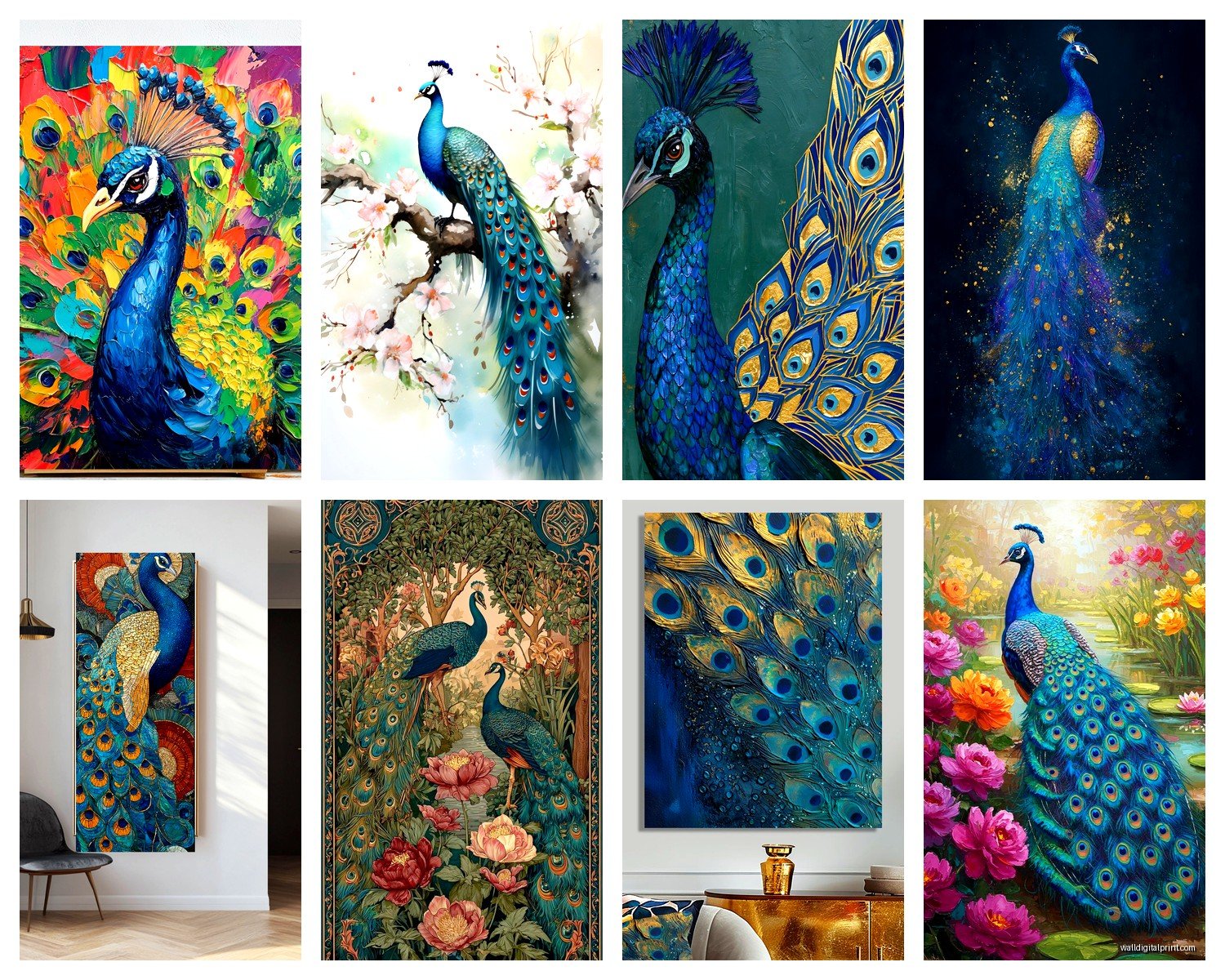
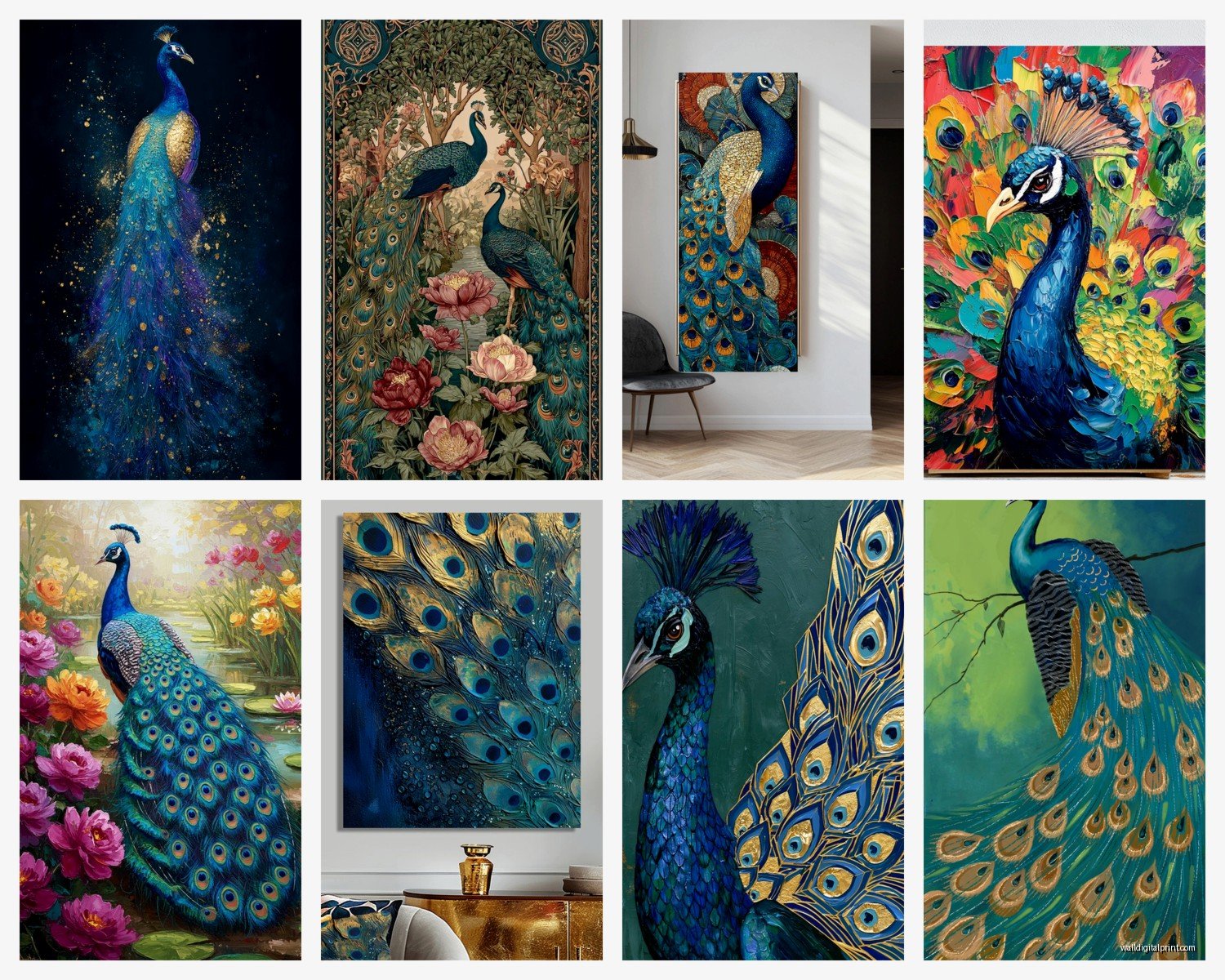
So I’ve been obsessing over peacock wall art lately and honestly it’s one of those things that can either look incredibly elegant or like your great aunt’s living room from 1987, there’s really no in between. I just helped a client pick pieces for her dining room last month and we spent like three hours going through options because she kept changing her mind about whether she wanted actual peacock imagery or just the feather motifs.
The Real Difference Between Peacock Types
Okay so first thing – you gotta decide if you want the full bird or just feathers because they create completely different vibes. The full peacock pieces, especially those big dramatic ones with the tail spread out, they’re statement pieces. Like, that’s the focal point of your room and everything else needs to work around it. I have this massive peacock canvas in my office that’s probably 40×60 inches and it literally dictates what throw pillows I can use.
Feather art is way more versatile though. You can layer it, mix it with other stuff, and it doesn’t scream “LOOK AT ME” quite as loud. I’ve used peacock feather prints in like five different rooms and they always work differently depending on what you pair them with.
Where They Actually Work Best
Living rooms are the obvious choice but honestly I think peacock art shines in unexpected places. My favorite installation was in a powder room – we did this gorgeous teal and gold peacock feather wallpaper on one accent wall and then hung a smaller framed piece opposite the mirror. The client was worried it would be too much but it’s literally the room everyone comments on.
Bedrooms can be tricky because peacocks are kinda… active energy? If that makes sense? I wouldn’t put a huge dramatic peacock over your bed unless you’re really into bold choices. But a subtle feather print on the wall opposite your bed works beautifully. Or above a dresser.
Dining rooms are actually perfect for peacock art because there’s something about the regality of it that fits with entertaining spaces. Just mounted a set of three peacock feather prints in my friend’s dining nook and the way they catch the light during dinner is *chef’s kiss*.
Materials and Finishes That Don’t Look Cheap
This is where people mess up the most. You cannot – and I mean cannot – go with those super glossy, obviously printed-at-Kinko’s looking pieces. They will cheapen your entire room.
Canvas prints work great if they’re good quality. Look for gallery-wrapped edges that are at least 1.5 inches thick. The thin ones look sad hanging on the wall. I usually go with canvas for larger pieces because framing something huge gets expensive fast.
Metal prints are having a moment and honestly for peacock art they’re stunning. The way the metallics play off actual metal… it just works. There’s this copper metal print I’ve been eyeing that has peacock feathers in blues and greens and the whole thing has this shimmer to it. Haven’t pulled the trigger yet because my cat keeps knocking things off walls and I don’t trust her around anything expensive.
Framed prints under glass are classic for a reason. If you’re going traditional or formal with your space, this is the move. I like black frames for modern spaces, gold or bronze for traditional, and white or natural wood for coastal or bohemian vibes.
The Embellished Pieces
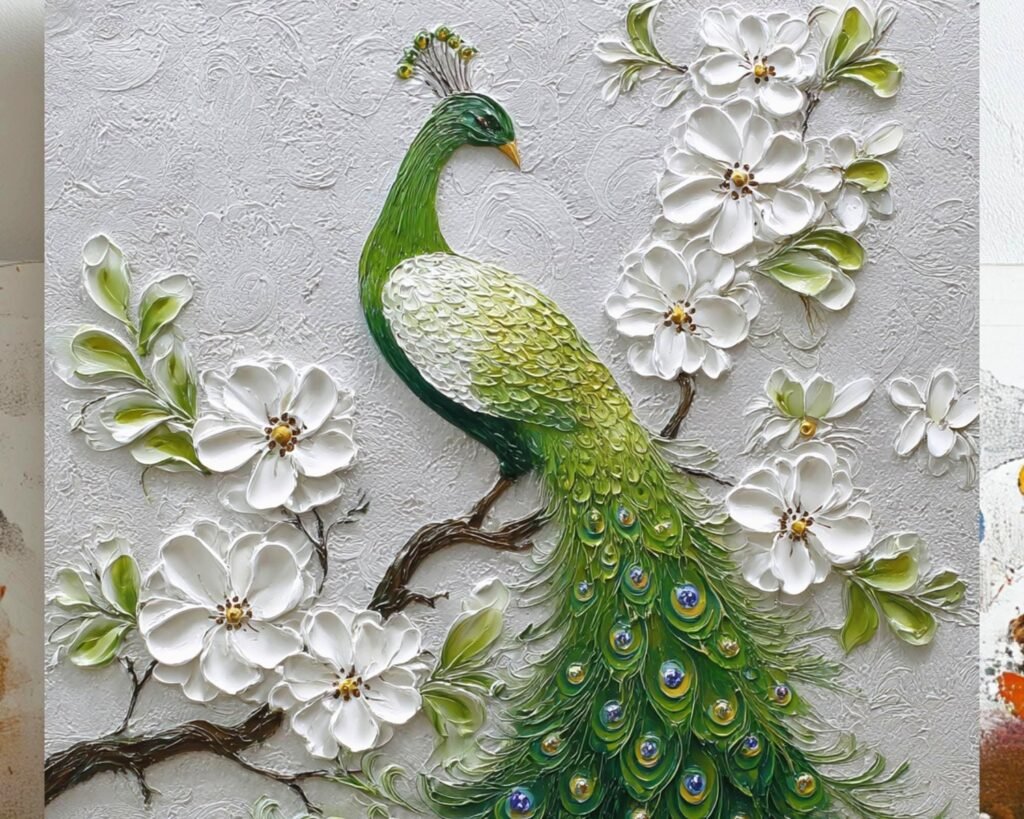
Okay so funny story – I was totally against the peacock art with actual feathers or gemstones glued on until I saw one done well. Most of them look craft-fair-gone-wrong but there’s this artist on Etsy who does these shadowbox pieces with real peacock feathers and gold leaf and they’re genuinely gorgeous. The dimensionality adds something flat prints can’t match.
Just… be careful with these. They collect dust like crazy and you gotta be okay with the maintenance. Also if you have cats (see previous comment about my destructive angel) maybe skip anything with actual feathers because it becomes a toy real fast.
Color Schemes That Won’t Fight Your Existing Decor
The traditional peacock colors are teal, navy, emerald green, and those iridescent purples with gold accents. Beautiful but they’re strong colors that you need to plan around.
If your room is mostly neutrals – grays, beiges, whites – peacock art becomes your color injection and you want to pull at least one of those colors into your accessories. Like throw pillows, a vase, even books on your coffee table. Otherwise the art just floats there looking disconnected.
For rooms that already have color, you gotta make sure there’s harmony. I had a client with a coral and navy living room who wanted peacock art and we had to really hunt for pieces that had enough navy to tie in but wouldn’t clash with the coral. Ended up finding this abstract peacock feather piece that pulled in some warmer tones.
The monochrome peacock pieces are genius if you’re struggling with color coordination. All black and white or sepia-toned peacock art gives you the elegance without the color commitment. I used a black and white peacock photograph in a minimalist bedroom and it was perfect – all the drama, none of the rainbow.
Metallics Are Your Friend
Gold peacock art works in warm-toned rooms. Silver/platinum works in cool-toned rooms. This sounds obvious but you’d be surprised how many people forget this and then wonder why their art looks off.
There’s also this whole category of peacock art that’s mostly gold leaf or metallic paint with just hints of color and those pieces are incredibly versatile. They read as glamorous without being too literal about the peacock thing.
Size and Placement Without the Guesswork
Gonna share the formula I use because I got tired of hanging things and then moving them: For art above a sofa or bed, aim for 2/3 to 3/4 the width of your furniture. So if your sofa is 84 inches, you want art that’s roughly 56-63 inches wide. This can be one large piece or a gallery wall situation.
Height-wise, the center of your art should be at eye level, which is generally 57-60 inches from the floor. But in dining rooms I go slightly higher because people are usually seated.
For peacock art specifically, because it’s often vertical (the bird’s tail and all), you can go taller than you might with landscape-oriented art. I have a vertical peacock piece that’s like 48 inches tall and only 24 inches wide and it works perfectly in a narrow wall space between two windows.
Gallery Walls with Peacock Themes
This is where you can get really creative. I did a gallery wall last year that mixed peacock feather photographs with botanical prints and some abstract gold pieces – the peacock elements tied it together thematically but it wasn’t overwhelming.
The trick is to limit how many actual peacock images you use. Like in a 9-piece gallery wall, maybe only 3-4 pieces are explicitly peacock-related. The rest should complement in color and style but give your eye somewhere to rest.
Oh and another thing – mix your frame styles within the same color family. All matching frames can look too matchy-matchy, but if you do all gold frames in different styles (some ornate, some simple) it looks curated instead of bought-as-a-set.
Styles That Work With Different Aesthetics
Art Deco is probably the most natural fit for peacock motifs. The 1920s was all about peacock everything. Look for geometric interpretations, lots of gold, that vintage poster style. These work beautifully in spaces with other Art Deco elements like mirrors, velvet furniture, geometric patterns.
Bohemian spaces can totally handle peacock art but go for the more organic, watercolor-style pieces. Or those ones that look hand-drawn. The super formal, realistic peacock portraits might feel too stiff.
Modern spaces need abstract or minimalist interpretations. I’m talking line drawings, watercolor washes that just suggest peacock feathers rather than rendering every detail, or those geometric peacock designs that are more about shape than realism.
Traditional and glam spaces – this is where you can go FULL peacock. The realistic oil painting style, ornate frames, rich colors, bring it all. These spaces can handle the drama.
What Doesn’t Really Work
I’m gonna be honest, peacock art in ultra-modern minimalist spaces is tough. Like if your whole aesthetic is Scandinavian hygge with all white and natural wood, a peacock is probably not your move. You could maybe do a very subtle single feather line drawing but even then it might feel out of place.
Farmhouse style and peacocks don’t really jive either unless you’re going for that maximalist modern farmhouse thing, which is kind of its own category now I guess.
The Practical Stuff Nobody Talks About
Lighting makes or breaks peacock art. Those iridescent colors need light to really pop. I always try to position peacock pieces where they’ll get either natural light or have a picture light or nearby lamp. In my client’s dining room we actually added a small spotlight in the ceiling aimed at the peacock canvas and it completely transformed it.
Cleaning depends on the type. Canvas you can dust with a microfiber cloth. Glass-covered prints are easy – just regular glass cleaner. The embellished ones with actual feathers… honestly I use a soft brush attachment on my vacuum on the lowest setting and just barely touch them. Works better than you’d think.
If you’re buying online which let’s be real is where most of us shop now, pay attention to the resolution of the image. Peacock feathers have so much detail that low-quality printing makes them look muddy. Look for pieces that specifically mention high-resolution printing or giclée prints.
Budget Breakdown From Someone Who’s Tried Everything
Under $50: You can find decent smaller prints on Etsy or Society6. The quality won’t blow your mind but for a guest room or hallway it’s fine. Just frame them nicely – a cheap print in a good frame looks way better than an expensive print in a cheap frame.
$50-150: This is the sweet spot for medium-sized canvas prints or framed pieces. Wayfair, West Elm during sales, smaller art galleries. I’ve gotten some of my favorite peacock pieces in this range.
$150-500: Original art from emerging artists, large high-quality canvases, metal prints, custom framing for vintage pieces. This is where you start getting stuff that looks truly unique.
Over $500: Original paintings, large commissioned pieces, antique peacock art. I have a client who spent like $800 on a vintage peacock painting from the 1960s and it’s genuinely a family heirloom quality piece.
Wait I forgot to mention – thrift stores and estate sales sometimes have amazing peacock art. I found this incredible peacock needlepoint that someone’s grandmother clearly spent months making and it was $15. Got it professionally framed for another $120 and now it’s worth way more than I paid.
Mixing Peacock Art With Other Decor
Velvet is peacock art’s best friend. Teal velvet pillows, emerald green velvet curtains, even a navy velvet chair – these textures echo the richness of peacock feathers.
Brass and gold accessories tie in perfectly. Candlesticks, mirrors, picture frames, even drawer pulls. The warm metallic complements those gold accents in peacock coloring.
Don’t go too literal with additional peacock stuff. Like if you have peacock wall art, you probably don’t need peacock throw pillows AND a peacock lamp AND peacock curtains. Pick one or two elements max or it becomes a theme park.
Plants actually look amazing with peacock art. The organic shapes and greens play off each other. I have a big fiddle leaf fig next to my peacock canvas and they just work together.
Okay so this is gonna sound weird but I’ve started pairing peacock art with blush pink accents and it’s unexpectedly gorgeous. The pink softens all that rich teal and gold, makes it feel less formal and more liveable.
The thing about peacock wall art is that it’s a commitment piece – you’re making a statement whether you want to or not. But if you pick the right style for your space and don’t go overboard with the theme, it adds this layer of elegance that’s really hard to achieve with other decor. Just remember that less is usually more, invest in quality over quantity, and make sure your lighting shows it off properly. My client with the powder room peacock wallpaper texts me photos of it like once a month because she’s still obsessed with how it turned out, so when you get it right, you really get it right.