Wall Art Guide, Wall Art Tutoriels
Shiva Wall Art: Hindu God Artwork & Temple Decor
Jun
So I’ve been working with Shiva wall art for like three years now, ever since this client wanted to convert their meditation room and I went down this whole rabbit hole of Hindu deity artwork. Let me tell you what actually works because I’ve made basically every mistake you can make with this stuff.
First Things First – Know What You’re Actually Getting
The market is flooded with Shiva art and honestly like 60% of it looks cheap the second you get it out of the box. I learned this the hard way when I ordered what looked like this gorgeous blue-throated Shiva print online and it arrived looking like someone printed it at Kinko’s on their lunch break.
Here’s what you’re gonna see out there:
Canvas prints are everywhere and they’re hit or miss. The stretched canvas ones that come ready to hang? Super convenient but check the thickness. Anything under 0.75 inches looks flimsy on the wall. I only go with 1.5 inch depth now because it has actual presence.
Metal prints have this really cool modern look that works if you’re going for that contemporary temple vibe. They’re durable as hell too. My friend has one in her yoga studio and it still looks perfect after two years of humidity and incense smoke.
Traditional paintings on cloth or canvas – these are the real deal but you gotta be careful about authenticity. I found this amazing artist on Etsy who actually lives in Rajasthan and does traditional Tanjore style work, but I’ve also seen people trying to pass off printed reproductions as hand-painted.
Placement Is Like Half The Battle
Okay so funny story, I once hung a dancing Nataraja piece above a client’s couch and she called me three days later saying she couldn’t relax because the cosmic dance of destruction was literally over her head while she watched Netflix. We moved it.
Traditional guidelines say you should place Shiva imagery in the northeast corner of your home or in your meditation space, but honestly I’ve seen it work in lots of different spots. What matters more is the energy of the space you’re creating.
Meditation rooms or prayer spaces – this is the obvious one but elevation matters here. The artwork should be at eye level when you’re seated, not standing. I usually go about 40-45 inches from the floor to the center of the piece.
Living rooms can totally work but think about the specific form of Shiva you’re using. The peaceful meditating Shiva works better than the fierce Bhairava form if people are gonna be chilling and watching TV there.
Yoga studios or practice spaces – I’ve done like seven of these now and Nataraja (dancing Shiva) is always the move. There’s something about the dance pose that just fits with the movement energy.
One thing though – traditional practice says don’t put deity images in bedrooms or bathrooms. Some clients care about this, some don’t, but I always mention it.
Size Matters More Than You Think
I spent an hour last Tuesday comparing sizes for this huge wall in a yoga studio and here’s what I figured out. A piece that’s too small just looks lost, but too big can feel overwhelming in an intimate meditation space.
For a standard meditation room (like 10×10 feet), I usually go with something in the 24×36 inch range. It’s substantial without dominating.
Larger living spaces can handle 40×60 inches or even bigger. I did a triptych once that was probably 6 feet across total and it was stunning – three panels showing different aspects of Shiva.
If you’re creating a gallery wall situation with multiple pieces, keep the largest one as your anchor and build around it with smaller complementary images. I like mixing Shiva with other elements – maybe some Om symbols, lotus flowers, or geometric yantras.
The Color Situation
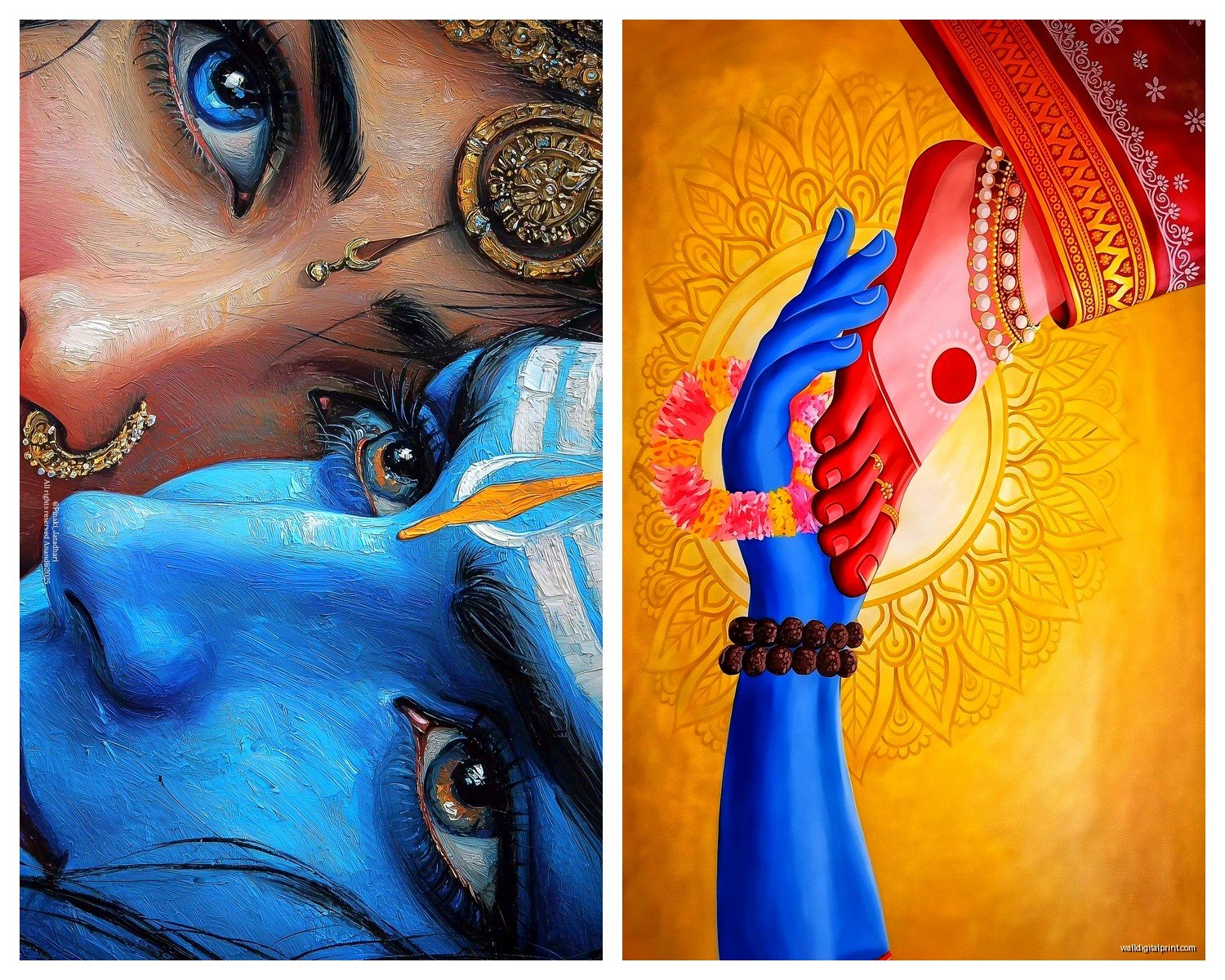
Traditional Shiva imagery has specific color symbolism and this is where it gets interesting. The blue throat (from the poison he drank to save the world) is iconic, but you’ll also see him in lots of different color schemes.
Blue and white – classic, calming, works in basically any space. This is my go-to recommendation if someone’s unsure.
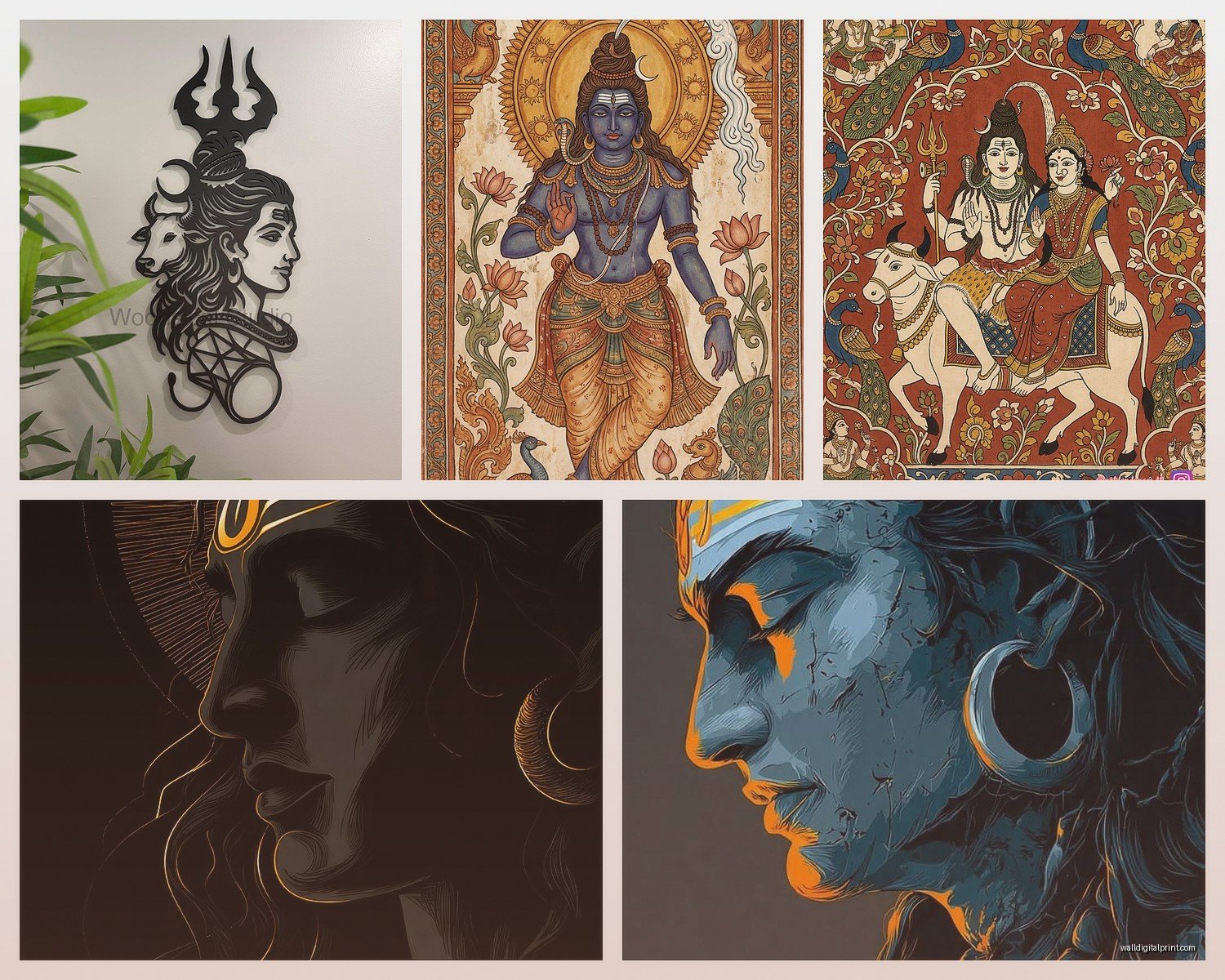
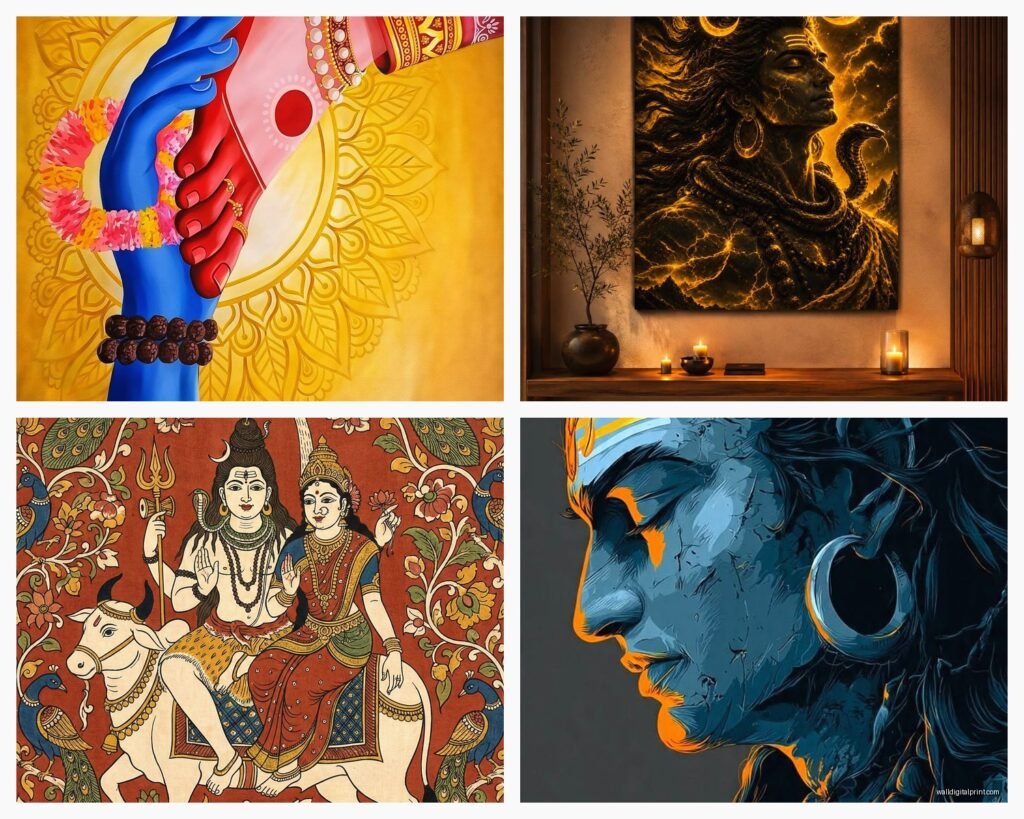
Gold and red – more traditional Indian aesthetic, really rich looking but you need the right space for it. These pop against deep colored walls like navy or charcoal.
Black and white or monochrome – super modern interpretation. I love these for contemporary spaces where you want the spiritual element without the traditional Indian decor vibe.
Metallic finishes – gold leaf, copper, silver. These catch light beautifully but they’re gonna cost you more. Worth it if you’re creating a focal point.
My cat knocked over my coffee while I was mounting a copper-finish Shiva piece last month and I almost cried, but it was fine. Anyway.
What To Look For Quality-Wise
This is where I’ve wasted so much money learning what NOT to buy.
Check the printing method. Giclée prints on canvas are gonna look way better than basic inkjet. The colors stay true and they don’t fade as fast. UV-resistant inks are worth paying extra for especially if there’s any natural light in the room.
For framed pieces, the matting and frame quality matters more than you’d think. I’ve seen gorgeous prints totally ruined by cheap frames that warp after a few months. Solid wood or metal frames, always.
If you’re going the traditional painting route, ask about the materials. Real gold leaf versus gold paint makes a huge difference in Tanjore style art. Same with the stones and gems – are they actual semi-precious stones or glass beads? Both can look good but you should know what you’re paying for.
The Iconography You Should Understand
You don’t need to be an expert but knowing the basic forms helps you pick the right piece for your space.
Meditating Shiva – sitting in lotus position, usually on Mount Kailash with the Ganges flowing from his hair. Super peaceful energy. Perfect for meditation spaces.
Nataraja – the cosmic dancer in a ring of fire. Dynamic, transformative energy. One leg raised, multiple arms, usually crushing a demon of ignorance underfoot. I love these for active spaces.
Ardhanarishvara – half Shiva, half Parvati (his consort). Represents the union of masculine and feminine energies. Really beautiful symbolism for couples or anyone working with balance.
Shiva with the crescent moon and trident – probably the most common iconic image. The trident (trishul) represents past, present, future or creation, preservation, destruction depending on who you ask.
The third eye is almost always visible – that’s his eye of wisdom and destruction. The snake around his neck is Vasuki. The Ganges in his hair. Each element means something but honestly you don’t need to explain it all to everyone who walks in your house.
Creating A Whole Temple Vibe
If you’re going beyond just one piece and creating an actual prayer or meditation corner, here’s what works together.
Start with your main Shiva artwork as the focal point. Then you can add:
A small shelf or table below for offerings – flowers, incense, a diya lamp. Even if you’re not Hindu and not doing actual puja, the aesthetic works.
Complementary smaller pieces – I like adding Ganesha somewhere nearby since he’s Shiva’s son, or a small Nandi (the bull) statue.
Lighting is huge. I usually install a small picture light above the main artwork or use LED strip lighting behind the piece for a glow effect. Warm white, not cool white – it feels more sacred.
Textiles matter too. A silk or cotton runner on the shelf in coordinating colors ties everything together. I found these amazing indigo-dyed cloths at a fair trade shop that work perfectly with blue-toned Shiva art.
The Modern Minimalist Approach
Wait I forgot to mention – you can totally do Shiva art in a minimalist space and it doesn’t have to look like a temple.
I’ve done this several times with black and white line drawings or simplified geometric interpretations of Shiva symbolism. There are artists doing really cool contemporary takes – like abstract representations of the cosmic dance or minimalist trident symbols.
One client wanted Shiva energy but her aesthetic is very Scandinavian minimal. We went with a simple black brushstroke Om on white canvas and a tiny bronze Nataraja statue on a floating shelf. Super subtle but the intention is there.
Budget Reality Check
You can find decent Shiva prints starting around $30-50 for basic canvas prints from places like Amazon or Wayfair. They’re fine for starting out but don’t expect heirloom quality.
Mid-range is like $100-300 and this is where you get better printing, proper framing, nicer materials. This is my sweet spot for most clients.
High-end traditional paintings or commissioned work can run $500-5000+ depending on size and artist. I have one client who collected a Tanjore Nataraja that was around $3000 and it’s genuinely a work of art that’ll last generations.
For metal prints or custom sizes, expect to pay more but they’re durable. That investment upfront means you’re not replacing it in two years when it fades or warps.
Where To Actually Buy This Stuff
Etsy has been my most reliable source honestly. You can find actual Indian artists selling traditional work plus contemporary artists doing modern interpretations. Read the reviews and check if they show photos of the actual product not just mockups.
Amazon and Wayfair have tons of options but quality is super inconsistent. I only buy from sellers with lots of detailed reviews and clear return policies.
Specialty Indian decor stores (online or physical if you’re lucky enough to have one nearby) usually have better quality traditional pieces. The prices are higher but you’re getting authentic stuff.
Local Indian grocery stores sometimes have a small section of religious items including wall art. The selection is limited but the prices are usually reasonable.
Art fairs and cultural festivals – I’ve found some of my favorite pieces at Diwali festivals and Indian cultural events where artists are selling directly.
Maintenance and Care
Canvas prints – dust them gently with a soft dry cloth. Don’t use water or cleaning products. Keep them out of direct harsh sunlight to prevent fading.
Metal prints are way easier, you can actually wipe them down with a damp cloth if needed.
Traditional paintings on silk or cloth are delicate. Professional cleaning only if they need it.
If you’re burning incense near your Shiva art (which like, of course you probably are), make sure there’s enough ventilation. The smoke residue builds up over time and can dull the colors. I learned this when a client’s beautiful piece got this weird film on it after six months of daily incense.
Common Mistakes I See People Make
Hanging it too high – seriously this is the most common thing. People hang art at standing eye level but for a meditation space you need it lower.
Mixing too many different styles in one small space. Like traditional Tanjore plus modern geometric plus photorealistic all together just looks chaotic.
Buying without checking dimensions. That 16×20 inch piece looks way bigger on a computer screen than it does on your actual wall trust me.
Not considering the wall color. A vibrant multi-colored Shiva piece can get lost on a busy wallpaper. Sometimes you need to paint the wall a solid color first.
Forgetting about lighting. Even the most beautiful piece looks flat without proper lighting.
Oh and another thing – if you’re buying for someone else as a gift, maybe check if they actually want religious imagery in their home? I know that sounds obvious but I’ve seen some awkward situations where someone assumed their yoga-loving friend would want a giant Shiva and they were like “uh I just do yoga for exercise.”
The whole thing is really about creating a space that feels meaningful to you. Whether that’s a full traditional temple corner or just one simple piece that reminds you to breathe, there’s no wrong way to do it as long as it’s respectful and intentional.
I’m gonna stop here because I could literally talk about this forever and you probably have enough info to make a decision now.