Wall Art Guide, Wall Art Tutoriels
Skateboard Wall Art: Deck Display & Skate Culture Decor
Jun
So I’ve been helping this friend set up his new apartment and he’s super into skate culture, and honestly the whole skateboard wall art thing has become way more sophisticated than just nailing a deck to your wall. Let me walk you through what actually works because I’ve done this in like three different spaces now.
The Basic Deck Display Options
Okay so first thing, you gotta decide if you’re hanging actual skateboards or going with prints and other art. Real decks are gonna be your statement piece obviously. I started with those clear acrylic wall mounts from Amazon, the ones that are like $15 for a set of two? They’re honestly fine for lightweight decks but here’s the thing, if you’ve got vintage boards or anything with real weight, they can look a bit flimsy.
The wooden peg mounts are where it’s at though. I found these handmade ones on Etsy that have like a minimalist dowel design, and they make the deck look like it’s floating off the wall. Way cleaner than those bulky plastic holders. You mount them about 6 feet up usually, depends on your ceiling height but you want people to appreciate the deck graphics without craning their necks.
Horizontal vs Vertical Mounting
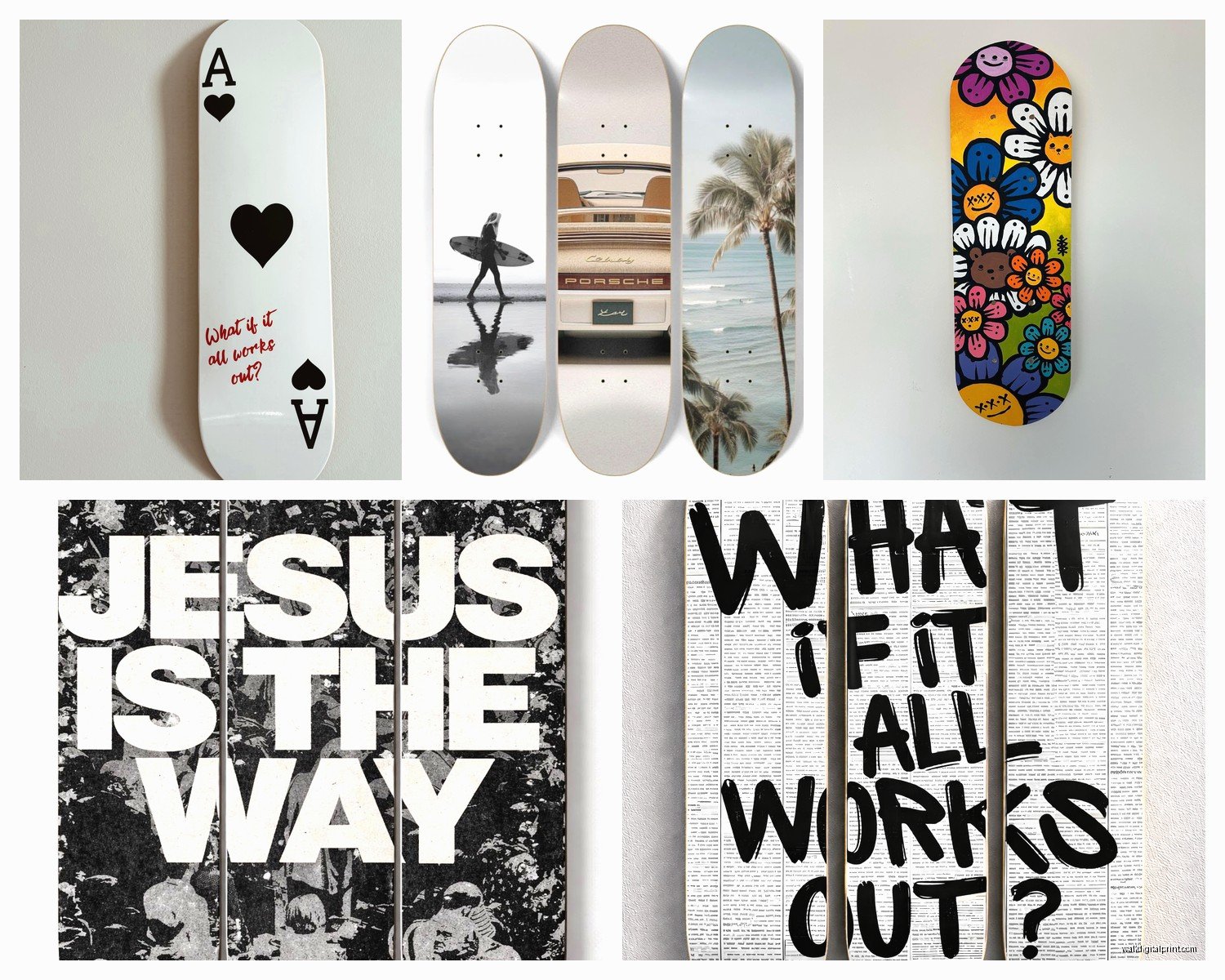
This is where people get tripped up. Vertical mounting saves space and works great in narrow hallways or between doorways. But horizontal, man, horizontal mounting really lets you see the full graphic design. I did a client’s home office last month and we mounted three decks horizontally in a row above his desk and it created this whole gallery wall effect without being too much.
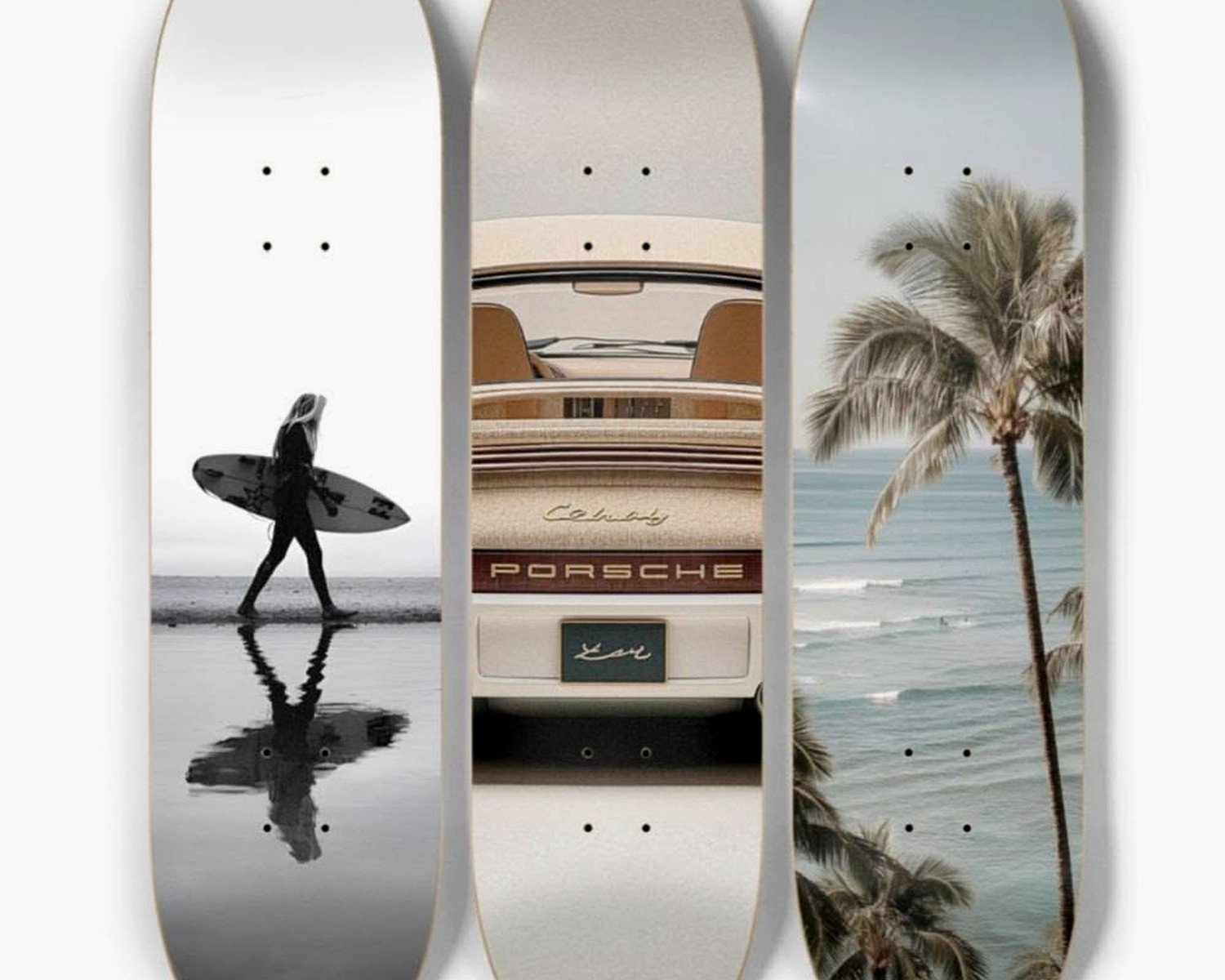
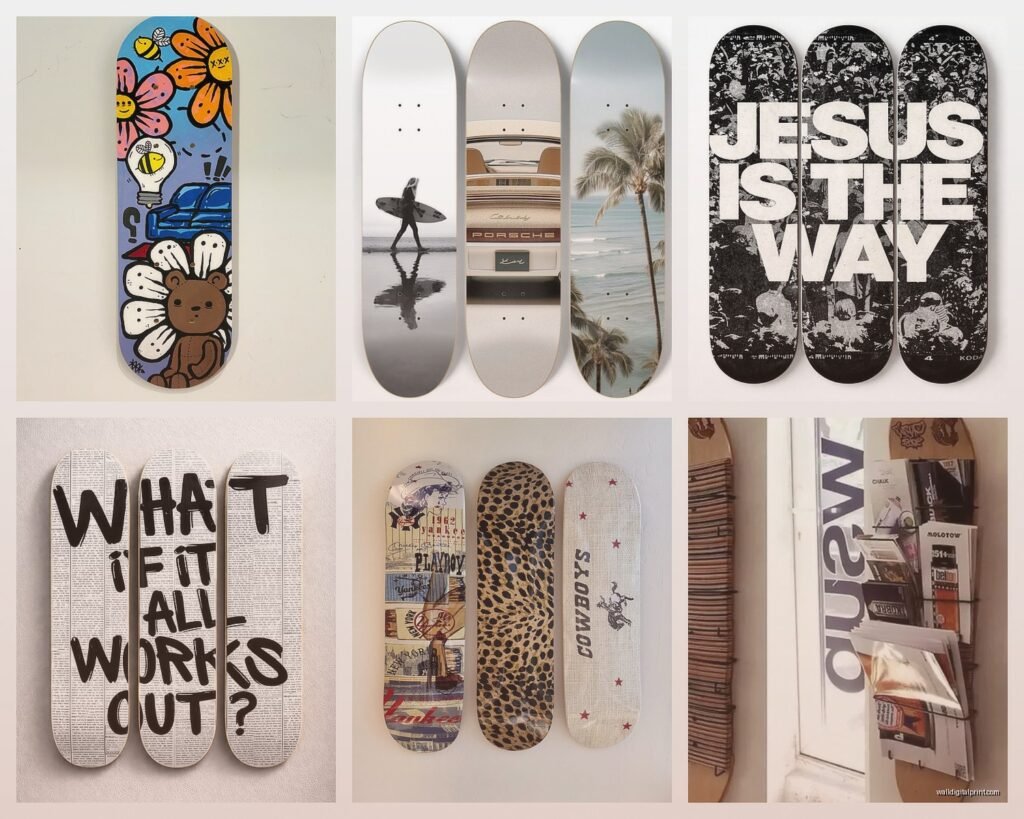
If you’re doing multiple decks, odd numbers always look better, that’s just a design rule that holds up. Three or five decks in a grouping. And mix up the graphics, don’t do all the same brand or all the same color palette unless you’re going for that super matchy collection vibe.
Where to Actually Source Skateboard Art
Okay so funny story, I was watching that skateboarding documentary on Netflix and got completely sucked into finding vintage decks for projects. Here’s what I learned about sourcing:
Real Decks:
- Local skate shops sometimes sell old stock or damaged decks for cheap, perfect for wall art
- eBay has vintage decks but prices are wild, you’ll pay $200+ for anything from the 80s or 90s with a recognizable brand
- Facebook Marketplace is surprisingly good, found a Powell Peralta for $40 once
- Ask skaters you know, they usually have old decks sitting in their garage
The thing about real decks is they don’t even need to be rideable. Scratched up, no grip tape, doesn’t matter. Sometimes the wear actually adds character for wall display.
Prints and Alternative Art
If you don’t wanna deal with mounting actual decks, skateboard-themed prints have gotten really good. Society6 and Redbubble have tons of skate culture art from independent artists. I’m obsessed with these minimalist line drawing prints of skaters mid-trick, they work in spaces where a full deck would be too much.
You can also frame deck graphics. Like literally just the printed graphic without the wood. Some companies sell just the graphic prints and they look sick in simple black frames. Did this in a teenager’s room and it was way less expensive than buying multiple decks.
Creating a Gallery Wall with Skate Elements
Wait I forgot to mention, gallery walls are probably the most impactful way to do skateboard art. You’re mixing different elements to tell a story. Here’s a formula that’s worked for me:
- One or two actual skateboard decks as focal points
- Framed skate photography, black and white works really well
- Vintage skate magazine covers, you can find reprints on Etsy
- Maybe a framed concert poster if they’re into skate punk music
- Small shelf for displaying wheels or trucks as sculptural objects
The key is varying your frame sizes and not making everything the same height. I use painter’s tape to map everything out on the wall first because once you start drilling holes, you’re committed. Start with your largest piece, usually the deck, and build around it.
Display Shelves Specifically for Decks
Okay this is gonna sound weird but floating shelves designed for decks are actually different from regular floating shelves. They have this slight lip or groove that keeps the board from sliding forward. I installed one from a company called BoardUp in my friend’s garage conversion and it holds four decks at once while taking up minimal wall space.
You can also do the leaning method if you have floor space. Get a narrow ledge shelf, like the IKEA picture ledges everyone uses, and just lean decks against the wall on them. Super casual, easy to swap out boards, and you can layer them with smaller framed art in front.
Lighting Makes a Huge Difference
Something I didn’t realize until I started doing this professionally, you need to light skateboard art properly. The graphics are meant to be seen clearly. I use those battery-powered LED picture lights that stick above frames, or if there’s an outlet nearby, plug-in picture lights work great.
For a full deck display, track lighting or adjustable spotlights let you highlight specific boards. My cat knocked over one of my lights last week and honestly it still looked fine, but proper lighting really makes the colors pop, especially on older decks where the graphics have faded a bit.
Themed Approaches That Actually Work
Vintage 80s/90s Nostalgia:
Focus on brands like Powell Peralta, Santa Cruz, Vision Street Wear. Pair with neon accents in the room, maybe some Memphis design patterns. This works great in a game room or home bar setup.
Modern Minimalist:
Choose decks with simple geometric graphics or solid colors. Mount them with those invisible acrylic mounts I mentioned. Keep everything clean lined. This is what I do for clients who want skate culture nods but in a sophisticated way.
Street Art Aesthetic:
Mix skateboard decks with graffiti-style art, urban photography, maybe some Shepard Fairey prints. This gets edgier, works well in studios or creative spaces. Add some industrial elements like exposed brick or metal shelving.
Beyond Decks: Other Skate Culture Decor
Oh and another thing, you don’t have to limit yourself to just boards. I’ve incorporated:
- Framed wheels mounted in shadow boxes, especially vintage wheels with cool colors
- Trucks mounted as coat hooks, this is actually super functional
- Grip tape art, where artists create designs on the grip tape itself
- Skate photography books displayed on coffee tables
- Vintage skate shoes in shadow boxes, Vans and Airwalks from the 90s
There’s this company that makes furniture from old decks, like coffee tables and shelves where they use cut-up boards. It’s pricey but if you’re really committing to the theme, it pulls everything together.
Practical Installation Tips
Since you’re probably gonna be drilling into walls, here’s what you need to know. Use wall anchors if you’re not hitting studs, especially for heavier decks. Those toggle bolts are your friend. I learned this the hard way when a deck fell off the wall at like 3am and scared the hell out of me.
Measure everything twice. Use a level. I know that sounds basic but I’ve seen so many crooked deck displays and once it’s up, you don’t wanna redo it. If you’re doing a symmetrical arrangement, find your center point on the wall first and work outward.
For rental apartments where you can’t make big holes, there are these heavy-duty adhesive strips rated for like 16 pounds. They work okay for lighter decks but I wouldn’t trust them long-term with anything valuable.
Protecting Your Investment
If you’re using vintage or valuable decks, keep them out of direct sunlight. The graphics will fade just like any art. I’ve seen beautiful old Powell Peralta boards get completely washed out from sun exposure. UV-protective glass in frames helps if you’re framing deck graphics.
Dust them occasionally. Sounds obvious but skateboard graphics collect dust in the grooves and it dulls the colors. Just a microfiber cloth every few weeks keeps them looking fresh.
Budget Breakdown
Let me give you realistic numbers because this can get expensive or stay pretty affordable:
Budget approach: $50-150 total
- Used decks from local shops or marketplace: $20-40 each
- Basic wall mounts from Amazon: $15-25
- Maybe one or two prints: $20-40
Mid-range approach: $300-600
- Mix of new and vintage decks: $100-200
- Quality mounting hardware: $50-100
- Framed prints and photography: $100-200
- Proper lighting: $50-100
High-end approach: $1000+
- Collector vintage decks: $400-800
- Custom mounting solutions: $200-300
- Original skate photography or art: $300-500
- Professional installation and lighting: $200-400
Room-Specific Ideas
Living Room: Keep it more curated, one or two statement decks max, pair with complementary art. You don’t want it to feel like a teenager’s bedroom unless that’s specifically the vibe you’re going for.
Home Office: Motivational if you’re into skate culture, I find it works great as inspiration. Mount behind your desk or on the wall you face during video calls if you want it as your background.
Bedroom: This is where you can go harder with the theme. Multiple decks, posters, the whole thing. Just make sure it doesn’t feel cluttered.
Garage or Workshop: Honestly the perfect space for skateboard art. You can be more casual with mounting, lean boards against walls, hang them from ceiling hooks even.
The main thing I’ve learned doing this is that skateboard art works best when it feels authentic to the space and the person living there. Don’t force it if you’re not actually into skate culture, but if you are or you’re decorating for someone who is, there’s so much room to get creative with it. Mix high and low, vintage and modern, and don’t take it too seriously. That’s kind of the whole point of skate culture anyway.