Wall Art Guide, Wall Art Tutoriels
Surf Wall Art: Surfboard Wave Beach Ocean Surfing
Sep
So I literally just finished helping my friend Rachel pick out surf wall art for her living room and honestly? It’s way more complicated than just grabbing a random surfboard print from Target. Like, I’ve been working with coastal decor for years now and there’s actually a method to making it look intentional instead of like… spring break threw up on your walls.
Figure Out Your Vibe First Because It Actually Matters
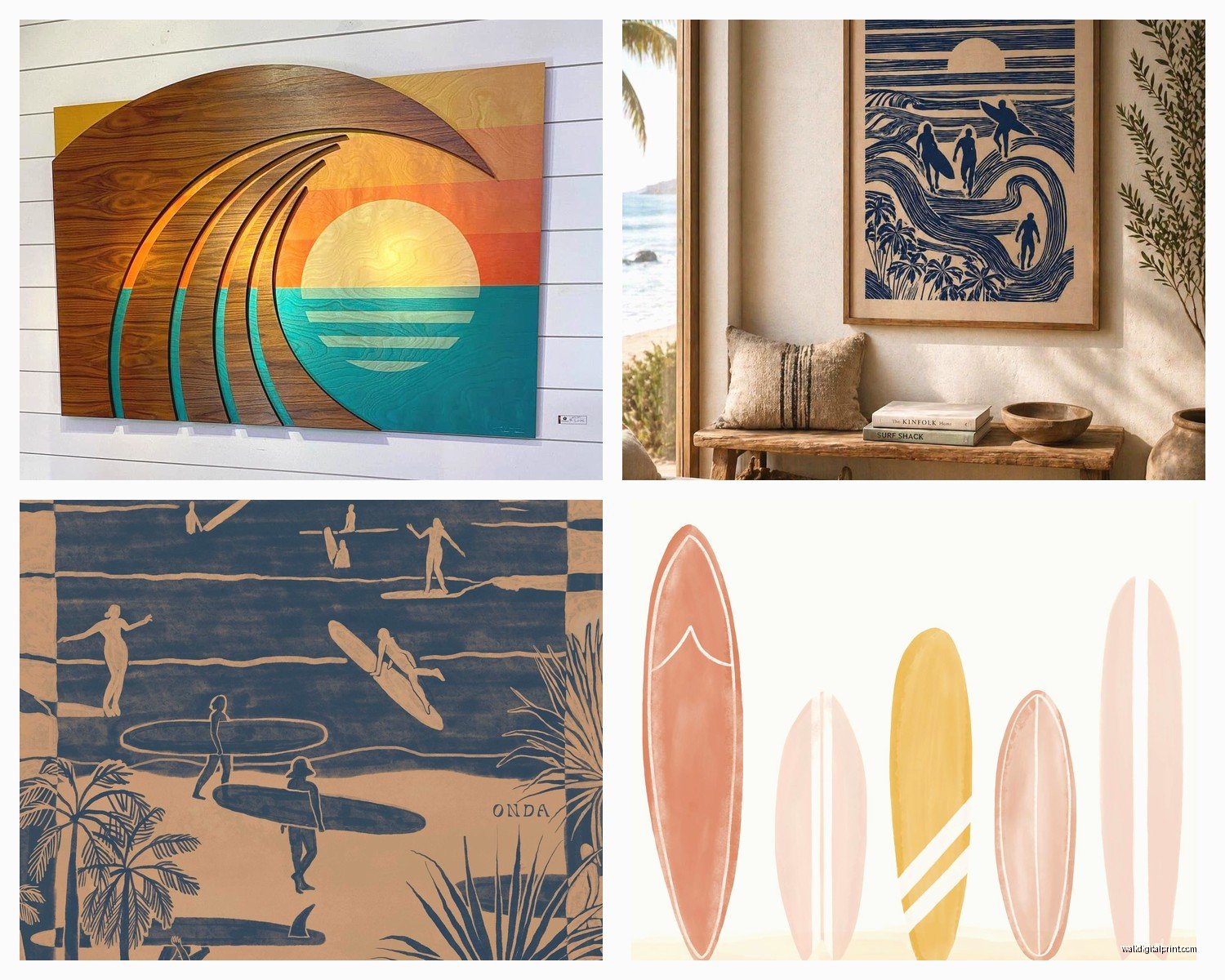
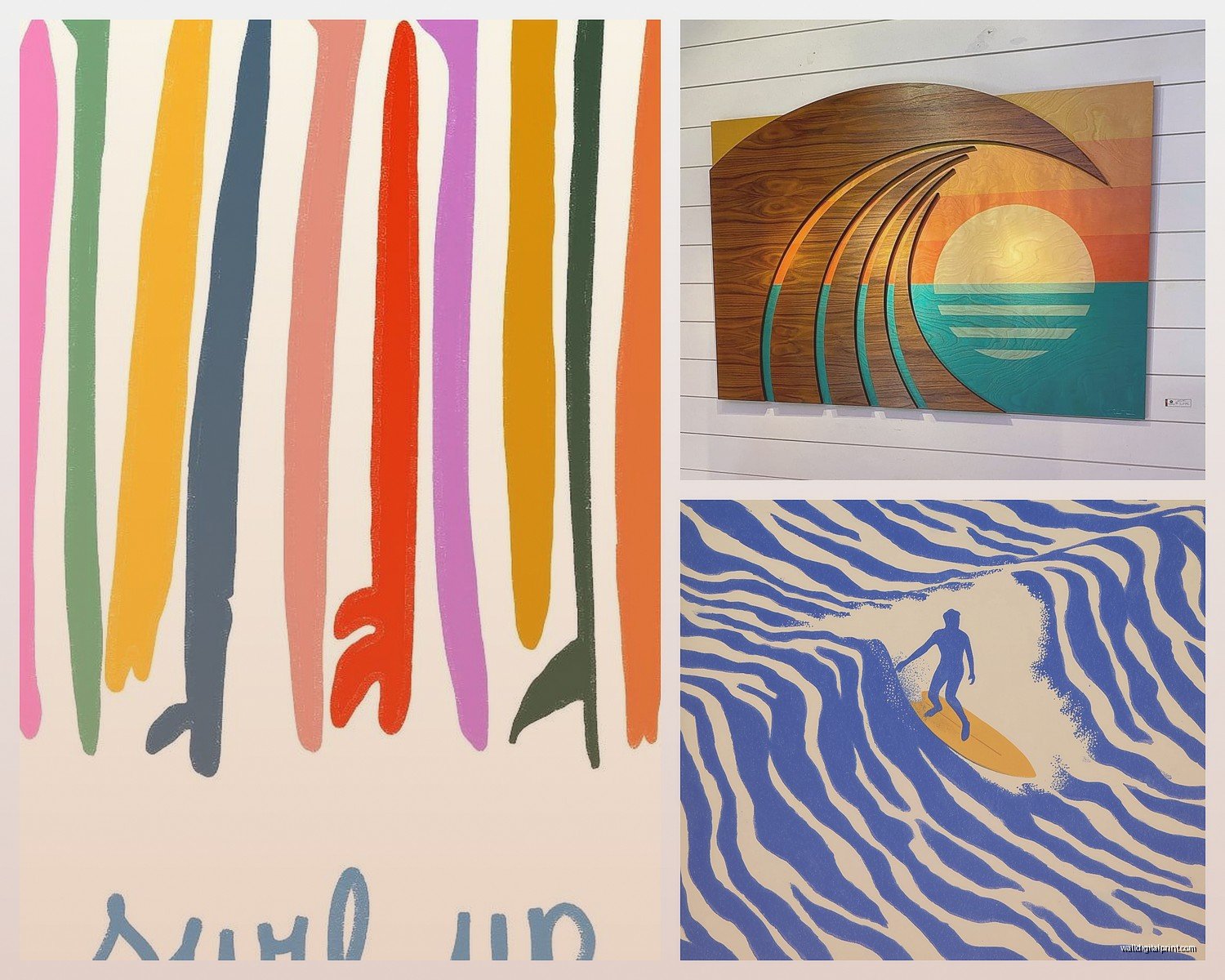
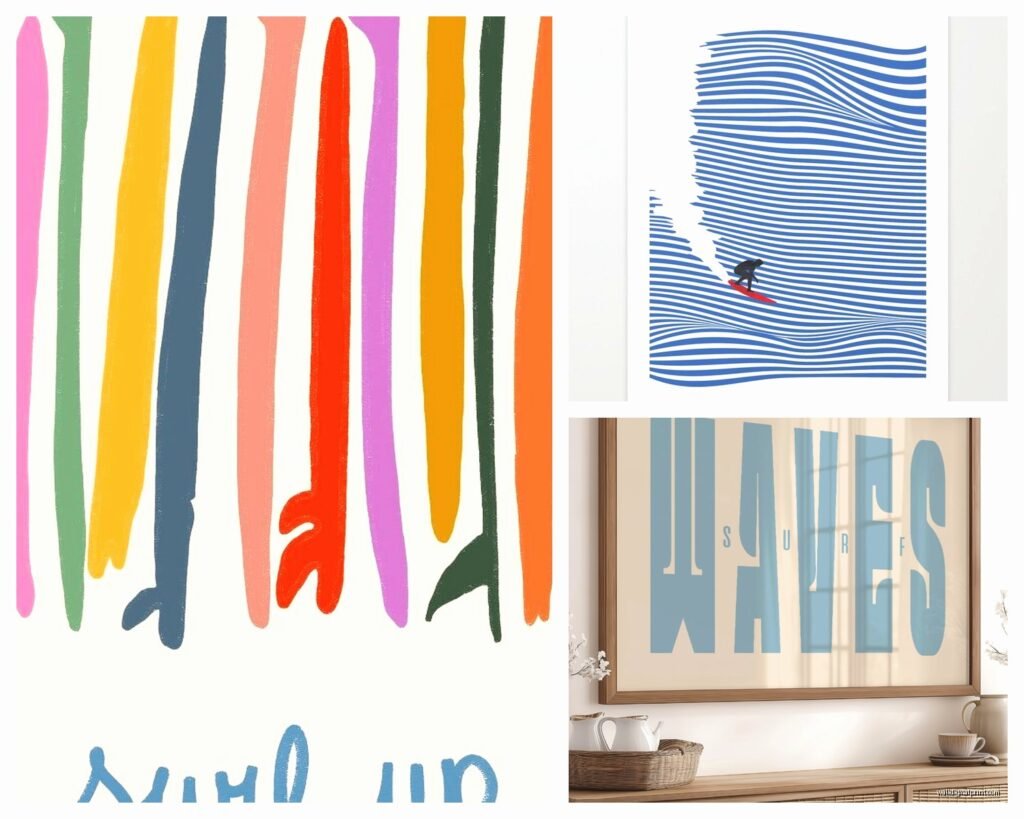
Okay so the biggest mistake people make is thinking all surf art is the same. It’s really not. You’ve got your vintage surf posters that are all retro colors and 1960s typography, then there’s the photographic ocean wave stuff that’s super dramatic and moody, and then like… actual surfboards as art which is a whole different thing.
I spent probably three hours last Tuesday comparing different styles because this one client wanted “beach vibes” but when I showed her classic surf photography she was like nope, too serious. She actually wanted the fun colorful illustration style. So yeah, you gotta narrow it down first.
The main categories I usually work with:
- Vintage surf posters and retro advertising prints
- Ocean wave photography (the big dramatic ones)
- Surfboard shapes as art objects or prints
- Illustrated surf scenes with that modern graphic design look
- Actual vintage surfboards mounted on walls
- Abstract ocean-inspired art that’s more subtle
Size and Scale Because Everyone Gets This Wrong
Look, I cannot stress this enough – that piece you think is big enough? It’s probably too small. I see this constantly. Someone buys a 16×20 print for their massive living room wall and then texts me a sad photo asking why it looks weird.
For over a couch or bed you want something that’s at least two-thirds the width of the furniture. So if your couch is 84 inches, you’re looking at a piece that’s minimum 56 inches wide. You can do a single large piece or a gallery wall situation, but the overall visual weight needs to be there.
My cat just knocked over my coffee… anyway. Where was I.
Oh yeah, so for surf art specifically, bigger is usually better because the whole point is capturing that expansive ocean feeling. Those tiny 8×10 prints? Save them for a gallery wall where you’re grouping like 6-9 pieces together. A single small surf print just looks sad and lonely.
The Gallery Wall Approach
If you’re gonna do multiple pieces, here’s what actually works. I learned this the hard way after installing a gallery wall that looked completely chaotic. You want odd numbers – 3, 5, 7, or 9 pieces. Mix sizes but keep a consistent theme. Like all vintage surf posters in different sizes, or all ocean photography but some in color and some black and white.
Space them 2-3 inches apart. I use painter’s tape on the floor first to map it out before putting holes in the wall because I’ve definitely hung things wrong before and had to patch like 15 nail holes. Not fun.
Where to Actually Buy This Stuff
Okay so this is where I have opinions. Etsy is honestly great for surf art because you can find independent artists and vintage prints. I’ve found amazing retro surf posters there for like $30-50 for digital downloads that I then get printed at a local print shop. The quality is way better than those mass-produced things from HomeGoods.
Society6 and Redbubble are solid for more contemporary illustration-style surf art. The artists upload their designs and you can get them printed on different sizes of paper or canvas. I’ve ordered probably 20 pieces from Society6 over the years for various projects.
For actual photography prints, look at sites like 20×200 or even directly from surf photographers on Instagram. A lot of them sell prints and the quality is insane. I got this one wave photograph from a photographer in Hawaii and it’s like… you can see individual water droplets. It’s massive and was like $400 but totally worth it for a statement piece.
Wait I forgot to mention – if you want actual vintage surfboards as wall art, check local surf shops first. Sometimes they have old damaged boards they’ll sell cheap. I found a 1970s longboard for $75 that had a huge crack but as wall art? Nobody cares. It looks authentic and cool.
Framing Matters More Than You Think
Unframed prints look unfinished and cheap, sorry not sorry. Even a simple frame makes everything look more intentional. For surf art I usually go with:
- Natural wood frames for that beachy organic look
- Black frames for more dramatic ocean photography
- White frames for a clean modern coastal vibe
- No frame but mounted on wood panels for a casual look
Michael’s and Hobby Lobby have constant sales on frames. Like literally wait two days and whatever you want will be 50% off. I never pay full price there. Also Framebridge does custom framing online and it’s actually not that expensive – I’ve used them when I need something specific.
For canvas prints you can skip the frame entirely which saves money. Just make sure the edges are finished nicely or get gallery-wrapped canvas where the image continues around the sides.
The Surfboard Mounting Thing
If you’re mounting an actual surfboard, you need proper hardware. Those command strips aren’t gonna cut it – surfboards are heavy. I use surfboard wall mounts that are specifically designed for this. They’re like $20-30 on Amazon and way safer than trying to rig something yourself.
Mount it horizontally usually, unless you have really high ceilings. And please measure twice because patching drywall holes in a rental is annoying. Speaking from experience here.
Color Coordination Without Being Matchy-Matchy
This is gonna sound weird but I actually pull colors from the art to use elsewhere in the room rather than trying to match the art to existing colors. Like if you have a surf print with turquoise and coral tones, bring those into throw pillows or a blanket.
But don’t go overboard (pun intended I guess). If your surf art has blues and teals, you don’t need to paint the whole room ocean blue. That’s too literal. Keep walls neutral – white, cream, light gray – and let the art be the color moment.
I learned this from watching too much HGTV honestly but it works. Neutral backdrop, colorful art, then small accessories that echo the art colors. Done.
Mixing Surf Art with Other Decor
You can totally have surf art without going full tiki bar. I’ve done surf photography in really modern minimalist spaces and it works because good photography is just good art, regardless of subject.
The key is not adding too many other beach elements. Like if you have surf art on the walls, maybe skip the seashell collection and driftwood everywhere. Pick one or two other coastal touches – maybe a jute rug or some potted palms – but keep it restrained.
Oh and another thing, mixing surf art with other types of art is totally fine. I have a client who has a huge wave photograph next to abstract paintings and it looks intentional because they’re all in similar frames and the color palette works together.
What Doesn’t Work
Okay real talk, some stuff just looks bad:
- Those super literal “SURF” text prints in that generic font – overdone
- Putting surf art in a bathroom that’s too small – it feels claustrophobic
- Mixing too many different surf art styles in one room – pick a lane
- Hanging it too high – the center should be at eye level, around 57-60 inches from the floor
- Fake vintage signs that are trying too hard to look distressed
Lighting Your Surf Art
Nobody talks about this but lighting makes a huge difference. If you have a big statement piece, consider adding a picture light above it or using track lighting to highlight it. Ocean photography especially looks amazing when properly lit because all those blues and greens really pop.
Natural light is obviously ideal but watch out for direct sunlight which will fade prints over time. I use UV-protective glass for anything valuable in rooms with lots of sun exposure.
For nighttime, warm LED bulbs work better than cool white which can make ocean blues look weird and artificial. This is like super specific but I’ve tested it extensively because I’m nerdy about this stuff apparently.
The Budget Breakdown
Since everyone always asks about cost, here’s what I typically spend:
Digital download print from Etsy: $15-50
Printing at local shop: $30-100 depending on size
Frame: $30-150 depending on quality and size
Total for one piece: $75-300
Or you can buy pre-framed from places like Society6:
Framed print: $80-200 depending on size
For actual vintage surfboards: $50-500 depending on condition and rarity
Photography prints from professional photographers: $200-800 for large format
You don’t need to spend a fortune though. I’ve created really good gallery walls for under $300 total by mixing affordable prints in nice frames with maybe one slightly pricier statement piece.
Installation Tips That’ll Save You Headaches
Use a level. Seriously. I know it seems basic but eyeballing it never works. Your piece will be crooked and it’ll bug you forever.
For heavy pieces over 20 pounds, find the studs and use proper anchors. I use those toggle bolt anchors for drywall when I can’t hit a stud and they’re super secure.
If you’re doing a gallery wall, cut out paper templates of each piece and tape them to the wall first. Rearrange until it looks right, then mark where nails go through the paper. This method has saved me so many times.
Okay so funny story – I once hung an entire gallery wall without templates and had to redo the whole thing because the spacing was off. Took like four hours total when it should’ve been one. Learn from my mistakes.
Renter-Friendly Options
If you can’t put holes in walls, there are options. Command picture hanging strips work for lighter pieces under 10 pounds. I’ve also used those gallery walls that lean on ledges – you install one narrow shelf and lean the art on it. Looks intentional and no nail holes.
Another option is tension rod systems for hanging art, though they’re less common for heavy surf art.
Maintenance and Care
Dust your art regularly with a microfiber cloth. For glass-covered pieces, use glass cleaner but spray it on the cloth first, not directly on the glass, so it doesn’t seep behind the frame.
If you have actual surfboards on the wall, they might need occasional wax removal or cleaning depending on their condition. Just use warm water and a soft cloth, nothing harsh.
Rotate art seasonally if you want to keep things fresh. I have clients who swap between different pieces throughout the year. Store extras flat in a dry place, wrapped in acid-free paper if you’re fancy.
I gotta say though, good surf art doesn’t really go out of style. I’ve had the same vintage surf poster in my office for like six years and it still looks current because the style is classic enough. That’s the benefit of choosing quality pieces over trendy stuff.
So yeah, that’s basically everything I know about surf wall art after doing this professionally and also just being slightly obsessed with coastal aesthetics. Start with figuring out your style, get the sizing right, invest in decent framing, and don’t overthink it too much. The whole point is capturing that relaxed beach feeling anyway.