Wall Art Guide, Wall Art Tutoriels
Wall Art Above Bed: Headboard Focal Point Placement
Jun
So I was literally just helping my friend Sarah figure this out last week and honestly, the whole “art above the bed” thing is way more confusing than it should be. Like, everyone acts like you just slap something up there but there’s actually a bunch of stuff to consider or it ends up looking… off.
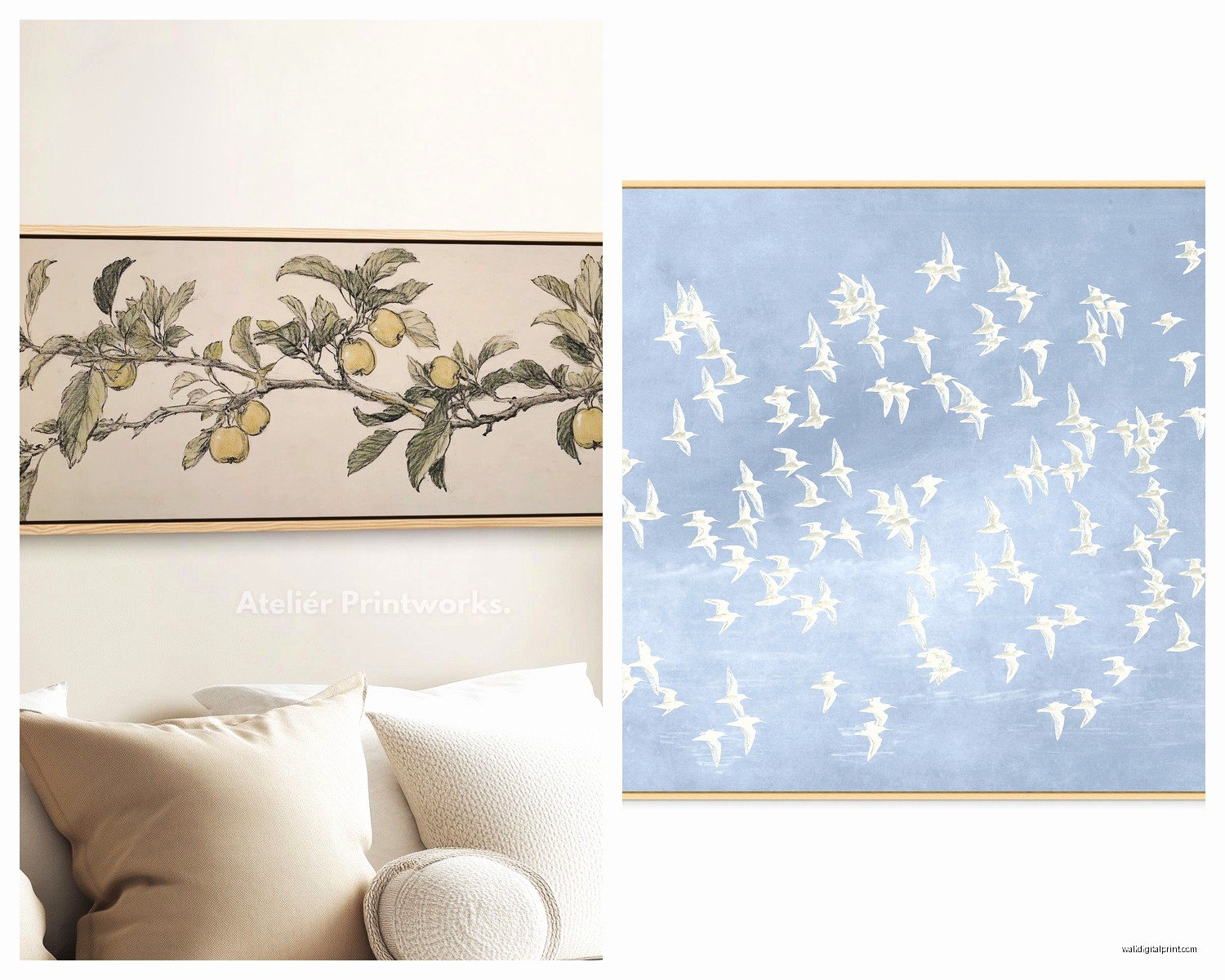
First thing – and I know this sounds obvious but you’d be surprised – measure the wall space above your headboard. Not just eyeball it. I’ve done that and ended up with a print that looked like a postage stamp. You want to measure the width of your headboard, then plan for your art to be somewhere between 50-75% of that width. So if your headboard is 60 inches wide, you’re looking at art that’s roughly 30-45 inches across. This can be one piece or a gallery wall situation, doesn’t matter, just the overall visual weight needs to fill that space properly.
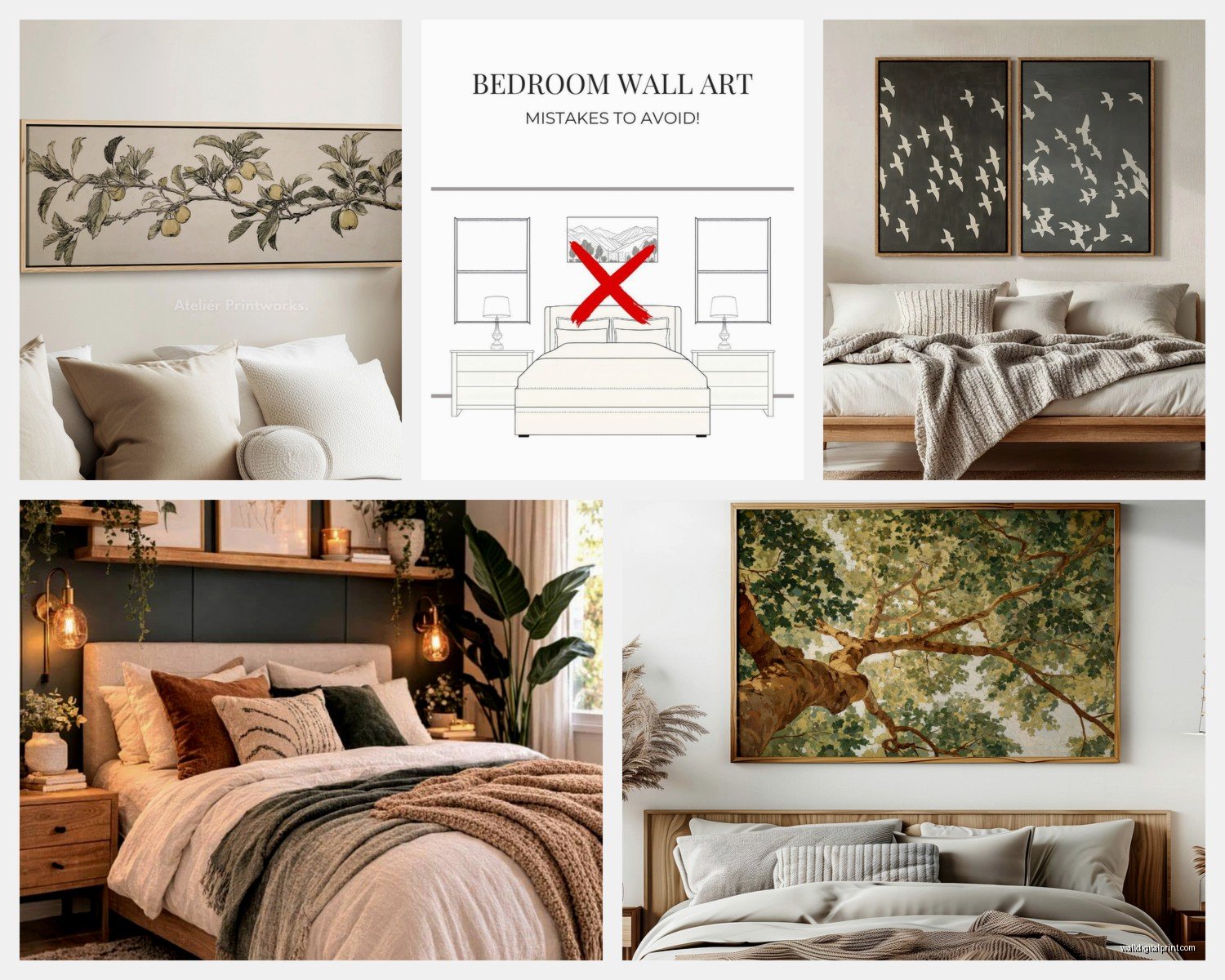
The height thing is where people really mess up. Your art should start about 5-8 inches above the headboard. Not 2 inches, not 15 inches. That middle range just looks right for some reason. I tested this in my own bedroom like three times before I figured it out – kept moving the same piece up and down until my partner was like “are you done yet” but yeah, that 5-8 inch sweet spot is key. If you go too close, it looks cramped and kinda claustrophobic. Too high and it’s just… floating up there awkwardly with no connection to the bed.
Oh and another thing – consider the ceiling height because that changes everything. Standard 8-foot ceilings? You’ve got less room to work with, so maybe stick to one medium-sized piece or a horizontal arrangement. But if you’ve got 9 or 10-foot ceilings, you can do something taller, maybe a vertical diptych or even a three-piece vertical arrangement. I did this gallery wall project last month where the client had these gorgeous high ceilings and we went with five pieces arranged in a grid pattern – looked amazing but wouldn’t have worked in a regular height room.
The style of your headboard matters too. Like, if you’ve got one of those massive upholstered headboards that goes way up the wall, you might wanna skip art entirely or just do something small and simple. I learned this the hard way when I tried to put this huge abstract piece above a tall tufted headboard and it was just… too much happening. Visual overload. But with a low-profile headboard or even no headboard, you’ve got more freedom to go bigger and bolder.
Weight is something nobody talks about until it’s a problem. Seriously, I’ve had a frame fall in the middle of the night (not above a bed thankfully, but still terrifying) and now I’m paranoid about it. Anything above your bed needs to be REALLY secure. Use proper wall anchors, not just nails. If you’re renting and can’t make big holes, there are these heavy-duty adhesive strips but honestly I don’t trust them for anything over like 5 pounds above a bed. The risk just isn’t worth it. My cat knocked over a vase last week and the noise alone gave me a heart attack, so imagine a whole frame.
For actual art choices, I’m gonna be real with you – abstract stuff works best in bedrooms. It’s calming, doesn’t compete for attention, and you won’t get tired of looking at it. I had this really detailed landscape print above my bed for like six months and eventually it started feeling too busy, you know? Like my brain was trying to analyze it when I should be falling asleep. Now I’ve got this simple line art piece, super minimal, and it’s so much better.
Black and white photography is another safe bet. Classic, timeless, works with literally any color scheme. I curated this whole bedroom setup using just black and white prints – three pieces in matching frames, arranged horizontally – and it looked expensive even though the frames were from IKEA. The trick is keeping the frames consistent. Don’t mix wood and metal, don’t mix black and white frames. Pick one vibe and stick with it.
Wait I forgot to mention – think about what you see from bed. This is gonna sound weird but lie down and actually look at where you’re planning to hang stuff. Sometimes what looks good standing up looks totally different from your pillow. I had a client who insisted on hanging art higher than I recommended and when she actually laid down, she couldn’t even see it properly. Had to rehang everything.
Gallery walls above beds can work but they’re tricky. You need an odd number of pieces usually – three, five, seven. Even numbers can look good too but they need to be arranged symmetrically. I did a four-piece grid last year that turned out great, but it took forever to get the spacing right. Each piece should be 2-3 inches apart, not more. Too much space and it looks disconnected, like they’re not meant to be together.
If you’re doing a gallery wall, lay it out on the floor first. I cannot stress this enough. Use painter’s tape on the wall to mark where each piece goes before you start hammering. I skip this step sometimes when I’m feeling lazy and always regret it. Always. You end up with extra holes and frames that don’t quite line up and then you gotta spackle and repaint and it’s a whole thing.
Color-wise, you want your art to either complement or contrast with your bedding and walls, but not match exactly. Exact matching looks too coordinated, kinda like a hotel room. I usually pull one or two colors from the art and echo them in throw pillows or a blanket. Creates this nice visual flow without being matchy-matchy.
Size mistakes I see constantly: going too small. People are so afraid of overwhelming the space that they end up with tiny art that just disappears. Better to go slightly too big than too small, honestly. A piece that’s a bit oversized makes a statement and actually anchors the whole room. Too small and it looks like an afterthought.
Texture matters too. If your room is all smooth surfaces – painted walls, cotton bedding, sleek furniture – adding some textured art can create interest. I’m obsessed with woven wall hangings right now, like macramé or woven fiber pieces. They add dimension and warmth. Just did a boho-style bedroom where we used this massive woven piece instead of traditional art and it completely transformed the space.
Lighting is something you gotta think about. If you’ve got a window that creates glare on the wall above your bed, you might need to position art to avoid that or use non-reflective glass in the frame. I had this whole situation where afternoon sun was hitting a framed print and creating this awful glare – ended up having to move it to a different wall entirely. Such a pain.
Oh and if you’re renting, command strips are your friend but know their limits. They work great for lightweight frames, especially canvas prints that don’t have glass. But anything with glass or a heavy wood frame? You’re gonna need permission to use actual hardware. I’ve tried to cheat this and it never ends well.
Personal photos above the bed – controversial opinion maybe but I’m not a huge fan. It feels weird to me having faces staring down while you sleep? But if you love the idea, go for it. Just make sure they’re professionally printed and nicely framed. No smartphone snapshots in cheap frames. It looks better to have no art than bad art, you know what I mean.
Symmetry versus asymmetry is a whole debate. Symmetrical arrangements (like two matching prints on either side of a centered piece) feel more traditional and calming. Asymmetrical feels modern and dynamic. Neither is wrong, just depends on your vibe. I personally lean asymmetrical because I get bored easily but I’ve designed plenty of symmetrical setups that look gorgeous.
Seasonal switching is something I do in my own bedroom – maybe I’m extra but I swap out art every few months. Keep it fresh, prevents that “I don’t even see it anymore” thing that happens when stuff stays up too long. I’ve got a rotation of maybe 6-8 pieces that I cycle through. Doesn’t work for everyone but if you get antsy about decor like me, it’s worth having options.
One more thing about headboards – if yours is ornate or has a lot going on (like carved wood or a bold pattern), keep the art simple. And vice versa. If you’ve got a basic upholstered headboard in a neutral color, that’s your chance to go bold with the art. Balance is everything.
Metal wall art is having a moment and I’m here for it, especially for modern or industrial bedrooms. Just make sure it’s not gonna be noisy – some metal pieces rattle or vibrate slightly and that would drive me absolutely insane trying to sleep. Test it before you commit.
The whole “meaningful art” thing – yeah it’s nice if the piece means something to you, but honestly it’s more important that you like looking at it and it fits the space. Don’t force some sentimental piece if it doesn’t work visually. You can display meaningful stuff elsewhere.
Actually gonna wrap this up because I need to finish this project for a client tomorrow but hopefully that helps? The main things are measure properly, hang it 5-8 inches above the headboard, make sure it’s 50-75% the width of your headboard, and secure it really well. Everything else is kinda personal preference and trial and error.