Wall Art Guide, Wall Art Tutoriels
Silver Wall Art: Metallic Decor for Modern Spaces 2026
May
So I’ve been obsessing over silver wall art lately and honestly it’s been taking over my client projects in the best way. Like, I was watching that new Netflix show last night and kept pausing to scroll through metallic pieces on my phone because I cannot stop thinking about how good this stuff looks in modern spaces.
Why Silver Works Different Than Other Metals
Okay so here’s the thing about silver that took me way too long to figure out. It’s not just “lighter gold” or whatever. Silver reflects light in this really specific way that makes rooms feel bigger without being all loud about it. I tested this in my own apartment first because I’m not gonna recommend something to clients without living with it, and the difference is wild. My north-facing living room that always felt kinda gloomy? Put a large silver geometric piece on the main wall and suddenly it’s bouncing whatever light comes in around the whole space.
Gold feels warm and cozy, copper has that industrial edge, but silver reads as modern and clean without going cold. That’s the trick with it for 2026 stuff, you want that sleek vibe but people are tired of spaces feeling sterile.
What Actually Works in Real Spaces
I’ve installed probably 30+ silver pieces in the last six months so lemme break down what actually looks good versus what sounds good in theory.
Abstract Geometric Pieces
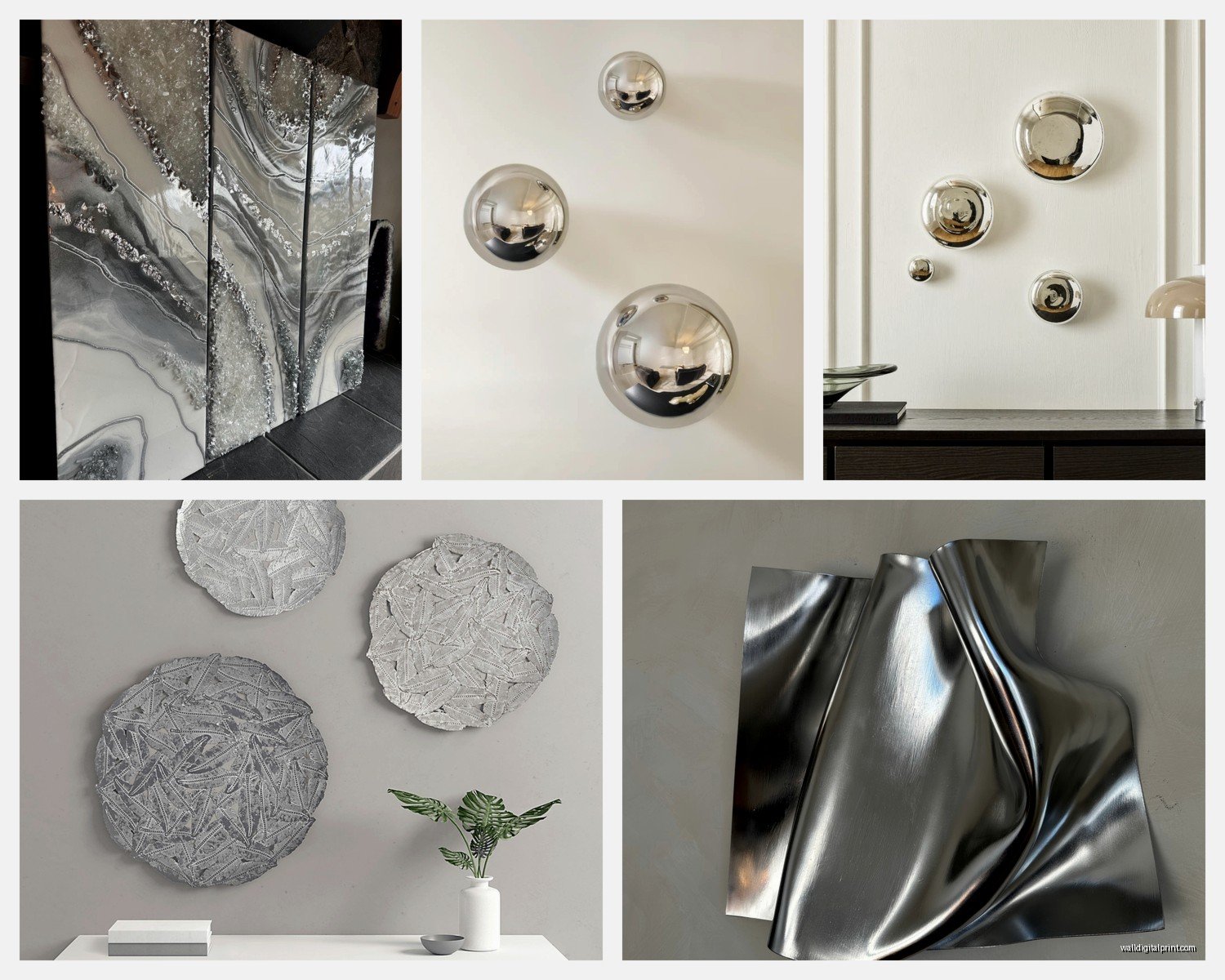
These are my go-to recommendation like 80% of the time. The overlapping circles and angular designs catch light from different angles throughout the day which means your wall literally looks different at 9am versus 6pm. I love the ones that have some depth to them, not just flat metal cutouts. Look for pieces where parts of the design sit like 2-3 inches off the wall so you get actual shadows.
Sizes matter more than you’d think. For a standard living room wall (we’re talking like 12-14 feet wide), you want something that’s at least 36 inches in one direction. I made the mistake early on of going too small and it just looked like you forgot to decorate and randomly stuck something up there.
Textured Panel Sets
Oh and another thing, those multi-panel sets are having a moment but you gotta be careful. Three panels works better than five in most spaces because five starts feeling busy. I did a installation last month where the client insisted on a seven-panel situation and we had to redo it because it looked like a design sneezed on the wall.
The brushed silver panels with horizontal or vertical lines? Those are really good for adding texture without pattern. Which sounds contradictory but trust me, when you put them in a room with a lot of smooth surfaces (leather sofa, glass coffee table, whatever) they give your eye something to rest on.
Sculptural Wall Objects
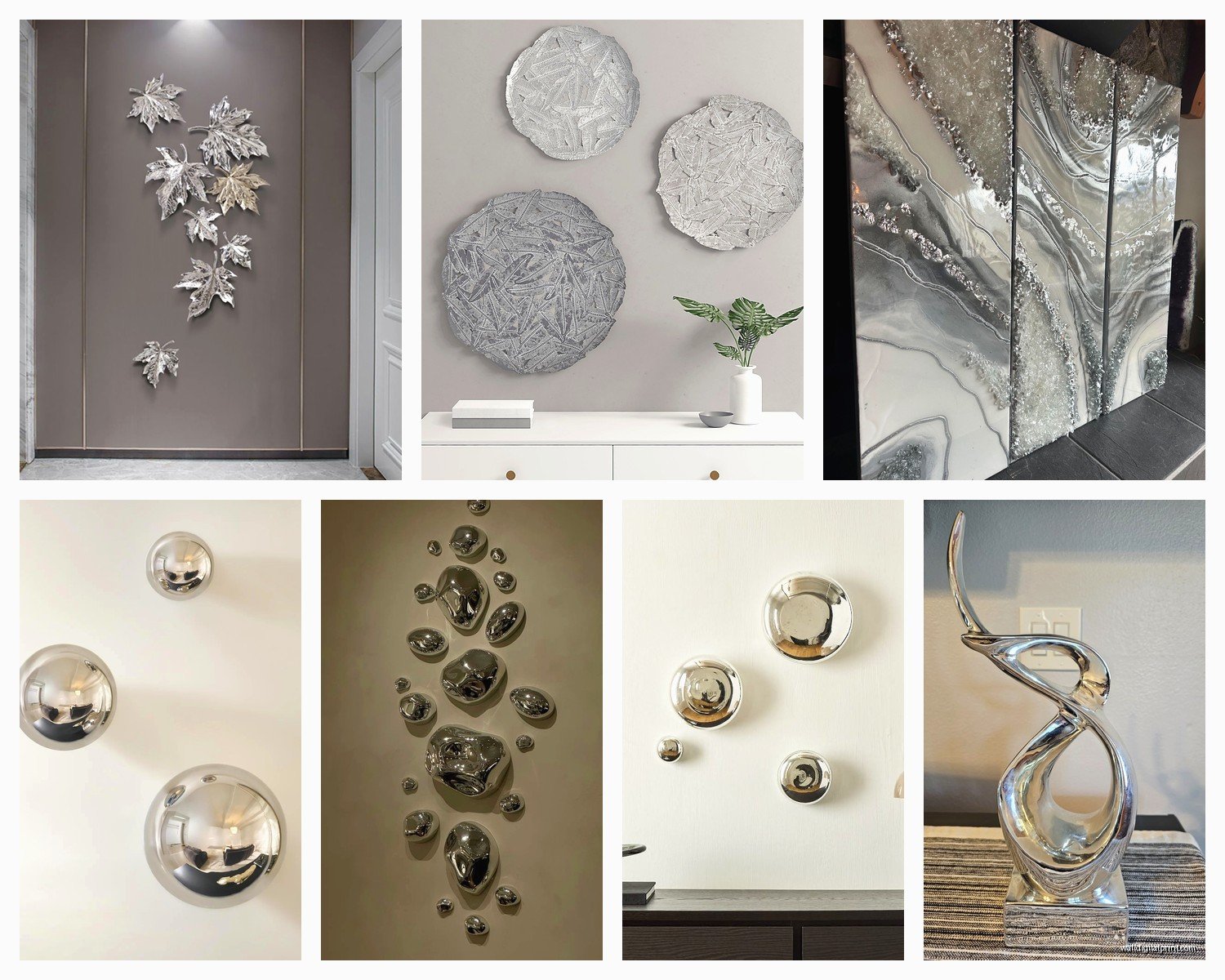
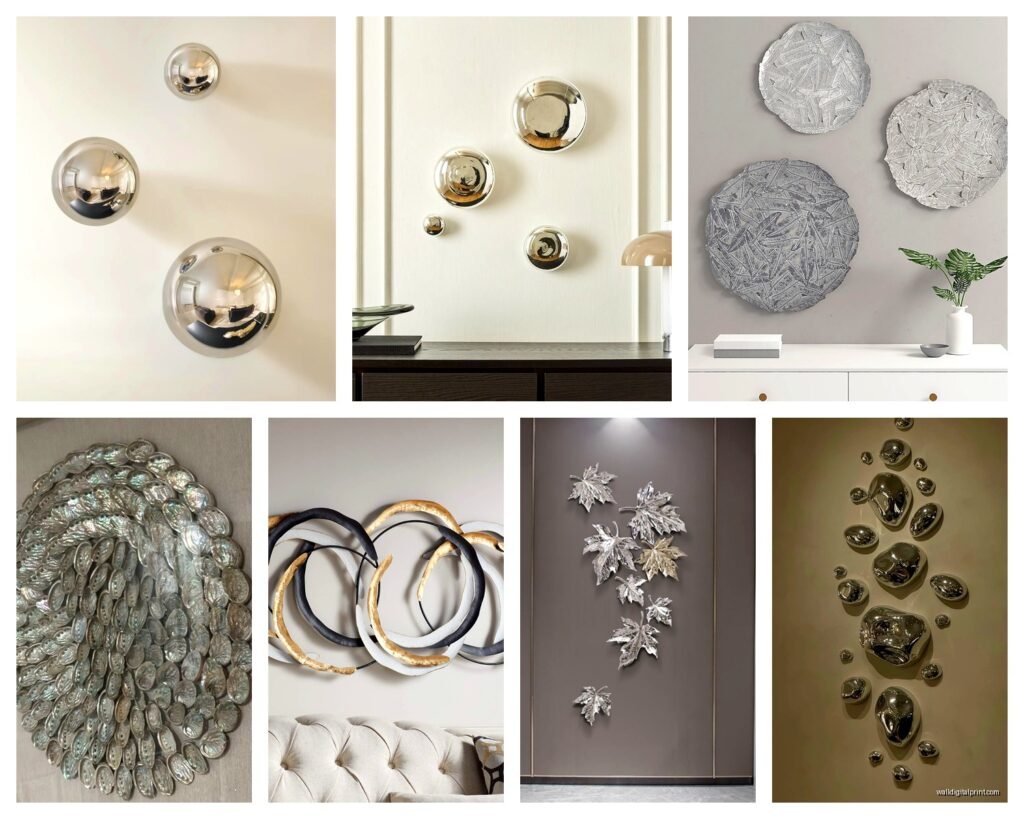
This is gonna sound weird but the sculptural pieces that look almost like modern jewelry for your walls? Those are the ones my clients photograph the most. We’re talking about those flowing ribbon designs or the ones that look like frozen metal waves. They photograph incredibly well which matters if you care about that stuff, but also they just add this element of luxury without being too precious about it.
I put one in a client’s entryway and every single person who comes over asks about it. It cost like $400 which isn’t cheap but also isn’t insane for a statement piece.
Where to Actually Put This Stuff
Okay so placement is where people mess up constantly. Just because it’s wall art doesn’t mean it goes on every wall.
Behind the Sofa
This is the obvious one but there’s a right way to do it. Your silver piece should be about two-thirds the width of your sofa. Maybe three-quarters if it’s a really large sectional. Hang it so the center is at eye level when you’re standing, which is usually around 57-60 inches from the floor to the center of the piece.
I learned this the hard way when I hung a gorgeous silver sunburst thing too high in my own place and it looked like it was trying to escape to the ceiling.
Dining Room Drama
Wait I forgot to mention, dining rooms are actually perfect for silver wall art because the light from chandeliers or pendant lights hits the metal and creates this whole ambient lighting situation. I did a client’s dining room with a large horizontal silver piece on the main wall and during dinner parties the candlelight reflects in it and it’s just really nice without being over the top.
The key is making sure your piece doesn’t compete with your light fixture. If you have a really ornate chandelier, go simpler with the wall art. If your lighting is minimal, you can do a more complex metallic piece.
Bedroom Accent Walls
Silver in bedrooms is tricky but when it works it WORKS. Above the bed is the obvious spot but I’ve been doing a lot of installations on the wall opposite the bed lately. Think about it, that’s the wall you actually look at when you’re lying in bed scrolling your phone at night (we all do it).
Just don’t go too shiny or mirrored in bedrooms because you don’t want it reflecting light around when you’re trying to sleep. Brushed or matte silver finishes are better for bedroom spaces.
Mixing Silver with Other Finishes
So here’s where it gets fun and also where people get nervous. You can absolutely mix silver with other metal finishes and it looks more interesting when you do.
I’ve got brass table lamps, silver wall art, and black metal shelving in my living room and it works because there’s a clear dominant metal. Silver is the main event on the walls, brass is the accent in lighting, black grounds everything. The old rule about matching all your metals is so dead.
That said, you gotta have some connection between them. In the room I just mentioned, all the metals have a matte or brushed finish. If I threw in something super shiny and chrome it would feel off.
Silver and Wood Tones
This combination is chef’s kiss for 2026 vibes. The warmth of wood (especially walnut or oak) with cool silver creates this really balanced modern organic thing that’s everywhere right now. My cat knocked over a walnut side table last week and I was genuinely upset because it sat perfectly under a silver abstract piece.
With Concrete or Stone
If you’ve got concrete walls or stone features, silver wall art is like the perfect companion. Both materials have that raw, textural thing happening and the silver adds sophistication without softening the industrial edge too much.
Lighting Considerations Nobody Talks About
Okay so funny story, I installed this beautiful silver piece in a client’s living room and she called me two days later saying it wasn’t working. Turned out she only had warm-toned lighting and the silver was looking kinda dingy and yellowish. We added some daylight-balanced LED spotlights and suddenly it looked how it was supposed to.
Silver needs the right light temperature to look good. You want lighting that’s at least 4000K, which is that neutral white zone. Too warm (like 2700K) and your silver looks dull. Too cool (6000K+) and everything feels like a hospital.
If you’re putting silver art on a wall without natural light, you gotta add some. I usually recommend simple picture lights or track lighting that you can aim at the piece.
What to Actually Buy in 2026
Let me give you specific recommendations because vague advice is useless when you’re trying to actually buy something.
For Large Walls
Look for pieces in the 40-60 inch range. Multi-panel sets of three pieces work really well because you can adjust spacing to fit your exact wall width. I’ve been seeing a lot of good options in that vertical panel design where each piece is maybe 12 inches wide by 48 inches tall.
Budget-wise, expect to spend $300-800 for something quality that’s actually metal and not just metallic paint on canvas. The real metal pieces have weight and presence that the painted versions don’t.
For Smaller Spaces
Circular designs in the 24-30 inch diameter range are perfect for smaller walls like above a console table or in a hallway. The round shape feels less aggressive in tight spaces than angular geometric pieces.
There’s this one sunburst design that’s been popular for like three years now and honestly it still looks good if you get a well-made version. Sometimes trends stick around because they actually work.
For Renters
If you can’t put big holes in walls, look for pieces that come with command strip compatible hanging systems. They exist now and they’re not terrible. Just make sure your piece isn’t super heavy because command strips have limits.
Another option is leaning art, which is having a moment anyway. Get a large silver piece and lean it on a console or credenza. It’s more casual and you can move it around.
Maintenance Real Talk
Silver wall art gets dusty and shows fingerprints if people touch it (kids are the worst about this). Once a month I just go over my pieces with a microfiber cloth. For the textured ones you might need a soft brush to get in the grooves.
Don’t use any harsh cleaners or you’ll mess up the finish. Just dry dusting is usually enough. If something gets on there, slightly damp microfiber cloth and that’s it.
The Tarnishing Question
Real silver will tarnish but most wall art is stainless steel or aluminum with a silver finish, not actual silver. So tarnishing isn’t really an issue with modern pieces. If you’re buying vintage or antique silver wall art (which can be gorgeous), then yeah, you’ll need to polish it occasionally.
Current Trends That’ll Last
I’m seeing a lot of organic shapes mixed with geometric elements. Like a piece that’s mostly angular but has one flowing curve in it. That feels fresh and less rigid than the super strict geometric stuff from a few years ago.
Also, mixed materials are big. Silver metal combined with natural stone or wood elements in the same piece. It’s more expensive but creates a focal point that doesn’t need anything else around it.
Layered dimensional pieces where parts of the design cast shadows on other parts, creating this changing display throughout the day as light moves. These are the ones that feel expensive even if they’re not crazy priced.
Common Mistakes to Avoid
Don’t go too matchy-matchy with everything silver. If you have silver wall art, silver lamp bases, silver frames, silver accessories, it’s too much. Pick one area for silver to shine (literally) and use other finishes everywhere else.
Hanging it too high is the biggest installation mistake I see. People think wall art should be way higher than it should be. That 57-60 inch center point rule is real and it matters.
Buying pieces that are too small for your wall. It’s better to go bigger than you think you need. A too-small piece on a large wall just looks sad and lost.
Getting super trendy specific designs that’ll feel dated in two years. Stick with cleaner designs that read as modern but not of-the-moment trendy.
Also don’t put silver wall art directly across from a window where it’ll get blasted with direct sunlight all day. The glare is gonna be annoying and it might fade or discolor depending on what it’s made of.
Budget Breakdown Reality
Under $200: You’re looking at smaller pieces or multi-panel sets that are decent quality but not heirloom pieces. This is fine for most spaces honestly.
$200-500: This is the sweet spot where you get good size, real metal construction, interesting designs. Most of my client projects land here.
$500-1000: Statement pieces, larger sizes, better construction, often from recognized designers or brands. Worth it if it’s for a main living space you’ll use for years.
Over $1000: You’re getting into art territory with unique pieces or custom work. Only worth it if you’re really invested in that specific piece or it’s a huge focal wall.
I’ve bought pieces at every price point and honestly some of my $150 finds look just as good as $600 ones. It’s more about the design and how it fits your space than pure price.
Just make sure whatever you buy is actually metal and has some weight to it. If it feels like thin tin foil it’s gonna look cheap on your wall no matter how good the design is.