Wall Art Guide, Wall Art Tutoriels
Unique Coastal Wall Art: One-of-a-Kind Beach Designs
May
So I’ve been obsessing over coastal wall art lately because honestly the generic “Live Laugh Love Beach” prints are making me lose my mind. Like, I had a client last month who wanted beach vibes but didn’t want their living room looking like a HomeGoods clearance section, and that sent me down this whole rabbit hole of finding actually unique pieces.
Where to Actually Find One-of-a-Kind Stuff
Okay so first thing, if you want truly unique coastal art, you gotta avoid the big box stores. I know, I know, Target is easy and I literally bought coffee there this morning, but their wall art is mass-produced in the thousands. Instead, hit up these places:
- Local art fairs near coastal towns – I found this incredible driftwood sculptor at a Cape Cod fair who makes these abstract wave pieces
- Etsy, but you have to dig past the first three pages of search results
- Instagram artists who do commission work – search hashtags like #coastalartist or #beachart
- Estate sales in beach towns (people don’t think about this but it’s a goldmine)
- Small galleries that actually represent local artists, not the ones selling resort art
The thing about finding unique pieces is you can’t just order it on a Tuesday and have it Friday. I’ve learned to give myself like 4-6 weeks for custom pieces, longer if it’s a busy season.
Materials That Actually Work for Beach Themes
This is gonna sound weird but I keep a running list on my phone of materials that photograph well AND look good in person, because sometimes coastal art looks amazing online and then arrives looking like craft store reject bin material.
Driftwood and Reclaimed Wood
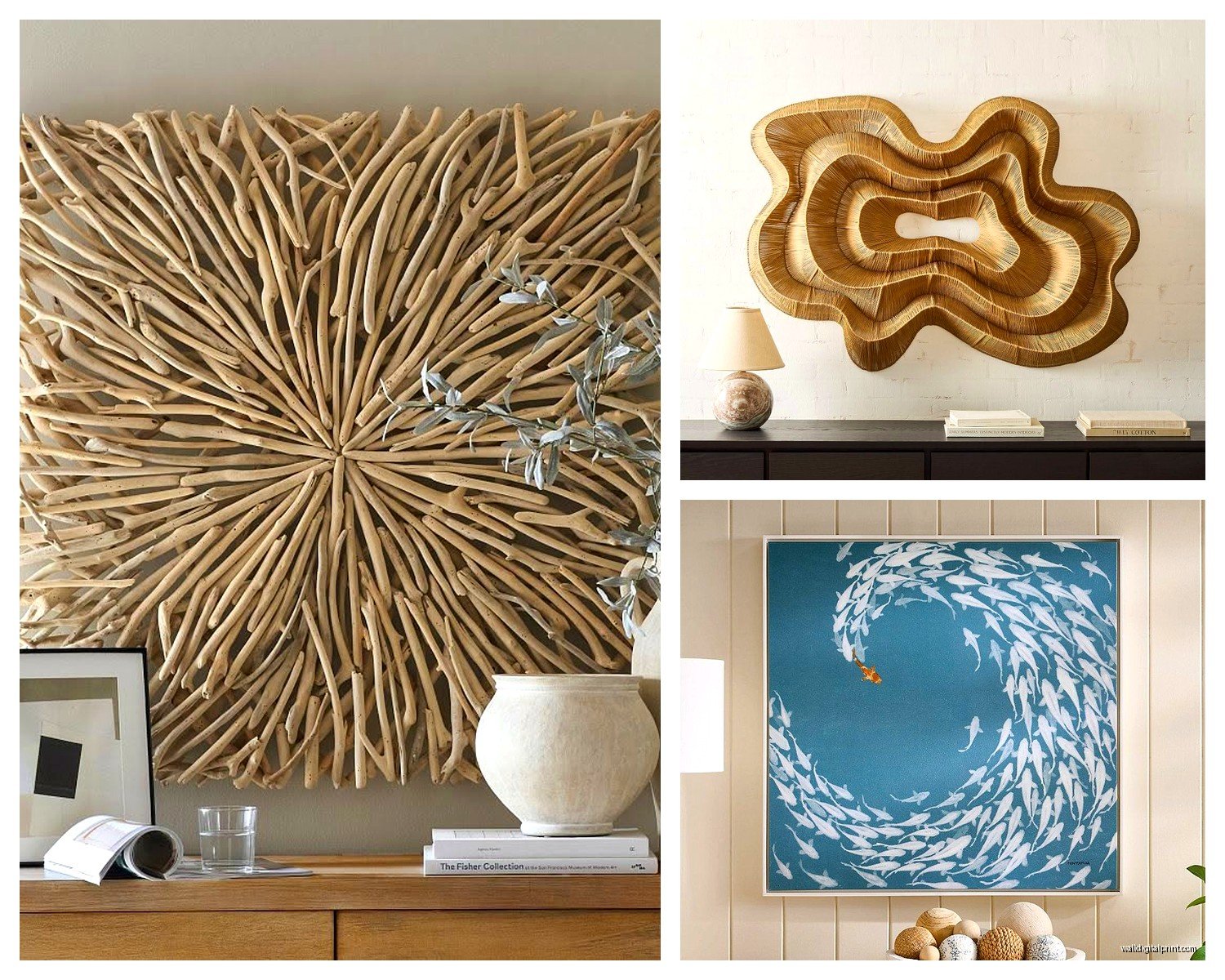
Real driftwood pieces are where it’s at. I’m not talking about those fake whitewashed pieces from chain stores. Actual driftwood has this weathered texture that you can’t replicate. I bought this massive driftwood wall hanging from an artist in Oregon who collects wood from local beaches and it’s the centerpiece of my office now. My cat tries to climb it weekly but that’s another issue.
Look for artists who:
- Actually source their wood from beaches (they’ll usually mention which beach)
- Leave the natural color variations instead of painting everything uniform white
- Create sculptural pieces, not just boards with words burned into them
Resin Art
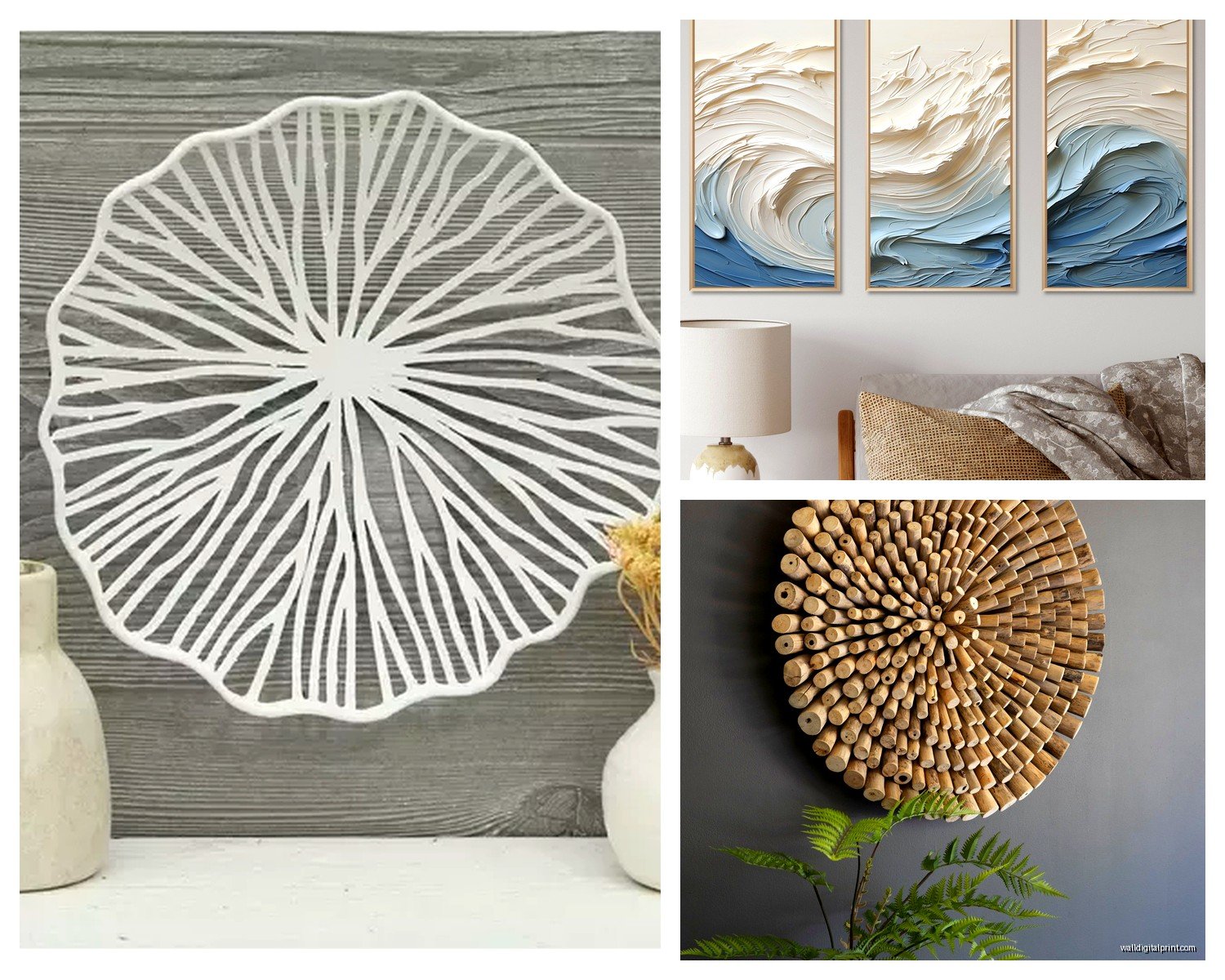
Okay so resin beach art exploded on Instagram and now everyone’s doing it, but there’s a huge difference between someone who just started last month and an actual skilled resin artist. The good ones layer the resin to create depth that looks like actual water. I commissioned a piece from this artist in Florida who does these ocean wave pieces with real sand from different beaches mixed in, and when the light hits it? Unreal.
Red flags for bad resin art: too much glitter, muddy colors that look brown instead of oceanic, super thick application that looks plastic-y.
Original Photography
This is actually the most affordable way to get unique coastal art if you know where to look. Find photographers who shoot beaches during off-seasons or unusual times of day. I have this print from a photographer who shoots the Oregon coast during storms, and it’s moody and dramatic instead of that typical bright sunny beach vibe everyone does.
Pro tip: buy directly from photographers’ websites, not through print-on-demand services. The quality difference is massive, and you’re supporting them directly.
Sizing That Doesn’t Look Ridiculous
Oh and another thing – I see people mess this up constantly. They buy these tiny 16×20 prints and hang them on massive walls and it just looks lost. Coastal art actually works better oversized because beaches are these huge expansive spaces, so your art should reflect that scale.
For above a sofa: you want something that’s at least 2/3 the width of the sofa. I usually go for 48-60 inches wide for standard sofas.
For statement walls: go big or go home. Like 40×60 minimum. I just installed a 48×72 ocean photograph in a client’s entryway and it’s the first thing people comment on.
Small spaces: this is where a collection of smaller unique pieces works better than one small piece. Think 3-5 pieces in varying sizes arranged asymmetrically.
The Gallery Wall Approach
If you’re gonna do a gallery wall with coastal pieces, please don’t make it matchy-matchy. The whole point of collecting unique art is that each piece has its own vibe. I did a gallery wall in my guest room with:
- An original watercolor of tide pools from a Maine artist
- A small driftwood sculpture
- Vintage nautical maps from an estate sale
- A modern abstract piece that just happened to have ocean colors
- Black and white surf photography
Mix mediums, mix frame styles (within reason – don’t go TOO chaotic), mix subject matter. It should feel collected over time, not bought all at once from the same place.
Custom Commission Work
This is where you get the most unique stuff obviously, but it’s also where people get nervous about spending money. I get it. Here’s what I’ve learned from commissioning probably 30+ pieces over the years:
Finding the Right Artist
Stalk their Instagram. Seriously. Look at their process videos, their finished work in actual homes (not just studio shots), read their captions to get a feel for their personality. I commissioned a piece from an artist whose feed I’d been following for months, and I already knew her style would work for what I needed.
Ask for references or photos of previous commissions if they don’t show them. Any legit artist will have these.
The Actual Commission Process
Most artists want 50% upfront, 50% on completion. This is standard, don’t try to negotiate it. What you CAN negotiate is:
- Timeline – be upfront about when you need it
- Revision rounds – get clear on how many rounds of changes are included
- Color palette – send them photos of your actual space
- Size and orientation – make sure they understand your wall dimensions
I always send artists like 10 photos of the room from different angles, the paint colors, the furniture, lighting situations. The more info they have, the better.
Wait I forgot to mention – get EVERYTHING in writing. Even if it’s just email exchanges. I had a situation once where an artist and I had different understandings of the timeline and it got messy. Now I confirm everything via email even if we talked on the phone.
Pricing Reality Check
Okay so this might hurt but original art from talented artists isn’t cheap. For a medium-sized original piece (like 24×36), you’re looking at $500-2000+ depending on the artist’s experience and medium. Resin pieces tend to be on the higher end because materials are expensive. Watercolors and photography prints are usually more affordable.
But here’s the thing – you’re getting something nobody else has. It’s an investment piece that actually makes your space unique. I’d rather have one amazing original piece than five mass-produced prints.
Mixing Coastal Art with Different Design Styles
The biggest mistake I see is people thinking coastal art only works with that whole nautical navy-and-white striped situation. Like no. I’ve successfully used unique coastal pieces in:
Modern Minimalist Spaces: Black and white beach photography, abstract ocean pieces with clean lines, single large-scale pieces with lots of negative space
Bohemian Rooms: Macramé combined with driftwood, colorful surf art, mixed media pieces with shells and rope
Industrial Vibes: Raw driftwood sculptures, metal art with ocean themes, photography in simple metal frames
Traditional Spaces: Original oil paintings of seascapes, framed vintage nautical charts, classic maritime art
The key is choosing coastal art that matches your existing style’s mood, not just slapping any beach print on the wall.
Installation Tips Nobody Talks About
Alright so you’ve found this perfect unique piece and now you gotta hang it without destroying your wall or the art. Some things I’ve learned the hard way:
Heavy pieces need proper anchors. Driftwood sculptures especially can be way heavier than they look. I use toggle bolts for anything over 20 pounds, and I don’t trust those command strips for anything valuable or heavy, sorry not sorry.
Resin art is sensitive to direct sunlight. It can yellow over time if it’s in harsh sun all day. I learned this after placing a gorgeous resin wave piece across from a west-facing window and noticing it getting a weird tint after six months. Moved it to a different wall, problem solved.
Lighting Matters So Much
This is gonna sound extra but proper lighting can make or break your unique art. I installed picture lights above two pieces in my living room and it completely transformed them. For really textured pieces like driftwood or thick resin art, directional lighting creates shadows that emphasize the dimension.
Natural light is great but inconsistent. If your art is the focal point, consider adding dedicated lighting even if it’s just a simple track light or spotlight.
Maintaining Unique Coastal Pieces
Different materials need different care and honestly some pieces are higher maintenance than others.
Driftwood: dust regularly with a soft brush, keep away from humidity extremes (ironic for beach art but whatever)
Resin: clean with a soft damp cloth, avoid harsh chemicals, keep out of direct sun like I mentioned
Original paintings: depends on the medium but generally don’t touch the surface, dust the frame only
Photography prints: if they’re properly framed with UV glass you’re good, otherwise they’ll fade over time
I have a client who bought this beautiful original watercolor seascape and hung it in her bathroom. The humidity destroyed it within a year. Don’t be like her. Consider the room’s conditions before placing expensive unique art.
Building a Collection Over Time
Here’s the thing about unique coastal art – you probably can’t afford to fill all your walls at once with original pieces, and that’s fine. Actually it’s better. Rooms that are decorated all at once look staged and impersonal.
I tell people to buy one meaningful piece per year, maybe two if you’re really into it. Start with your most important wall, the one you see every day or the one guests see when they walk in. Then add pieces as you find them and can afford them.
I’ve been collecting coastal art for like eight years now and my collection tells a story. There’s the piece I bought on a trip to Maine, the commissioned painting I got after finishing a huge project, the vintage chart I found at an estate sale while binging that true crime show (got distracted but found treasure).
Red Flags When Shopping
Okay real quick, things that should make you run away:
- Artists who won’t show you their process or previous work
- Prices that seem way too good for “original” art (it’s probably a print)
- Sellers who can’t tell you anything about the artist or creation process
- Pieces marketed as “handmade” but clearly mass-produced
- Anyone who pressures you to buy immediately
Also be wary of “coastal art” that’s just generic tropical stuff. Palm trees aren’t coastal, they’re tropical. Know the difference for your specific vibe.
The best unique coastal art comes from artists who have an actual connection to the ocean, whether they live there or visit regularly or grew up near water. You can tell the difference between someone who’s creating from experience versus someone who’s just copying popular beach aesthetics.
Anyway I’m realizing I’ve been typing for way longer than I planned but hopefully this helps you find some actually cool coastal pieces instead of the same stuff everyone else has. The hunt for unique art is honestly half the fun once you get into it.